
25 Small Home Office Ideas for a Cozy Workspace
You don’t need a spare room to enjoy a genuinely functional home office. With smart layout choices and space-saving furniture, even the smallest corner can become a productive, inviting workspace. These 25 small home office ideas will help you make the most of limited square footage, proving that a cozy, well-designed office is possible in any home.
1. Closet Converted Office Nook
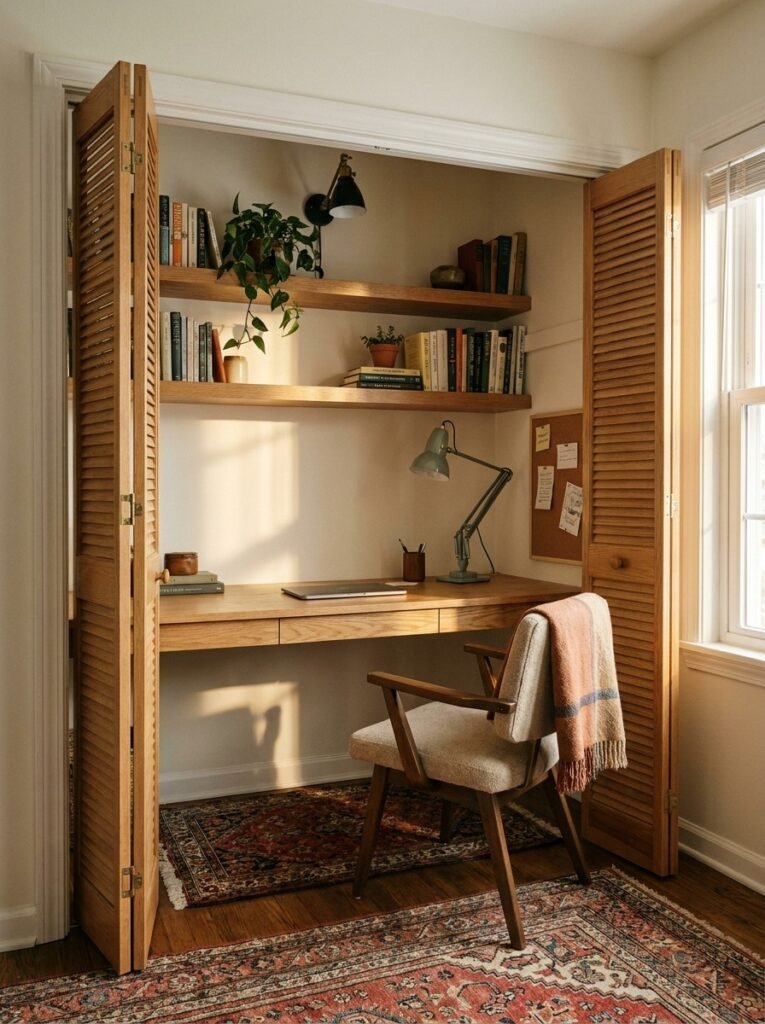
Converting an unused closet into a compact office nook is one of the most clever solutions for those without a spare room to dedicate to work. A small built-in desk paired with floating shelves above makes efficient use of vertical space, proving that even a few square feet can become fully functional.
Add task lighting since closets often lack natural light of their own, and choose a slim desk depth to leave room for a chair to fully tuck in when not in use. Vertical shelving above the desk provides storage without taking up additional floor space in the process.
Use folding or sliding doors to hide the entire setup away when not in use, keeping the workspace contained without permanently taking over a shared living area. This clever setup works particularly well in studio apartments or homes without a spare room.
2. Corner Desk Setup
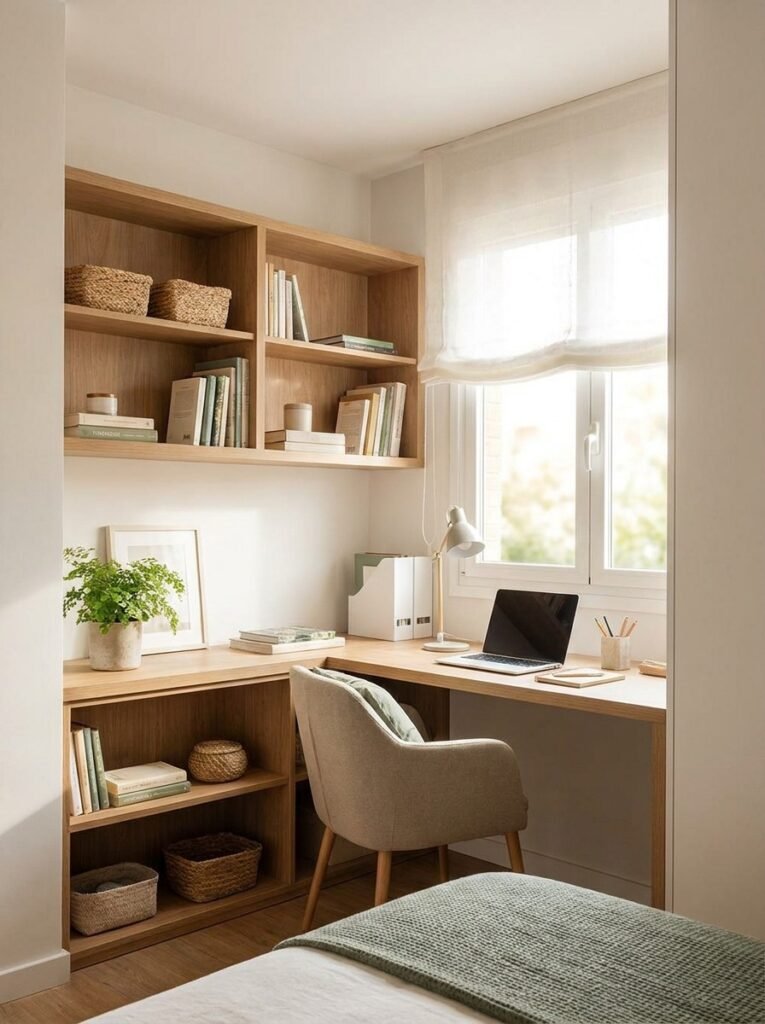
A corner desk setup makes efficient use of an often-underutilized part of the room, tucking the workspace into a space that might otherwise sit empty. This layout maximizes square footage without disrupting the room’s overall flow, making it especially practical for bedrooms or living rooms with limited space.
Choose a desk specifically designed for corner placement, with an angled or L-shaped surface that fits neatly into the room’s natural geometry. This shape often provides more usable surface area than a straight desk of the same overall footprint.
Add wall-mounted shelving above the corner desk to maximize vertical storage without requiring additional floor space. This complete corner setup proves that a genuinely functional office doesn’t require its own dedicated room to work well.
3. Floating Wall-Mounted Desk
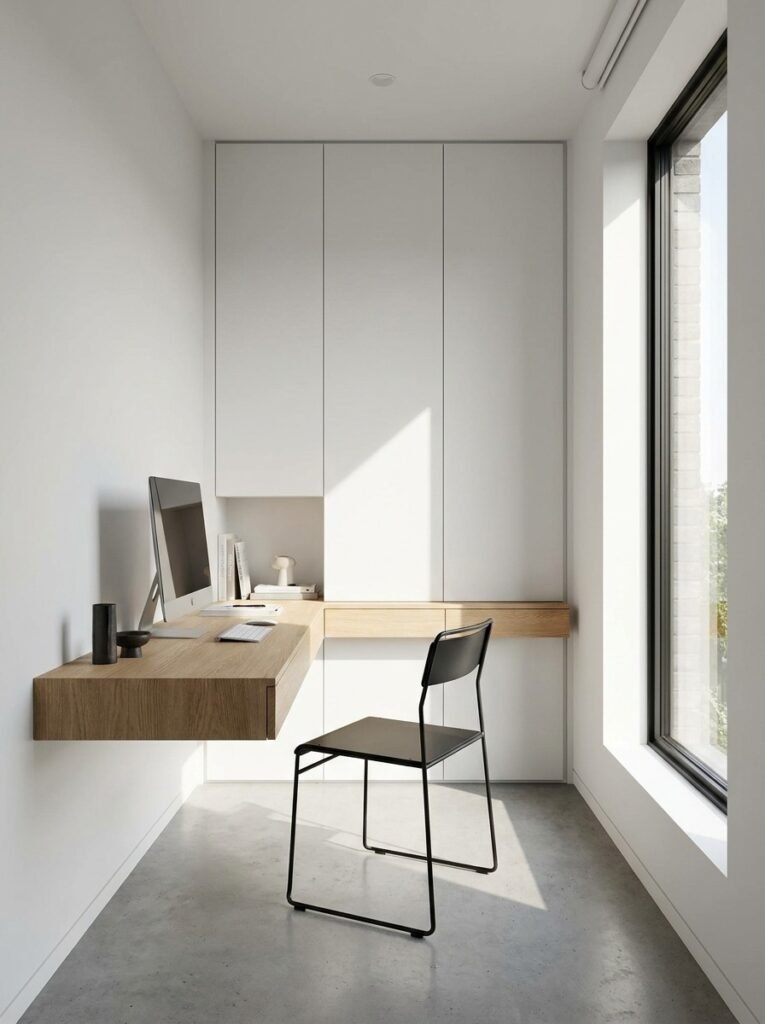
A floating wall-mounted desk eliminates the need for legs or a traditional base, creating a sleek, space-saving work surface that visually opens up the room. This design choice works particularly well in narrow hallways or small bedrooms where floor space is at an absolute premium.
Because the desk has no legs, the chair can be pushed completely underneath when not in use, further reducing the visual footprint of the entire setup. This makes the floating desk an excellent choice for multi-purpose rooms that need to transition between work and other functions.
Choose a desk with built-in cable management to keep cords from disrupting the clean, minimal look this style is known for. This streamlined solution proves that small spaces can still accommodate genuinely functional work areas.
4. Under Stairs Office Nook
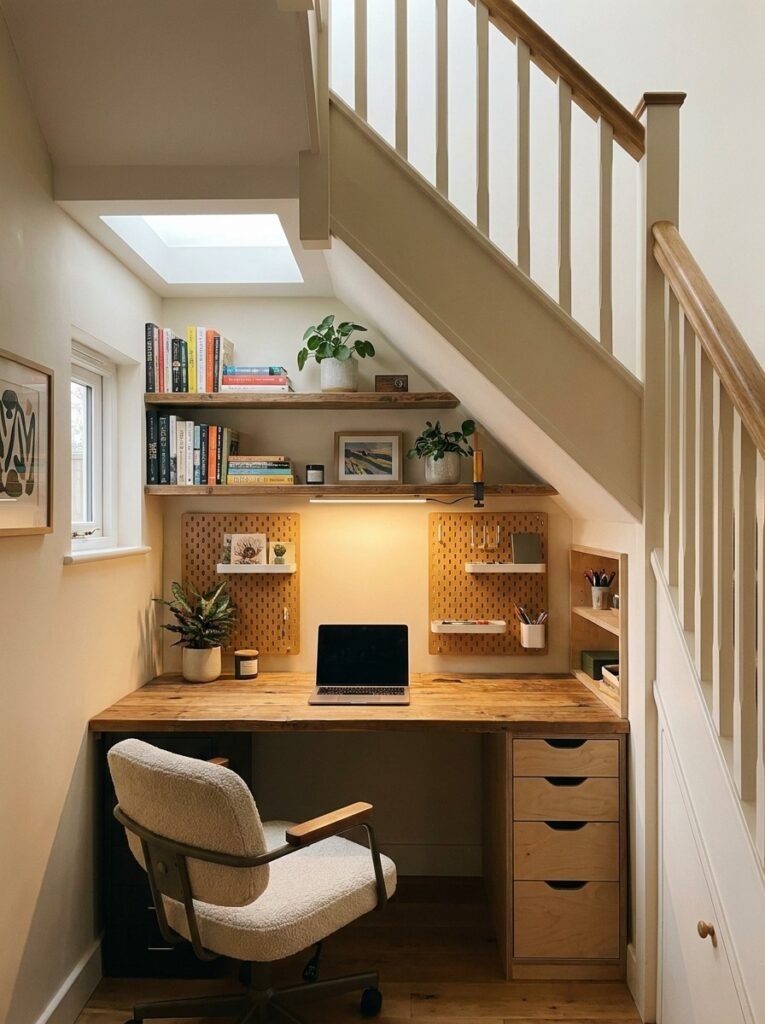
The space beneath a staircase is one of the most commonly overlooked areas in a home, yet it offers genuine potential for a compact, functional office nook. This unconventional location makes use of square footage that would otherwise remain entirely wasted throughout the household.
Custom-fit a small desk to match the staircase’s sloped ceiling, positioning the tallest part of the desk toward the front where headroom is greatest. Add task lighting since this area often lacks natural light, ensuring the workspace remains fully functional despite its unconventional location.
This creative solution works particularly well in homes without a spare room, transforming dead space into a genuinely useful area. Built-in shelving along the remaining wall space further maximizes the nook’s overall storage capacity.
5. Compact L-Shaped Desk
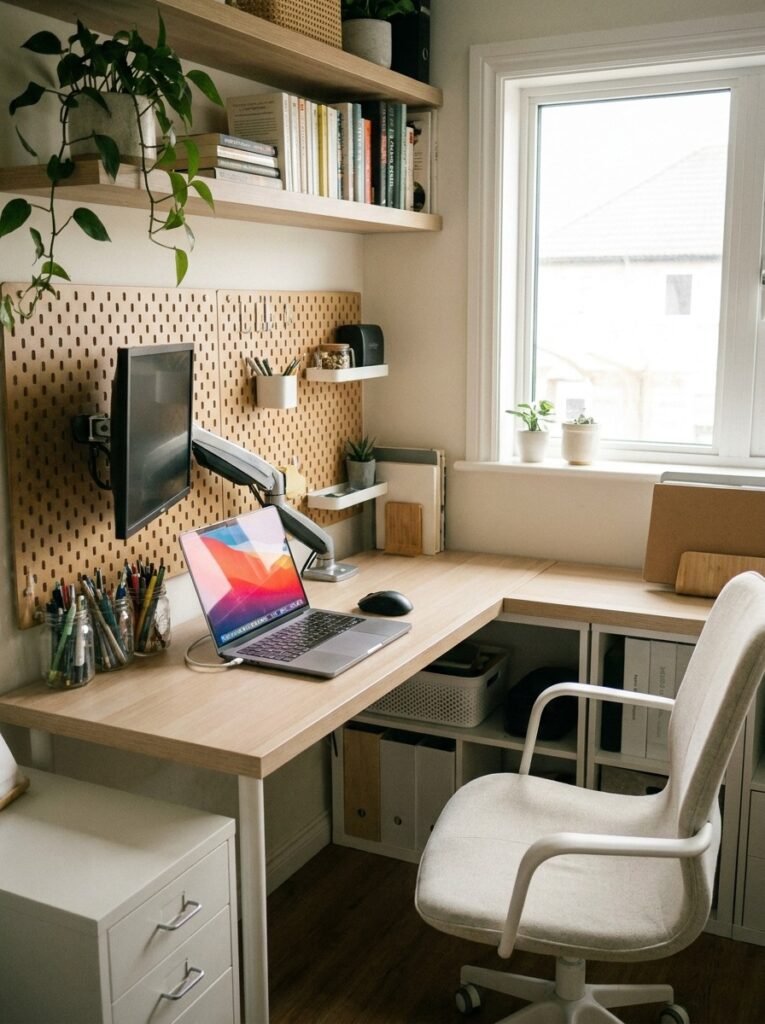
A compact L-shaped desk offers more usable surface area than a standard rectangular desk while still fitting efficiently into a corner or small room. This shape provides separate zones for a computer setup and additional workspace, all within a relatively contained overall footprint.
Choose a scaled-down L-shaped design specifically built for smaller spaces, rather than a full-sized executive version meant for larger home offices. This ensures the desk fits comfortably without overwhelming the room or blocking natural pathways throughout the space.
This furniture choice works particularly well for those who need to spread out materials for different tasks, like writing on one side and using a computer on the other, all within a compact overall office setup.
6. Fold Down Wall Desk
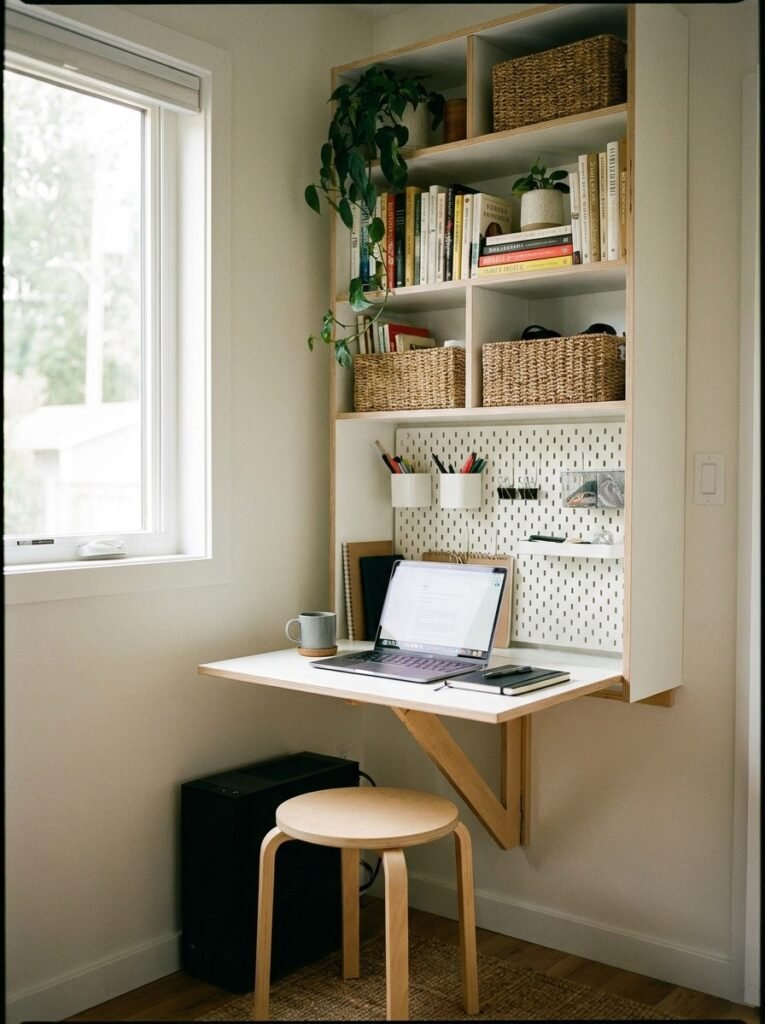
A fold-down wall desk offers maximum flexibility for small spaces, folding flat against the wall when not in use and opening into a full work surface when needed. This design essentially eliminates the desk’s footprint entirely during non-working hours, making it ideal for multi-purpose rooms.
Choose a model with built-in storage compartments that remain accessible even when the desk is folded down, ensuring office supplies stay organized regardless of the desk’s current position. This feature adds genuine function beyond the basic folding mechanism itself.
This solution works particularly well in studio apartments, guest rooms, or any space that needs to serve multiple purposes throughout the day. It’s one of the most space-efficient options available for those working with truly minimal square footage.
7. Small Desk with Vertical Storage
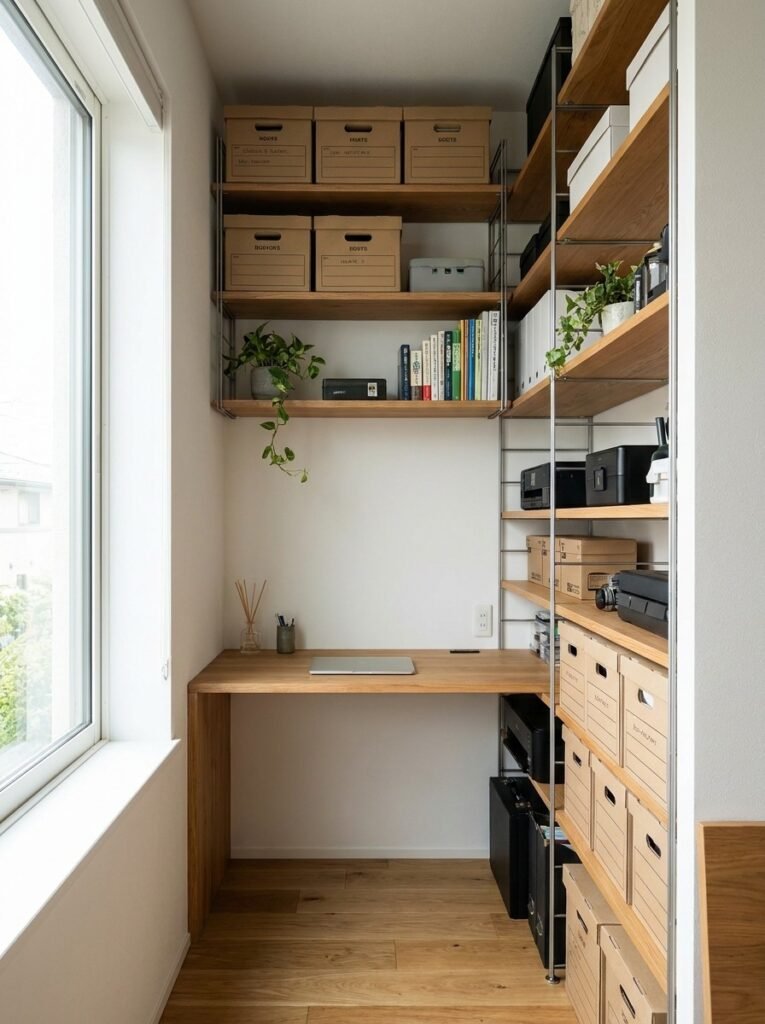
Pairing a small desk with tall vertical shelving maximizes storage without expanding the overall floor footprint of the workspace. This approach takes advantage of unused wall height, an especially valuable resource in small rooms where floor space is limited but vertical space often remains available.
Choose narrow shelving units that fit comfortably beside or above the desk, using bins and labeled boxes to keep supplies organized despite the compact storage footprint. This vertical approach keeps everyday essentials accessible without requiring additional floor-based furniture.
This combination proves particularly effective for those who need significant storage capacity despite working within a genuinely small physical space. It’s a practical solution that prioritizes function without sacrificing the room’s overall spaciousness.
8. Window Nook Office Corner
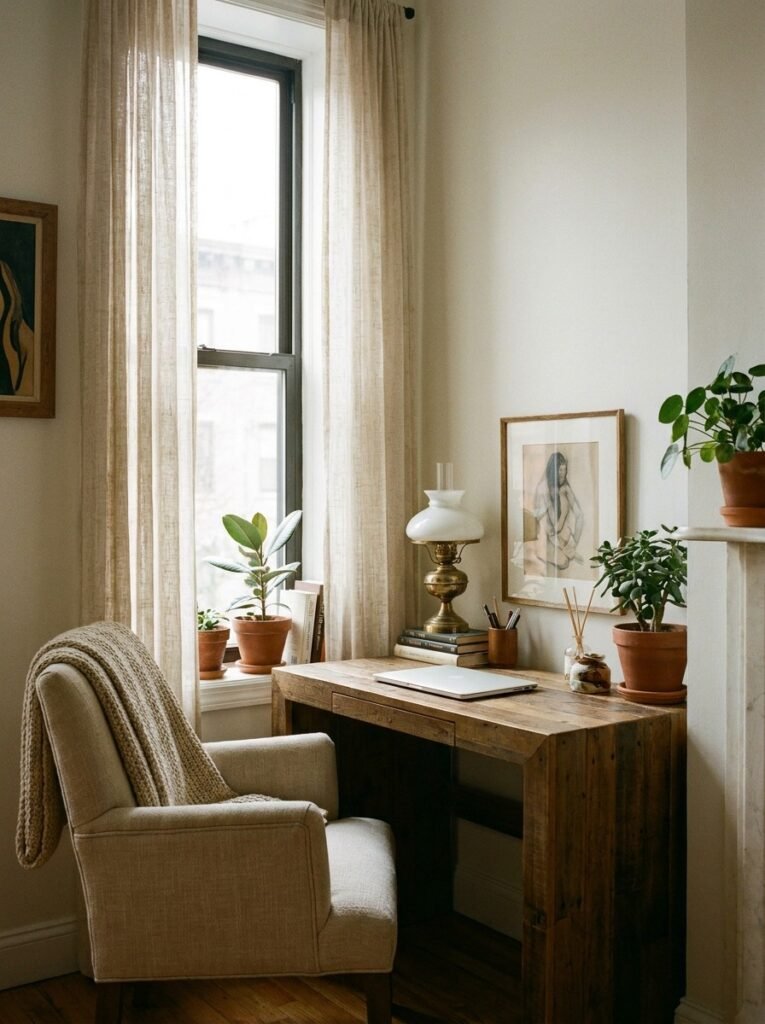
Positioning a small desk beside a window maximizes natural light, which has been shown to boost mood and productivity throughout the workday. This setup makes efficient use of an existing architectural feature, turning an ordinary corner into one of the most desirable spots in a small home.
Choose a slim desk that fits comfortably within the available window nook space, adding sheer curtains to soften harsh midday light while still allowing plenty of brightness into the room. This cozy setup feels connected to the outdoors despite its compact footprint.
This idea works particularly well in bedrooms or living rooms with an underused window corner, proving that even the smallest office setup can feel genuinely pleasant to work in throughout the day.
9. Bedroom Corner Office Setup
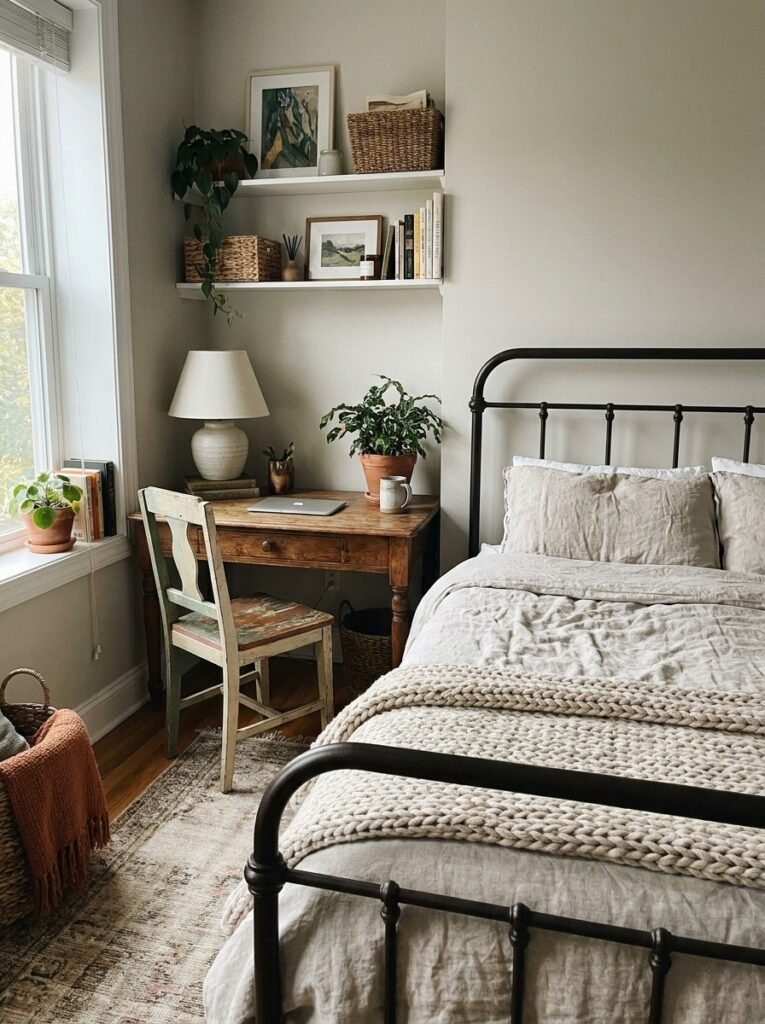
A bedroom corner office setup makes practical use of shared space for those without a spare room dedicated to work. Positioning a small desk in an underused bedroom corner allows for a functional workspace without requiring any additional square footage beyond what’s already available.
Choose a desk with a slim profile to avoid the setup feeling like it’s competing with the bed for visual attention. Coordinating the desk’s finish with existing bedroom furniture helps the workspace feel like a natural, intentional part of the room rather than an afterthought.
This approach works particularly well in studio apartments or smaller homes, allowing the bedroom to serve double duty without feeling cluttered or overly utilitarian throughout the rest of the space.
10. Slim Console Desk
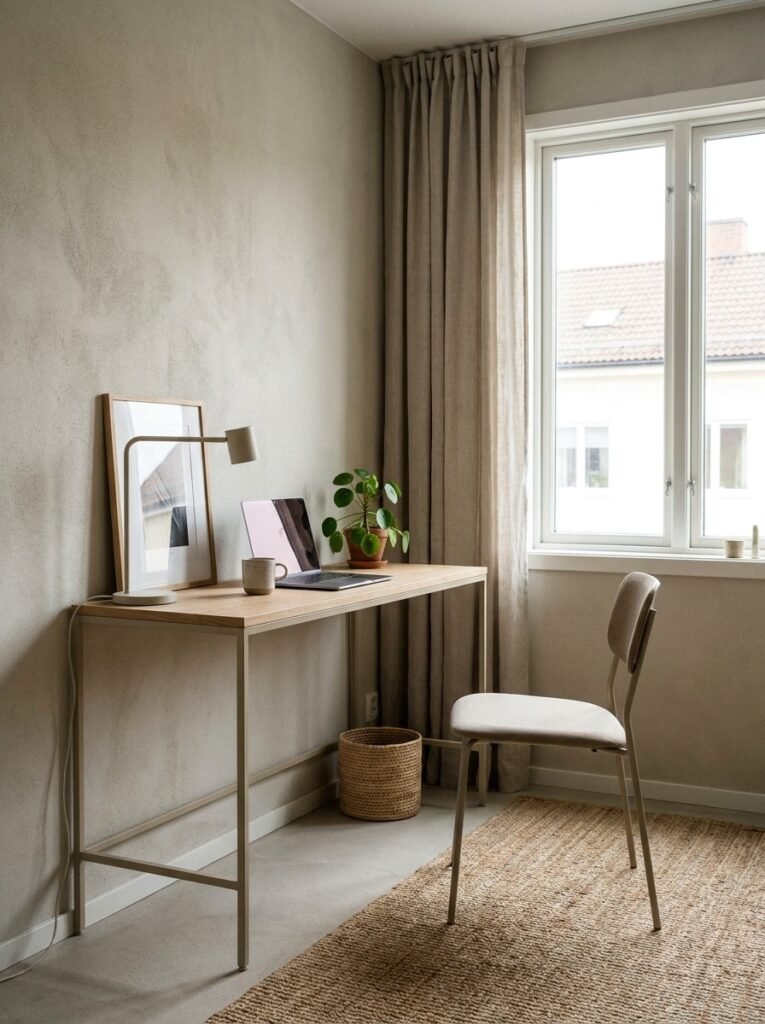
A slim console desk offers a narrow work surface that fits comfortably along a hallway wall or in a tight corner without significantly impeding the room’s overall walkway. This furniture style, originally designed as an entryway table, adapts naturally into a compact, functional workspace.
Choose a console desk with a depth of around twelve to sixteen inches for the most space-efficient footprint while still accommodating a laptop and basic supplies. This narrow profile makes it one of the most versatile small-space desk options available.
Add a wall-mounted shelf or small drawer unit nearby for additional storage without requiring extra floor space. This streamlined setup proves that a genuinely functional workspace doesn’t need significant square footage to feel complete.
11. Small Space Multi-Functional Desk
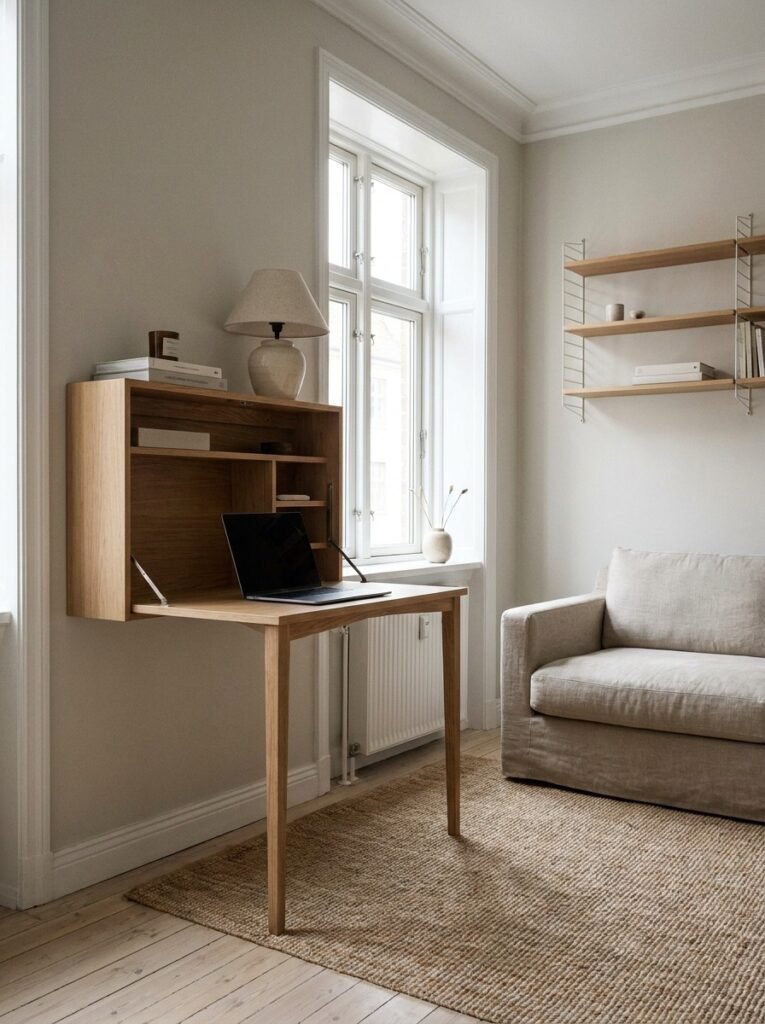
A multi-functional desk that doubles as a console table or side table offers genuine versatility for small spaces that can’t dedicate an entire piece of furniture solely to office work. This dual-purpose approach maximizes the value of every furniture piece within a limited overall footprint.
Choose a desk design with a clean, simple silhouette that works equally well as a decorative surface when not actively in use for work. This flexibility allows the piece to blend seamlessly into a living room or entryway rather than looking purely utilitarian.
This approach works particularly well for those who only need occasional desk space rather than a dedicated daily office setup, making the most of a single furniture piece across multiple household functions throughout the week.
12. Bookshelf Desk Combo
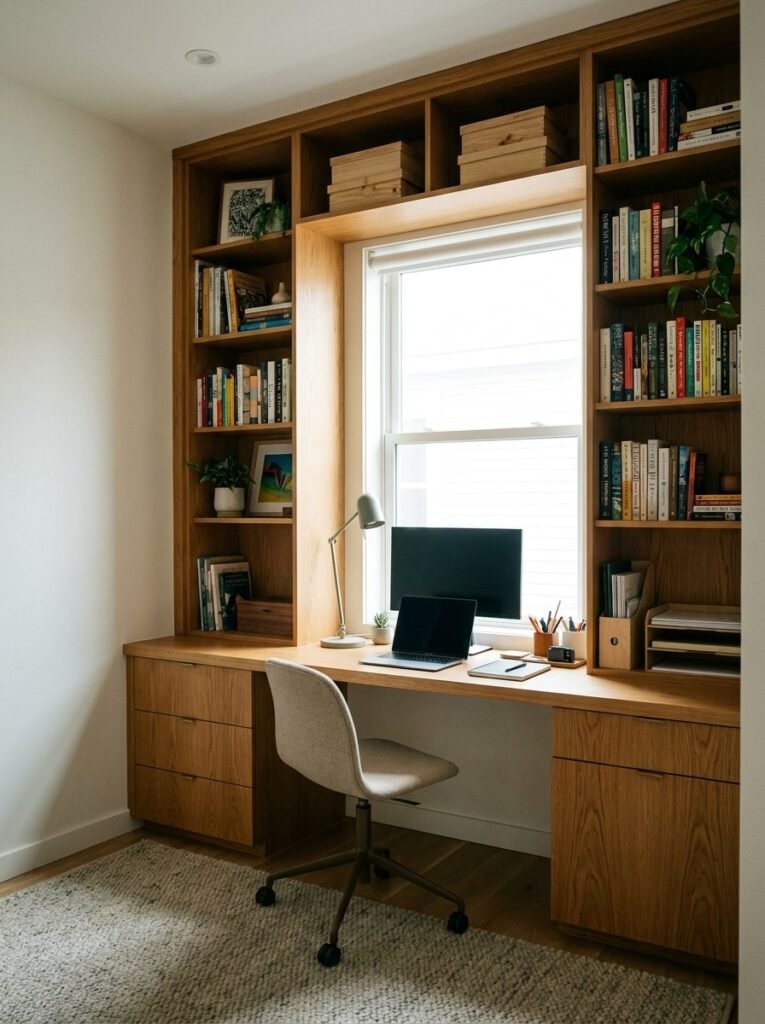
A bookshelf and desk combination integrates a work surface directly into a larger shelving unit, maximizing both storage and function within a single, cohesive piece of furniture. This built-in approach makes efficient use of vertical wall space while keeping the workspace visually unified with surrounding storage.
Choose a unit where the desk surface sits at a comfortable working height, with shelving extending both above and below for maximum storage capacity. This combination eliminates the need for separate desk and bookshelf furniture, saving valuable floor space in the process.
This setup works particularly well in home libraries, small studies, or living rooms doubling as workspace, offering a genuinely comprehensive solution within a single furniture footprint.
13. Small Rolling Cart Office Storage
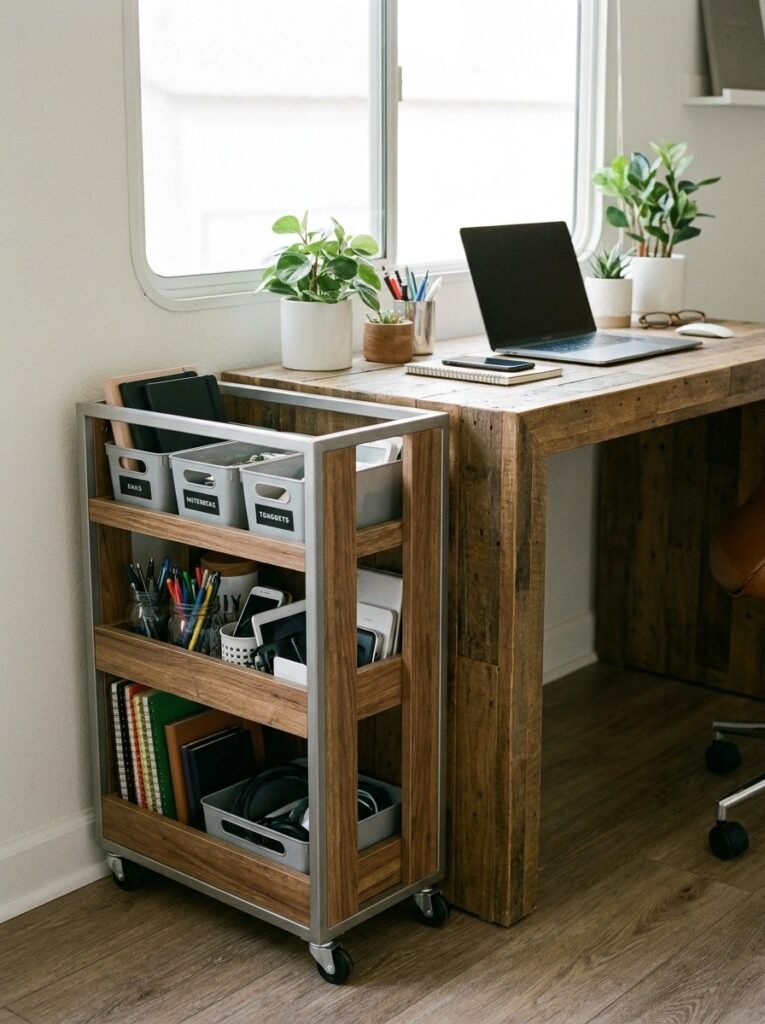
A small rolling storage cart offers flexible, mobile organization for a compact home office, providing storage that can move wherever it’s needed most. Multiple tiers allow you to sort supplies by category, keeping everything contained in one easy-to-transport unit rather than requiring additional fixed furniture.
This system works especially well in small spaces where a full filing cabinet or bulky storage unit simply won’t fit comfortably. The cart can be tucked beside the desk during work hours and rolled into a closet or corner when the space needs to serve another purpose.
Label each tier clearly so supplies remain easy to locate despite the compact storage footprint. This mobile solution proves that genuine organization doesn’t require significant square footage to function effectively.
14. Compact Desk with Pegboard Wall
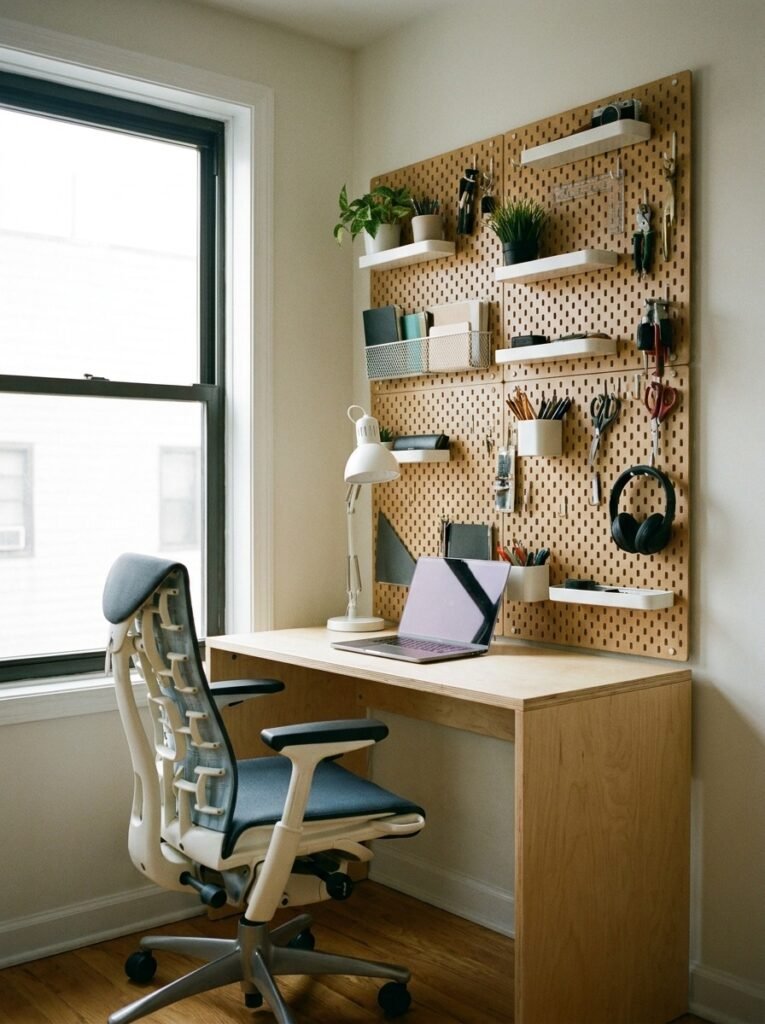
Pairing a compact desk with a pegboard wall maximizes vertical storage without requiring additional floor-based furniture. This customizable system allows you to hang scissors, cords, folders, and other office supplies directly on the wall, keeping the desk surface clear for actual work.
Paint the pegboard to match your room’s color scheme for a cohesive look, and rearrange hooks and small shelves as your storage needs change over time. This flexibility makes the pegboard an especially practical solution for evolving small-space office requirements.
This combination works particularly well in closets, corners, or any compact area where floor space for additional storage furniture simply isn’t available. It keeps everything accessible while maintaining a clean, organized desk surface.
15. Tiny Nook Under Window
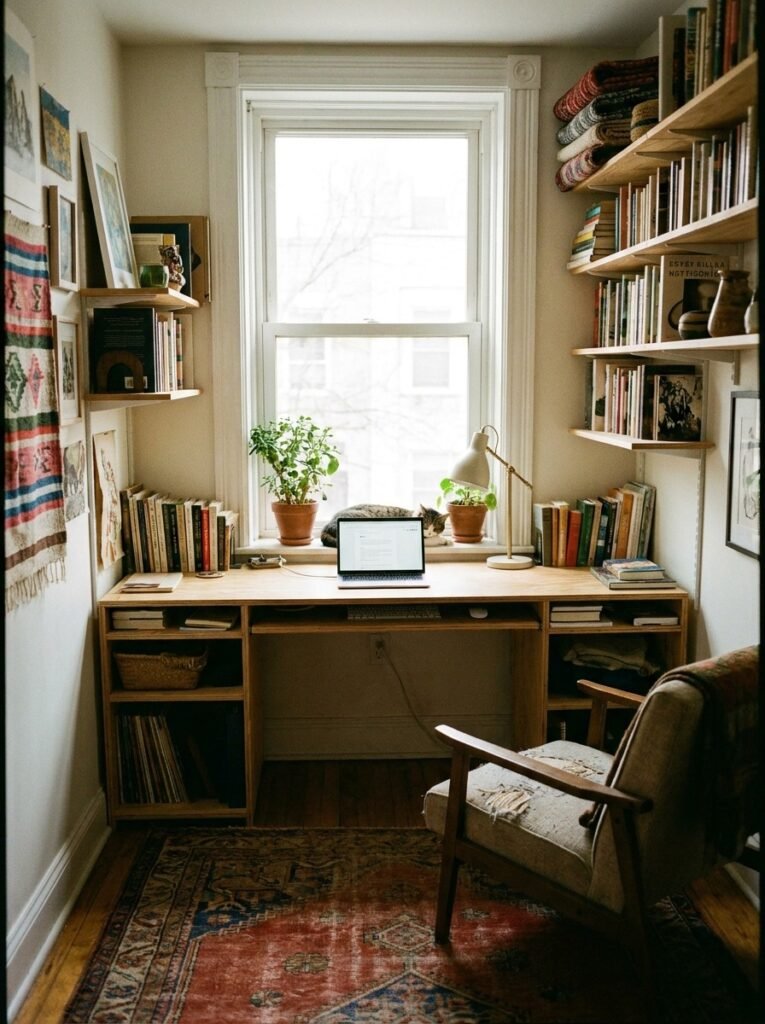
The area beneath a window often goes completely unused, making it an excellent candidate for a tiny office nook. A custom-fit desk positioned at this height takes full advantage of the natural light while making efficient use of otherwise wasted space along the wall.
Choose a desk depth that fits comfortably beneath the window sill, ensuring the setup doesn’t obstruct the window’s natural light or ventilation. This tight fit maximizes the room’s available square footage without requiring the removal of any existing architectural features.
This idea works particularly well in bedrooms, living rooms, or hallways with an underused window area, proving that even the smallest nook can become a genuinely functional workspace with the right custom furniture fit.
16. Mini L-Shaped Corner Desk
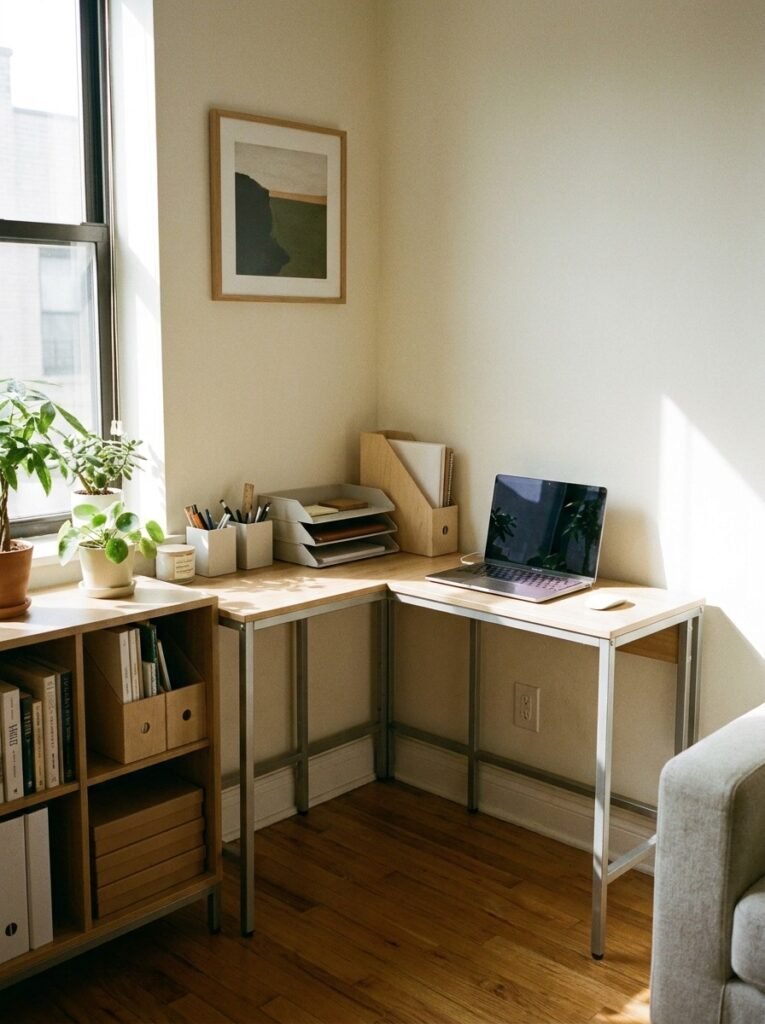
A mini L-shaped corner desk offers the functional benefits of an L-shaped layout while remaining appropriately scaled for genuinely small rooms. This compact version provides separate zones for different tasks without overwhelming the space the way a full-sized L-shaped desk might in a smaller room.
Choose a desk specifically marketed for small spaces, checking dimensions carefully to ensure it fits comfortably within your available corner without blocking doorways or walkways. This scaled-down approach delivers functional versatility without sacrificing the room’s overall livability.
This furniture choice works particularly well for those who need distinct areas for computer work and other tasks, like sorting mail or writing by hand, all within a genuinely compact overall footprint.
17. Small Space Chair and Ottoman Desk Combo
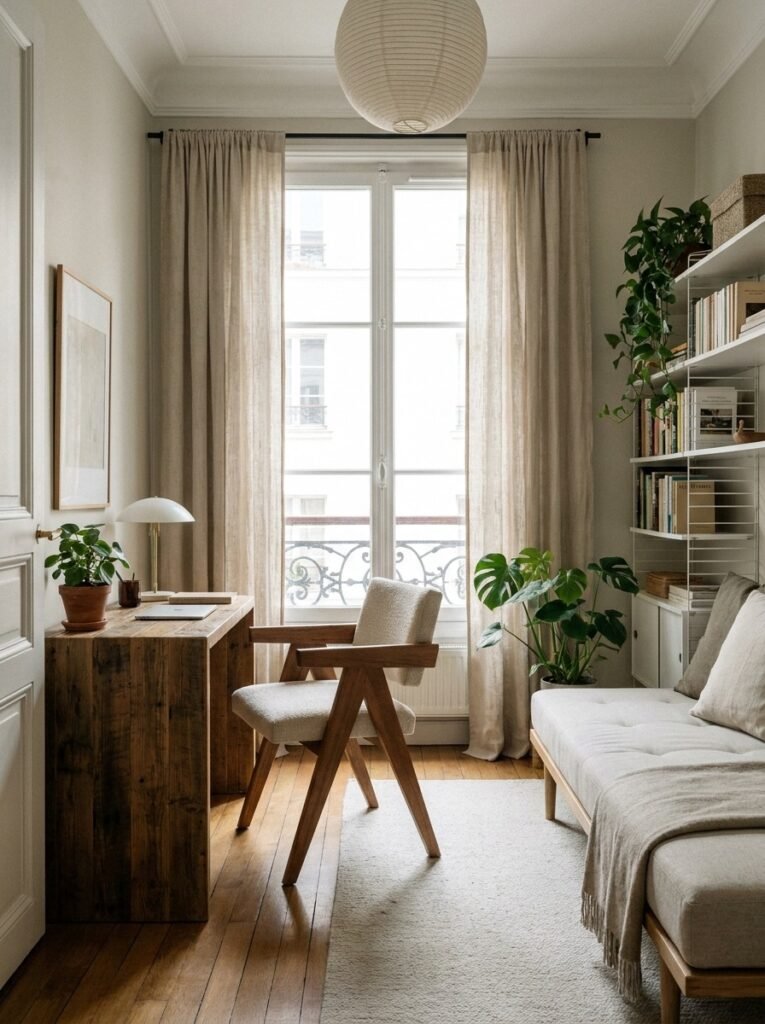
Choosing a desk chair that also functions as extra seating elsewhere in the home maximizes furniture versatility within a small space. This dual-purpose approach means the chair can move between the desk and a nearby living area as needed, rather than remaining a single-purpose office piece.
Select a chair with a design aesthetic that works both at a desk and as general seating, avoiding overly specialized ergonomic designs that might look out of place elsewhere in the home. This flexibility makes the furniture investment work harder across multiple household functions.
This approach works particularly well in studio apartments or small homes where every piece of furniture needs to serve more than one purpose. It’s a practical solution for maximizing limited space and furniture budget alike.
18. Vertical Shelving for Small Office
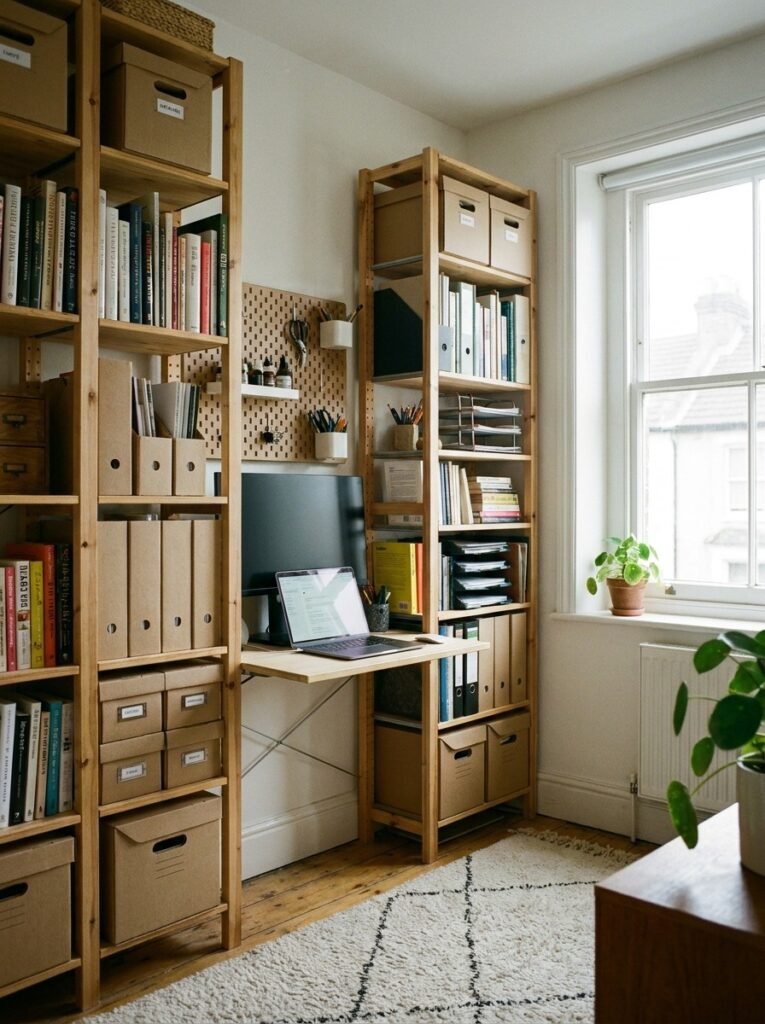
Tall vertical shelving units flanking a compact desk maximize storage capacity without expanding the office’s overall floor footprint. This approach takes full advantage of unused wall height, an especially valuable resource in small rooms where horizontal floor space remains genuinely limited.
Choose narrow shelving units that fit comfortably on either side of the desk, using labeled bins and boxes to keep supplies organized despite the vertical storage arrangement. This setup keeps everyday essentials accessible while maintaining a relatively small overall furniture footprint.
This combination works particularly well for those who need significant storage capacity for books, files, or supplies despite working within a genuinely small physical space, prioritizing height over width for maximum efficiency.
19. Wall Mounted Folding Desk
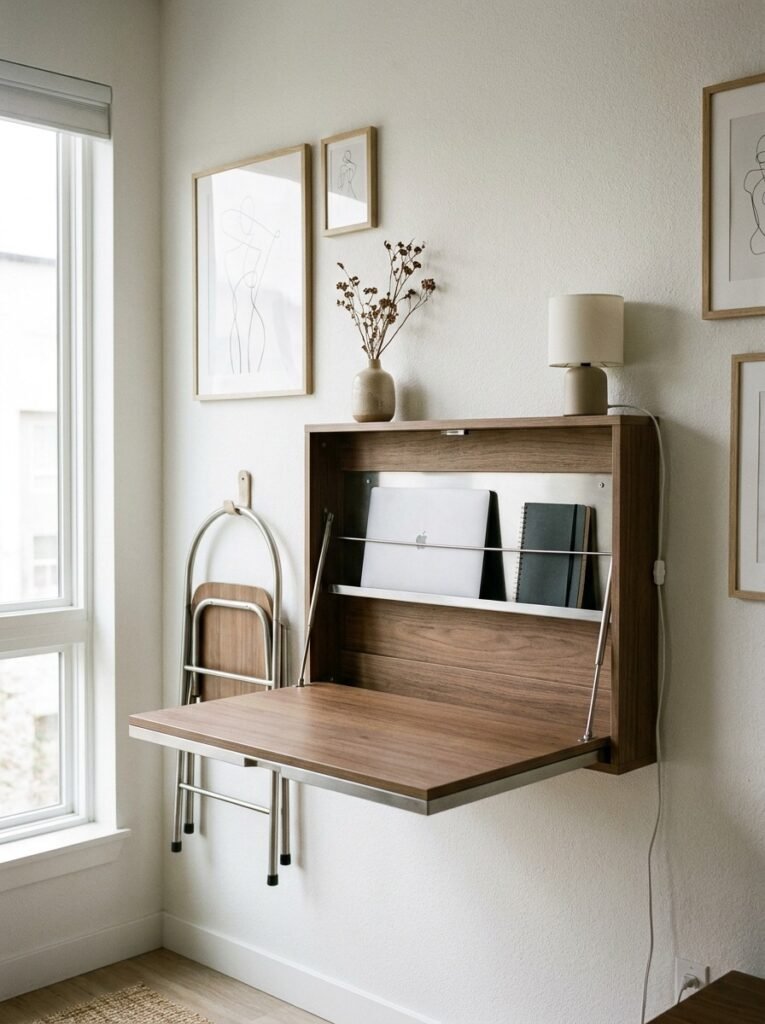
A wall-mounted folding desk represents one of the most extreme space-saving solutions available, disappearing almost entirely into the wall when not actively in use. This design works particularly well in studio apartments or multi-purpose rooms that need to reclaim floor space for other activities throughout the day.
Choose a model with a sturdy folding mechanism and adequate weight capacity for your typical work setup, including a laptop and any additional supplies. Some designs include built-in shelving that remains visible even when the desk itself is folded flat against the wall.
This solution proves particularly valuable for those in genuinely tiny living spaces, like studio apartments or shared rooms, where a permanent desk footprint simply isn’t practical for the household’s daily needs.
20. Small Space Task Lighting Setup
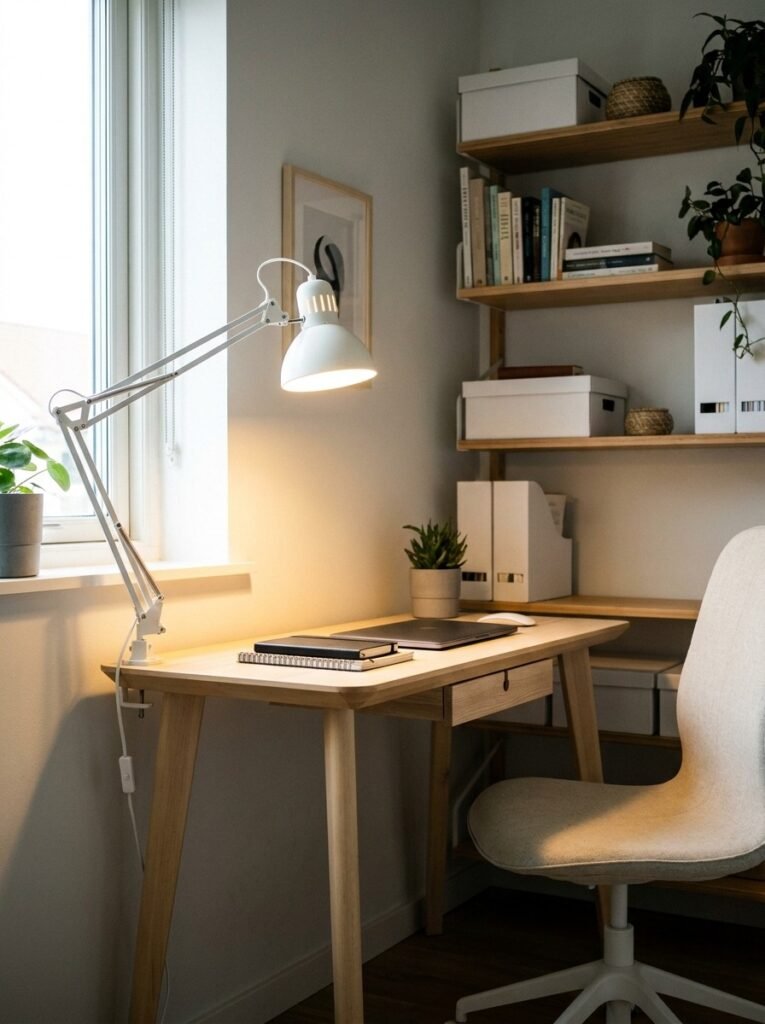
Investing in a quality adjustable task lamp becomes especially important in small home offices that may lack abundant natural light. A bright, well-positioned lamp ensures the workspace remains functional regardless of the room’s size or window access, supporting focused work throughout the day.
Choose a lamp with an adjustable arm or swivel head, allowing you to direct light precisely where it’s needed for different tasks. This flexibility proves particularly valuable in small spaces where the desk might serve multiple purposes throughout the day, from work to hobbies.
This relatively small investment significantly improves the overall usability of a compact office setup, proving that proper lighting can make even the tiniest workspace feel genuinely functional and comfortable for extended use.
21. Compact Desk with Acrylic Accessories
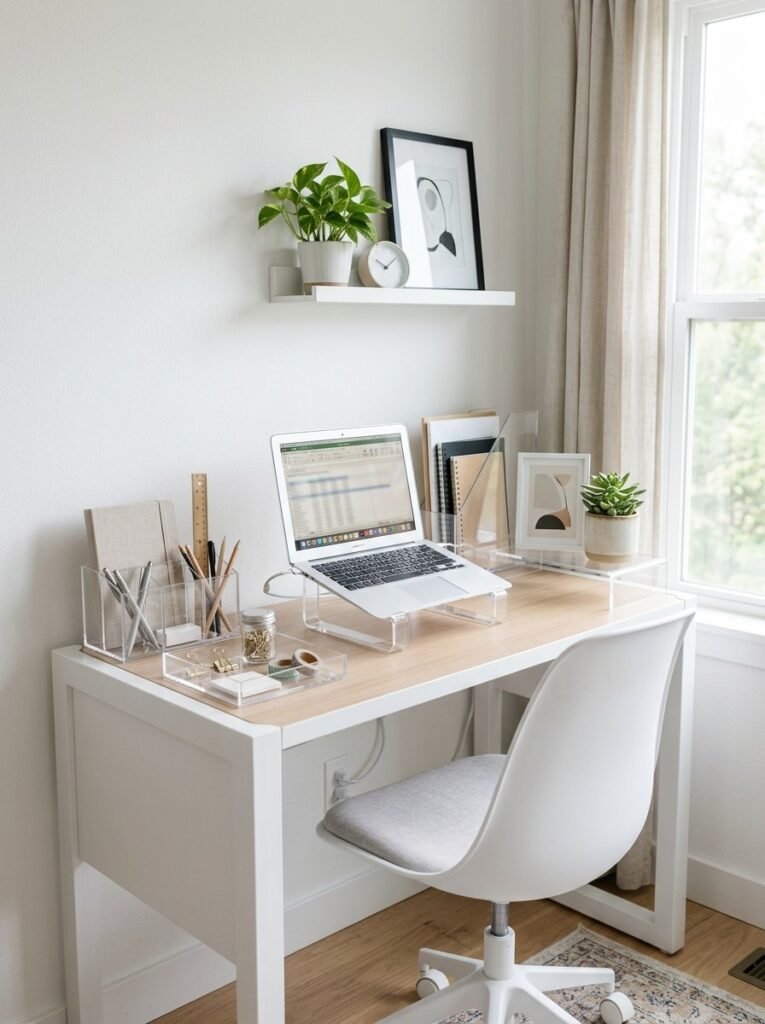
Clear acrylic desk accessories offer a sleek way to organize office supplies without adding visual bulk to an already small workspace. Because the material is transparent, these organizers blend seamlessly into the room rather than adding to the perceived clutter of a compact desk surface.
Use acrylic trays, pen holders, and small drawer units to keep supplies contained and easy to see at a glance. This transparent styling works particularly well in small offices where every visual element needs to feel light rather than heavy or space-consuming.
This organizational approach proves especially valuable for small desks with limited surface area, where opaque storage solutions might otherwise make the workspace feel more crowded and visually overwhelming than necessary.
22. Multi-Use Guest Room Office
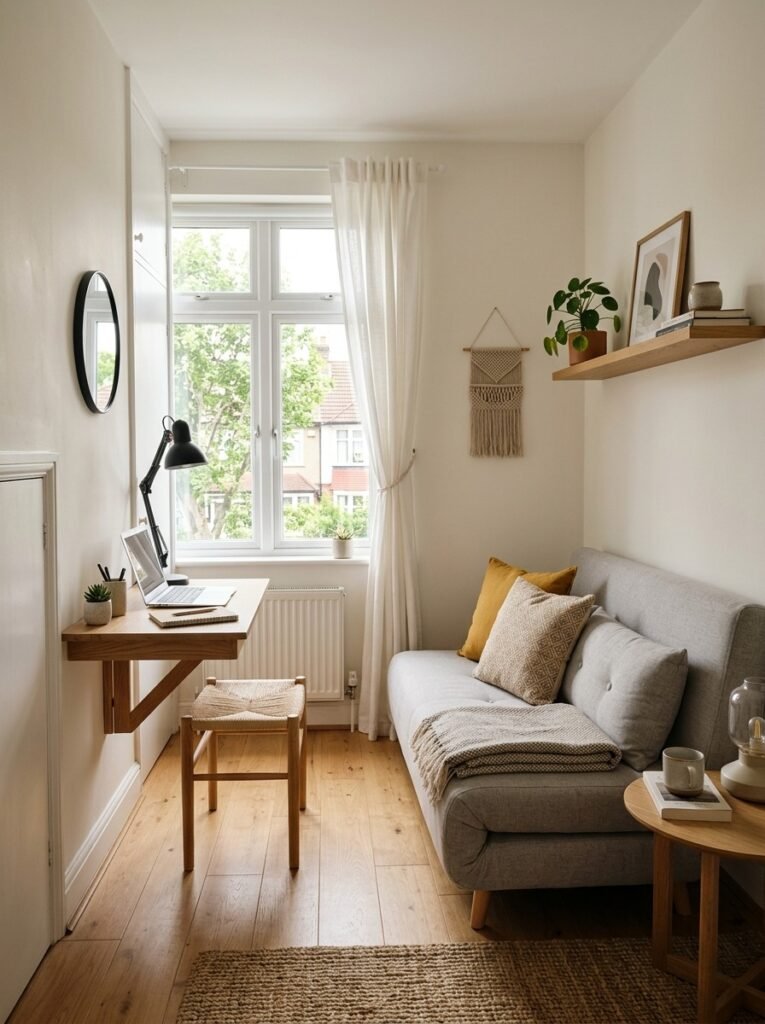
Combining a guest bedroom with a home office maximizes the value of a room that might otherwise sit unused most of the year. A compact desk tucked into a corner, paired with a fold-out sofa bed or daybed, allows the space to serve both purposes without significant compromise.
Choose furniture that transitions easily between functions, like a desk that can also serve as a nightstand when guests are staying over. This flexibility ensures the room remains genuinely useful throughout the year, rather than sitting empty except for occasional visitors.
This dual-purpose approach works particularly well in smaller homes without a dedicated spare room for either function individually, making the most of limited square footage across two distinct household needs.
23. Small Space Cable Management Solutions
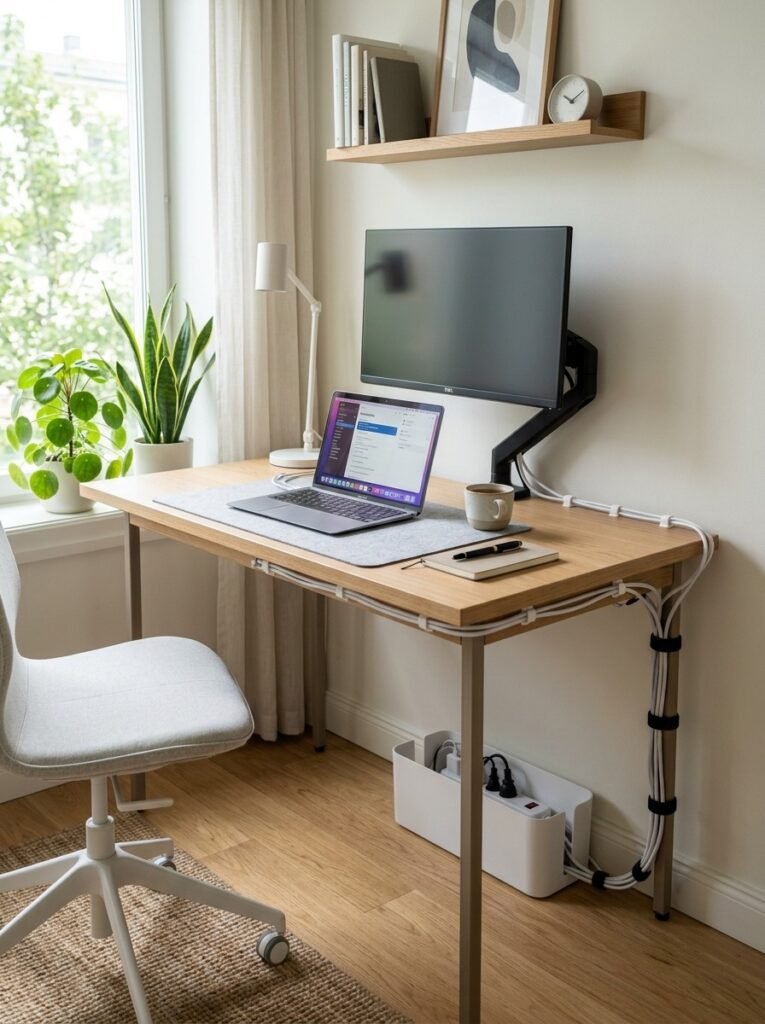
Proper cable management becomes especially important in small home offices, where tangled cords can quickly make an already tight space feel chaotic and cluttered. Simple solutions like cable clips, a cord box, or a cable sleeve keep wires organized and out of sight throughout the workspace.
Route cords along the back or underside of the desk rather than letting them dangle visibly, using adhesive clips to secure the path. This small effort significantly improves the overall visual tidiness of a compact office, making the space feel more intentional and calm.
This often-overlooked detail makes a meaningful difference in how functional and pleasant a small office feels to use daily. Investing a small amount of time in cable organization pays off significantly in the space’s overall usability.
24. Petite Vanity Desk Conversion
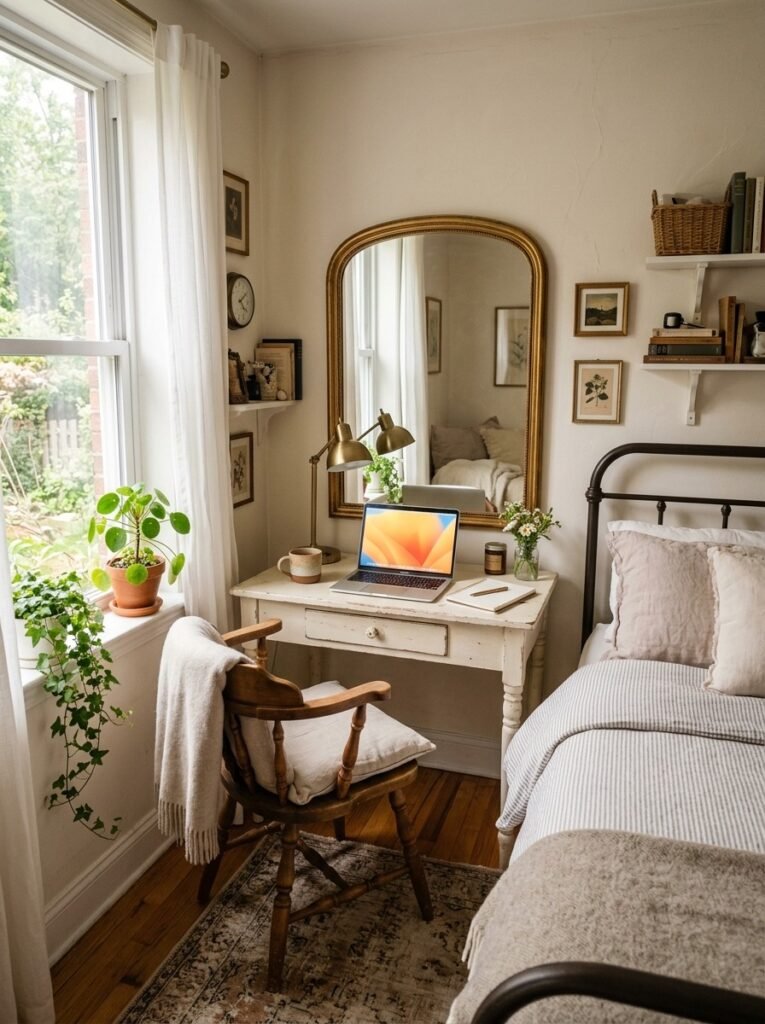
Repurposing a small vanity desk as a home office workspace offers a charming, dual-purpose furniture solution for bedrooms without additional space to spare. The vanity’s typically compact footprint and built-in mirror make it a natural fit for both getting ready and completing work tasks.
Choose a vanity with a smooth, flat surface suitable for a laptop, and consider adding a small tray or organizer to keep work supplies separate from beauty products when the desk needs to transition between its two functions throughout the day.
This clever repurposing works particularly well in smaller bedrooms already containing a vanity, avoiding the need for an entirely separate desk while still providing genuine workspace function when needed.
25. Balcony or Sunroom Office Nook
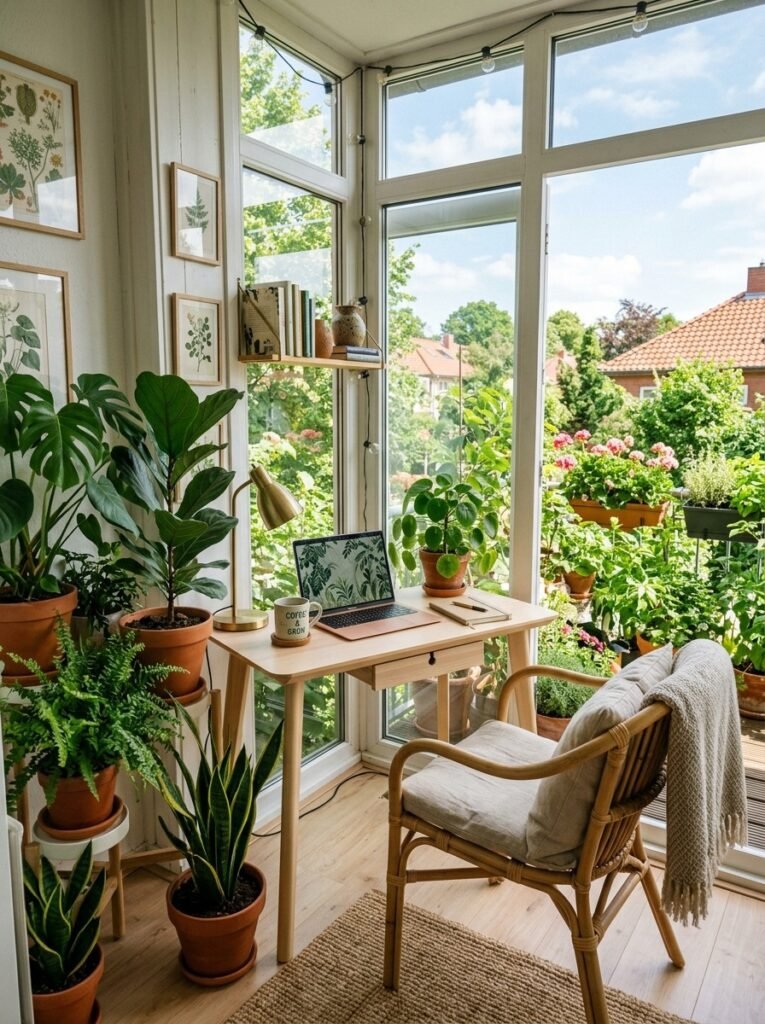
A balcony or sunroom offers an unexpected but genuinely appealing location for a small home office nook, taking advantage of abundant natural light and a connection to the outdoors that traditional interior rooms often lack. This setting can make even routine work tasks feel more pleasant and refreshing.
Choose weather-appropriate furniture if the space isn’t fully climate controlled, and add a few plants to enhance the room’s naturally bright, airy atmosphere. This location works particularly well for those who find themselves more productive with plenty of natural light and fresh air nearby.
This creative use of space proves that a home office doesn’t need to occupy a traditional interior room, offering a genuinely refreshing alternative for those with access to a sunroom or covered balcony area.
A small footprint doesn’t have to mean a compromised workspace. From closet conversions and under-stair nooks to fold-down desks and clever vanity repurposing, these 25 ideas prove that genuinely functional, comfortable home offices can fit into almost any corner of a home, no matter how limited the square footage.
The key to success in a small office is thinking vertically and choosing furniture that either folds away or pulls double duty elsewhere in the home. Prioritizing wall-mounted storage, slim desk profiles, and good task lighting will almost always matter more than the total floor space you actually have to work with.
Whether you carve out a nook under the stairs or transform an unused closet, the goal is a workspace that feels intentional rather than squeezed in as an afterthought. Save your favorite ideas from this list, measure the space you have available, and start building a cozy office that works as hard as you do.