
24 Wall Paneling Ideas for a Stylish Upgrade
Wall paneling has made a major comeback in home design, offering texture, dimension, and architectural interest that flat paint simply can’t achieve. From classic shiplap to dramatic fluted wood, these 24 wall paneling ideas will help you add character to any room in your home, whether you’re working on a full renovation or a single accent wall.
1. Shiplap Wall Paneling
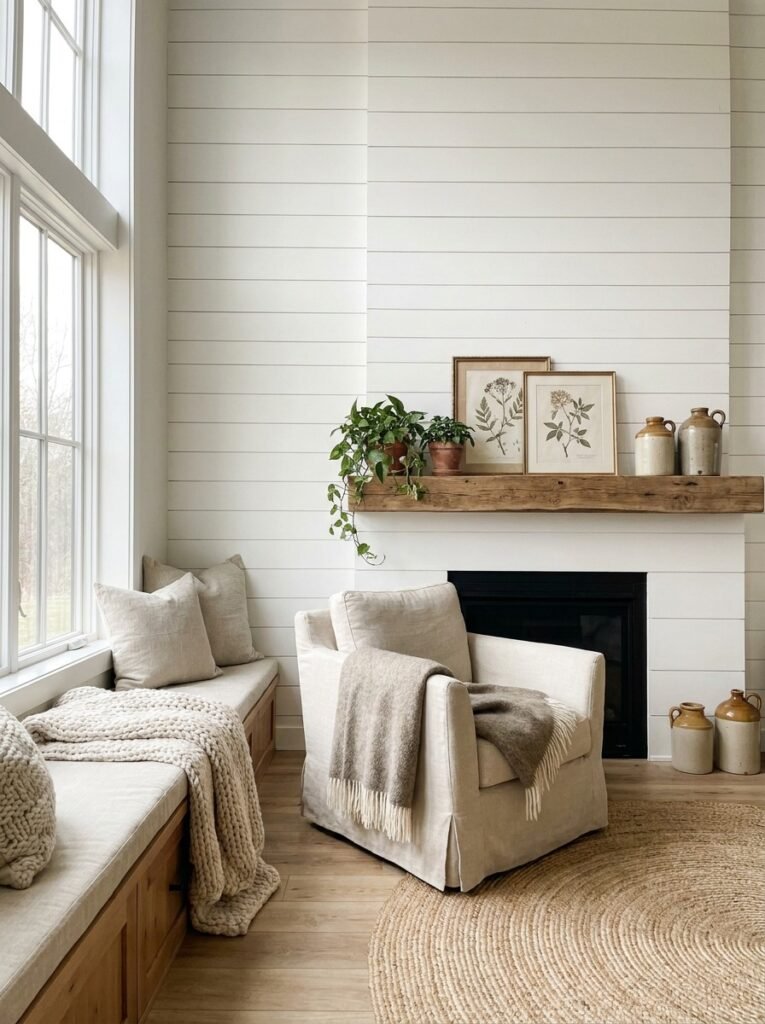
Shiplap remains one of the most recognizable paneling styles, featuring horizontal wood boards with a distinct overlapping groove between each plank. This texture adds subtle shadow lines across the wall, creating visual interest without overwhelming the room, especially popular in farmhouse and coastal-inspired interiors.
Paint shiplap in crisp white for a classic, timeless look, or choose a soft neutral tone to match your existing color palette. This paneling style works particularly well as an accent wall behind a bed, sofa, or fireplace, adding texture without requiring a full room commitment.
2. Board and Batten Paneling
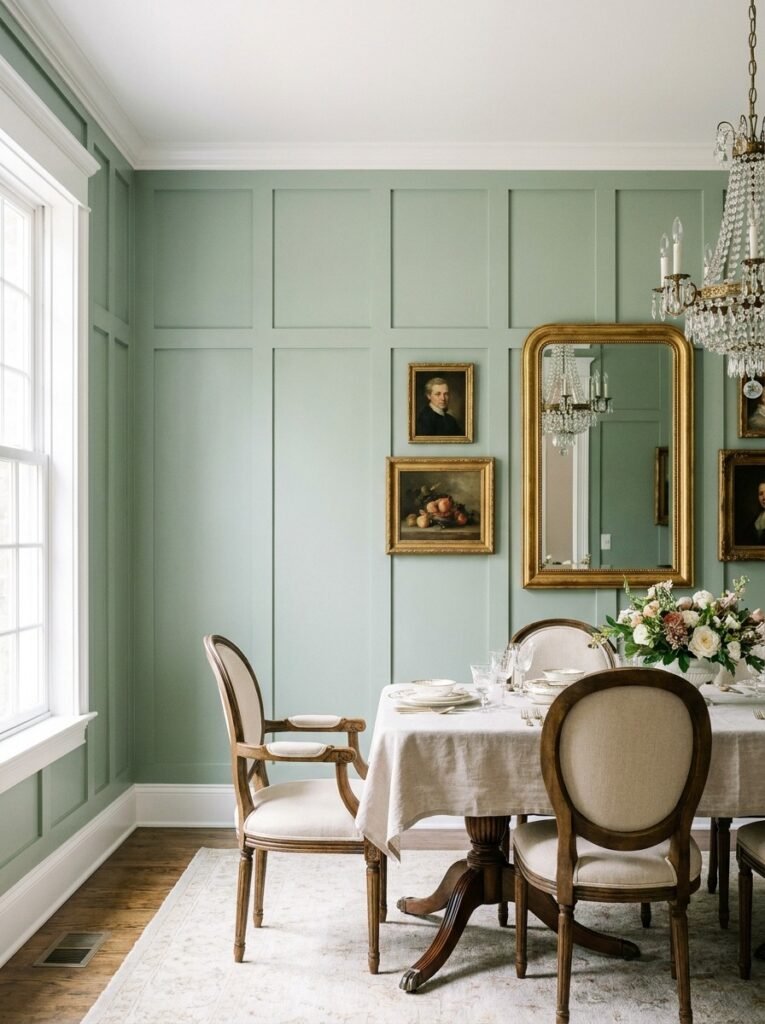
Board and batten paneling features vertical strips, or battens, layered over a flat board surface, creating a structured grid pattern that adds architectural detail to a plain wall. This classic style has origins in traditional barn construction but has since become a popular choice for elegant interior walls.
This paneling style works beautifully in dining rooms, hallways, and entryways, where its structured lines add sophistication without excessive ornamentation. Paint the paneling in a bold color for contrast against white trim, or keep everything monochromatic for a more subtle, textural effect throughout the room.
3. Beadboard Wainscoting
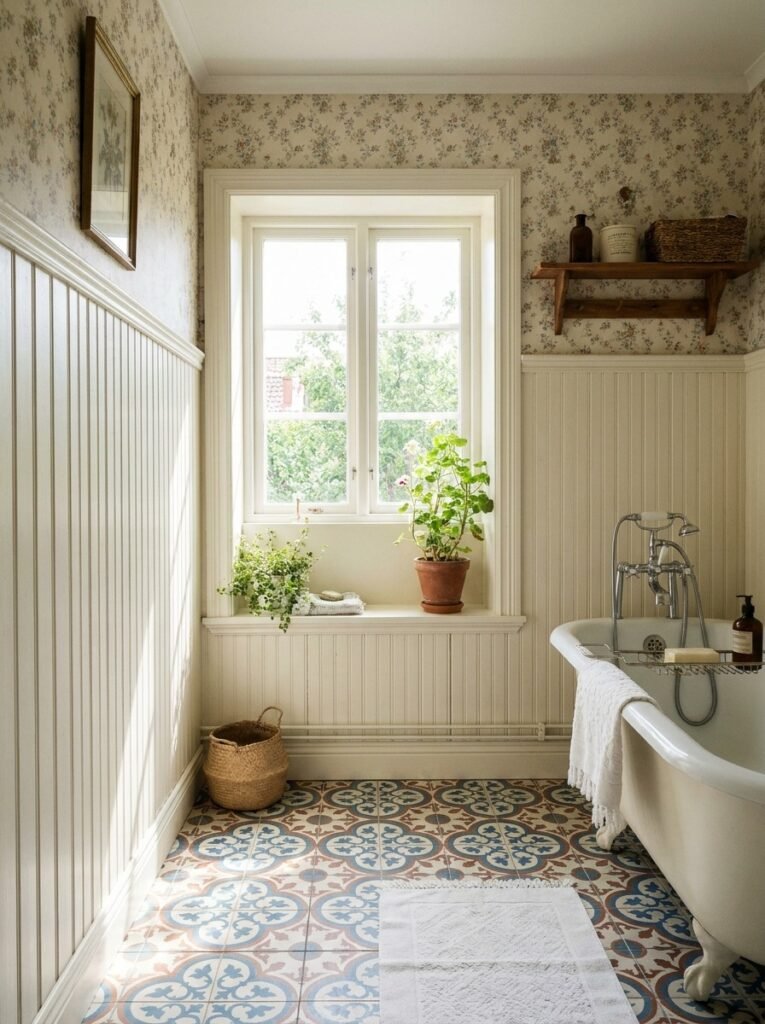
Beadboard wainscoting features narrow vertical planks with a distinctive ridged groove pattern, traditionally installed to about chair-rail height on the lower portion of a wall. This classic detail adds cottage charm and durability, making it a particularly popular choice for bathrooms, kitchens, and mudrooms.
The lower placement of beadboard also serves a practical purpose, protecting the wall from scuffs and water damage in high-traffic or moisture-prone areas. Pair with a contrasting paint color above the wainscoting line for definition, or keep the entire wall a single cohesive tone for a more subtle effect.
4. Geometric Wood Panel Wall
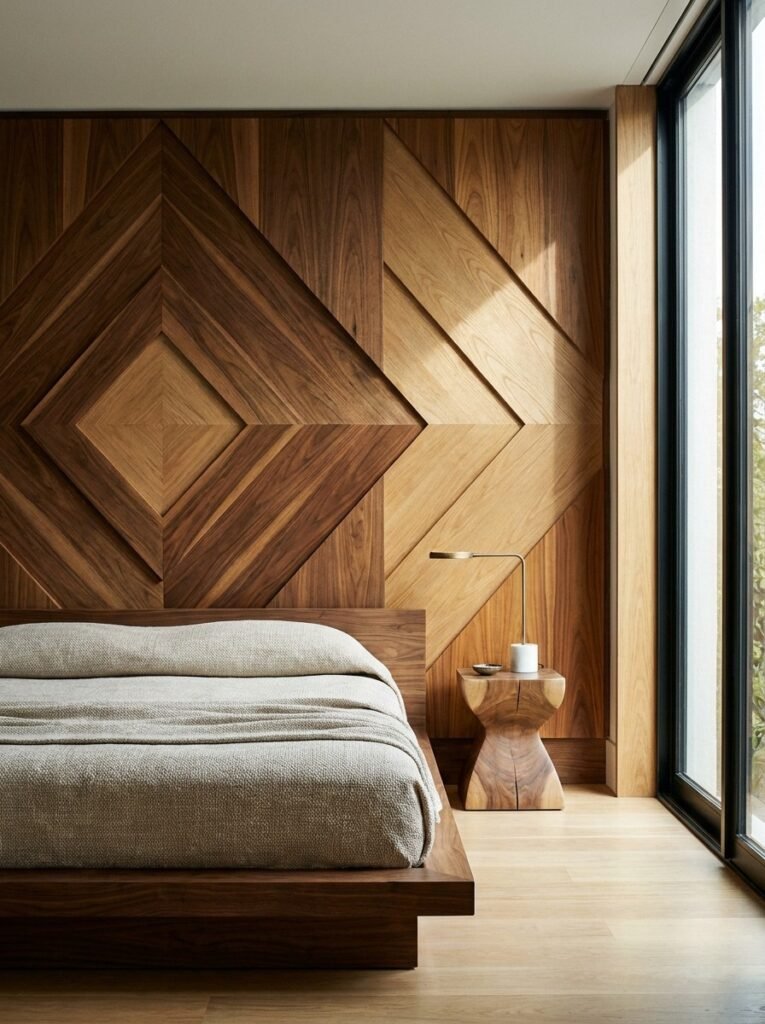
Geometric wood panels create a striking, sculptural focal point through angular patterns like diamonds, chevrons, or interlocking shapes. This bold paneling style adds significant dimension to a wall, catching shifting light throughout the day and creating shadows that flat wallpaper or paint simply cannot replicate.
This look works particularly well behind a bed or as a statement wall in a living room, where its dramatic texture can be fully appreciated. Choose a natural wood finish to highlight the grain, or paint the panels a single bold color for a more contemporary, monochromatic effect.
5. Vertical Slat Wood Wall
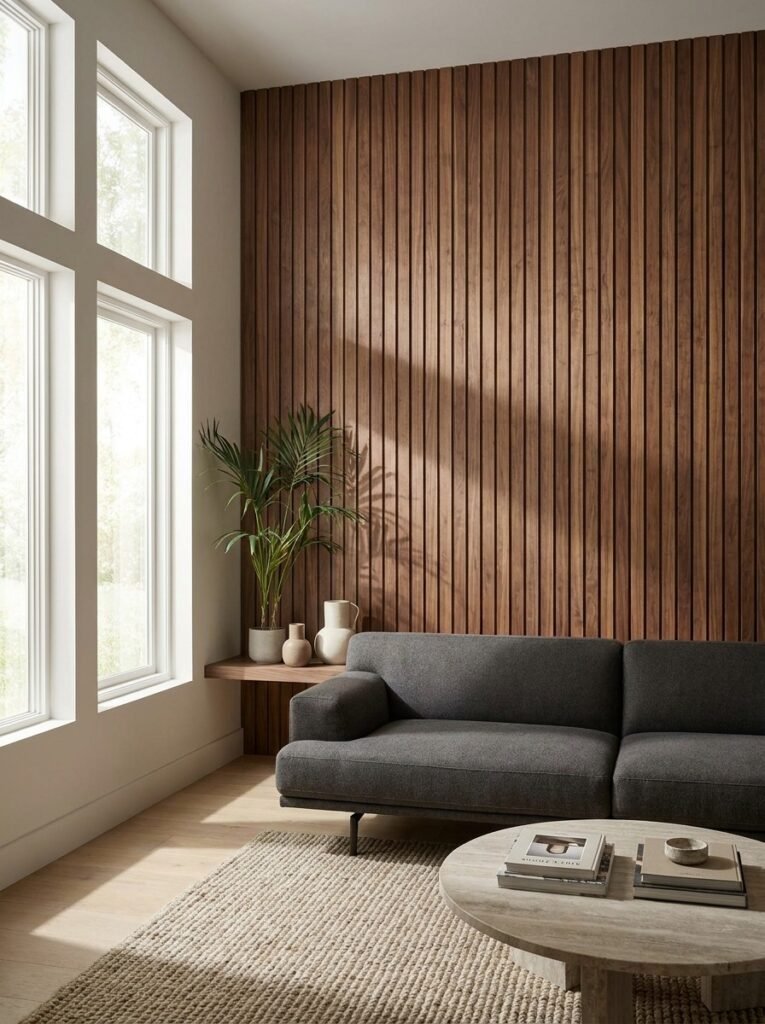
Vertical wood slat paneling has become one of the most popular contemporary wall treatments, adding warmth and texture through evenly spaced wooden strips. The consistent vertical lines create a sense of height in a room while also adding acoustic benefits, softening sound in spaces with hard flooring.
This paneling style pairs beautifully with minimalist and mid-century modern interiors, where its clean, repetitive pattern complements simple furniture lines. Choose a warm wood tone like walnut or oak for richness, or opt for a painted finish to match a specific color scheme throughout the room.
6. Raised Panel Wainscoting
Raised panel wainscoting features recessed, framed sections that create a three-dimensional, sculptural effect on the wall, commonly associated with traditional and formal interior styles. This detailed molding work adds a sense of craftsmanship and elegance, particularly suited to dining rooms, libraries, and formal living spaces.
Paint raised panel wainscoting in a crisp white or soft neutral for a timeless, classic look that suits nearly any traditional home style. The depth created by the raised sections adds subtle shadow play throughout the day, giving the wall genuine architectural character beyond flat paint alone.
7. Herringbone Wood Panel Wall
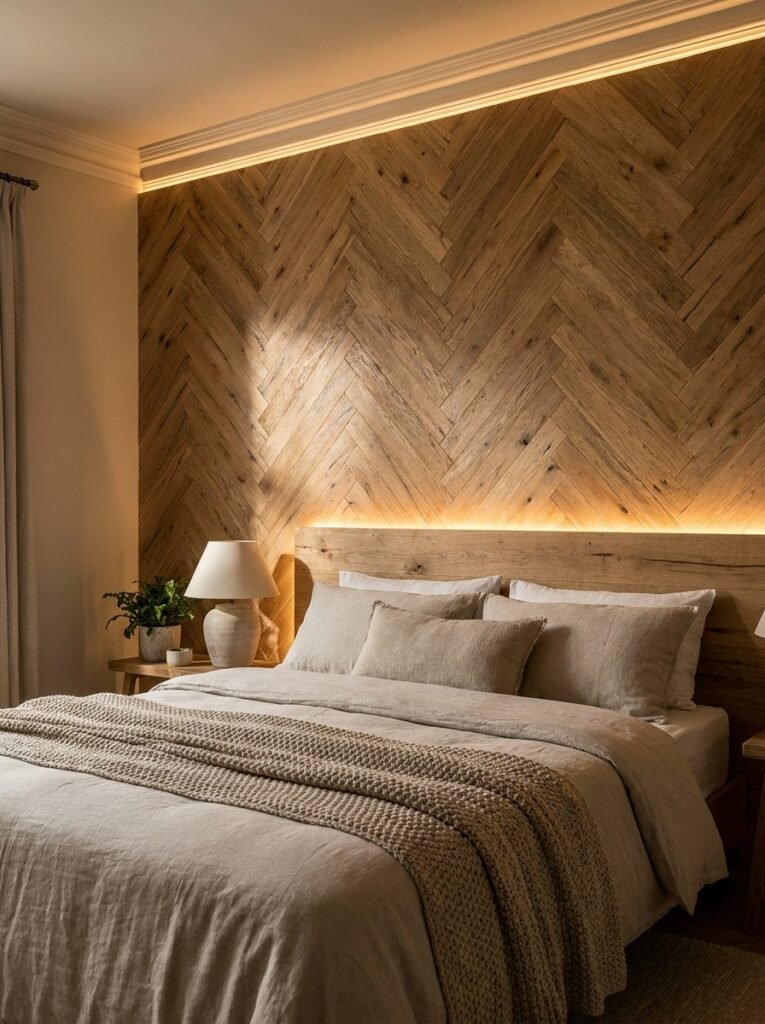
Herringbone wood paneling creates a dynamic zigzag pattern through angled wood pieces, adding significant visual movement and texture to a wall. This intricate pattern requires more precise installation than simpler paneling styles but delivers a genuinely impressive, high-end result that few other treatments can match.
This paneling style works particularly well as a statement wall behind a bed or in an entryway, where its eye-catching pattern makes an immediate impression. Choose a natural wood finish to emphasize the grain and pattern, keeping the surrounding decor simple to let the herringbone design remain the focal point.
8. Painted Two-Tone Paneling
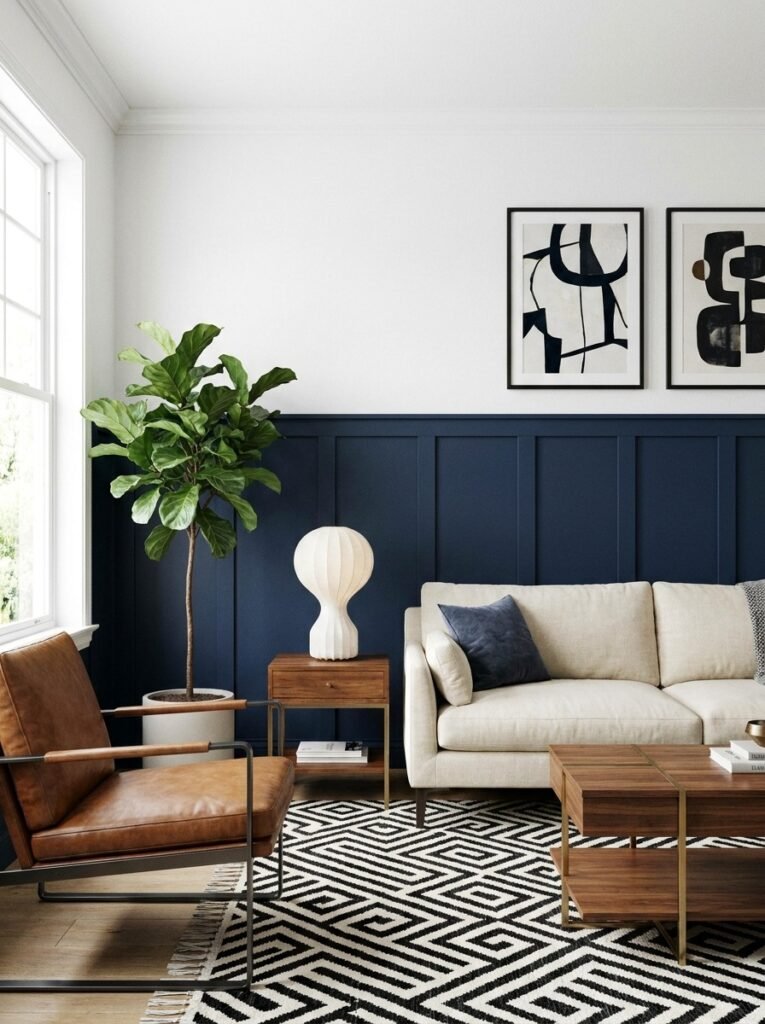
Two-tone paneling combines a painted lower panel section with a contrasting upper wall color, adding depth and visual interest without committing to a single bold color throughout the entire room. This approach works especially well with board and batten or wainscoting styles that naturally create a horizontal dividing line.
Choose a deep, saturated color like navy or forest green for the paneled lower section, paired with white or cream above for balance. This combination grounds the room visually while keeping the space from feeling too dark or enclosed, especially in rooms with adequate natural light.
9. Reclaimed Wood Accent Wall
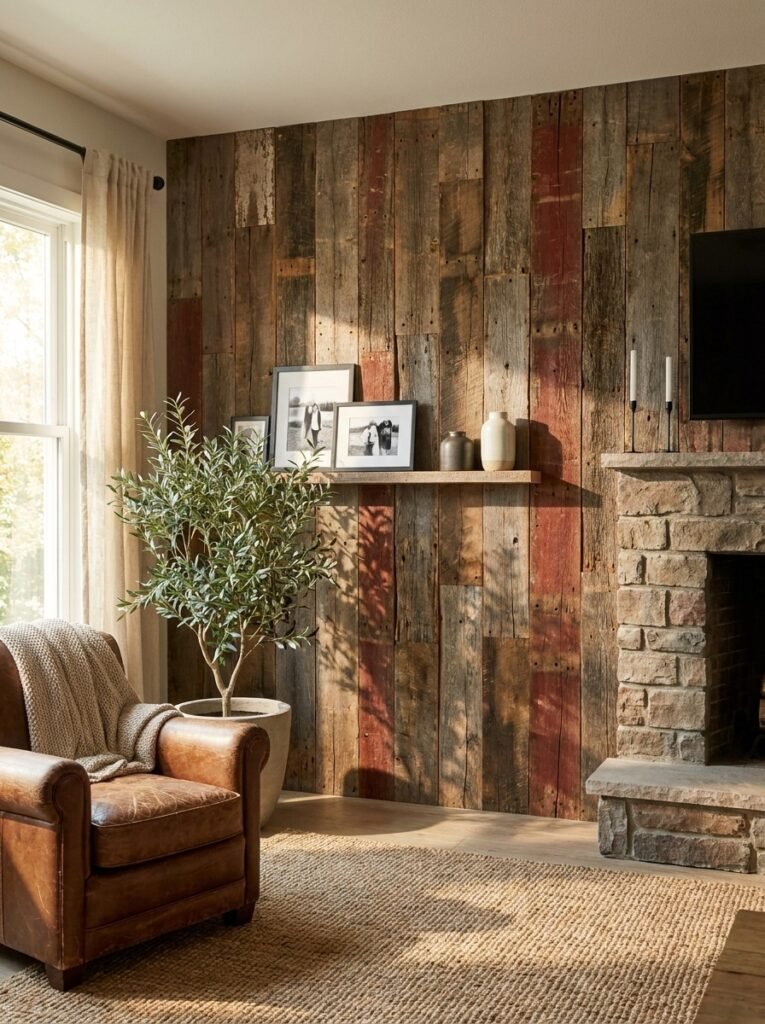
Reclaimed wood paneling brings genuine history and character to a wall through weathered, textured planks that show natural signs of age and wear. Unlike new lumber, reclaimed wood often features varying tones, nail holes, and grain patterns that create a truly one-of-a-kind, authentic rustic look.
This style works particularly well in farmhouse, industrial, or rustic-modern interiors, where the wood’s natural imperfections add to its overall charm rather than detracting from it. Source reclaimed wood from salvage yards or specialty suppliers for the most genuine material, ensuring proper treatment for interior installation.
10. Fluted Wood Panel Wall
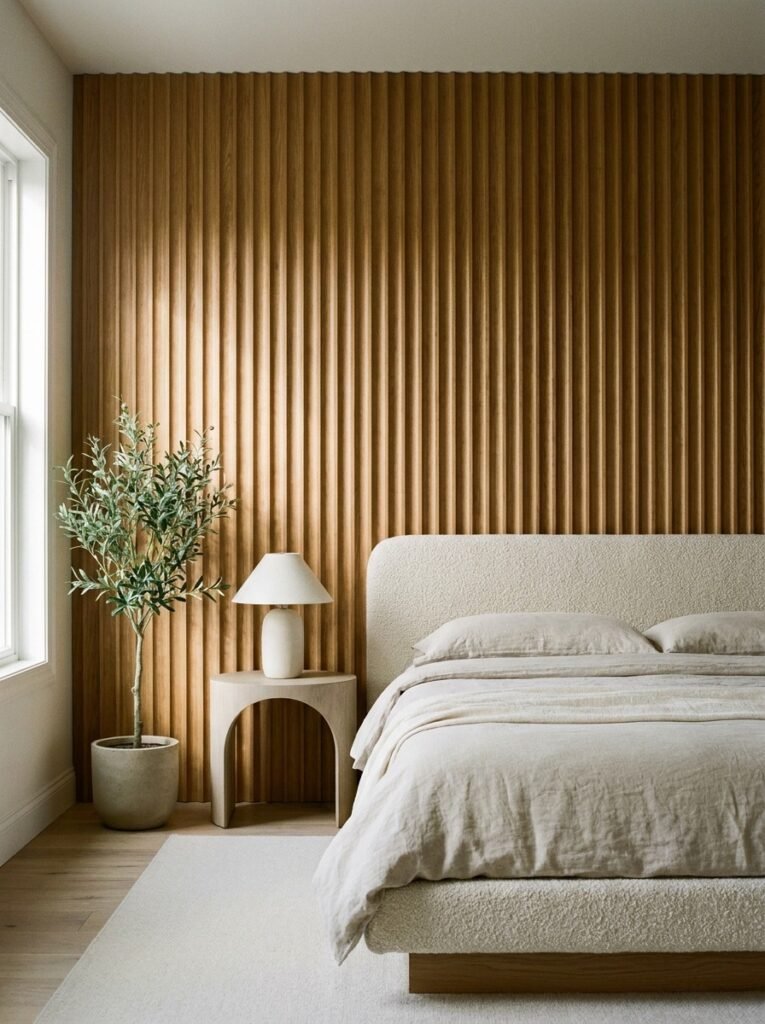
Fluted paneling features narrow, rounded vertical grooves carved into the wood surface, creating a soft, elegant ribbed texture that has become especially popular in contemporary interior design. This subtle detailing adds sophistication without the boldness of angular geometric patterns, offering a refined alternative to flat wood slats.
This paneling style works beautifully behind a bed, on a kitchen island, or as a full accent wall in a living room. Choose a warm wood tone to highlight the fluted texture’s natural shadow lines, or paint the panels a soft neutral for a more subtle, tone-on-tone effect.
11. Wainscoting in Bathroom
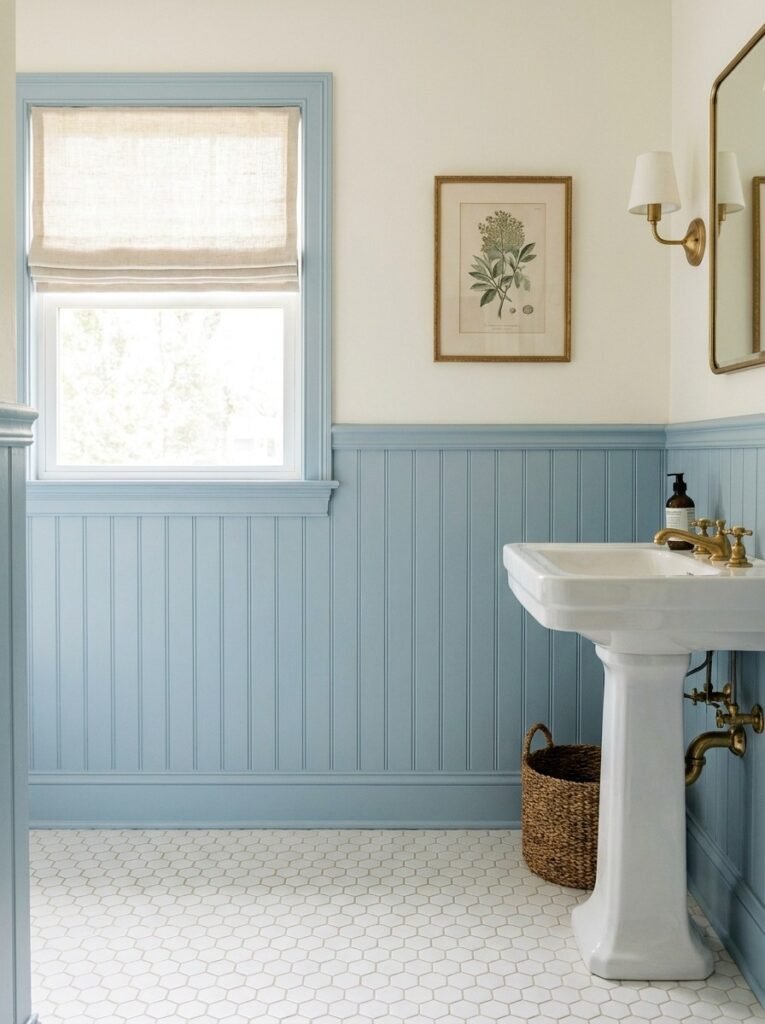
Wainscoting in the bathroom adds both style and practical water resistance, protecting the lower wall from splashes near sinks, tubs, and showers. This classic detail brings architectural interest to a room that might otherwise rely solely on tile for texture, offering a softer, more traditional alternative.
Choose a moisture-resistant paint finish for durability in this humid environment, and pair with a complementary tile choice below or beside the wainscoting for a cohesive look. Soft blues, sage greens, or crisp whites all work beautifully within this classic bathroom paneling application.
12. Faux Brick Panel Wall
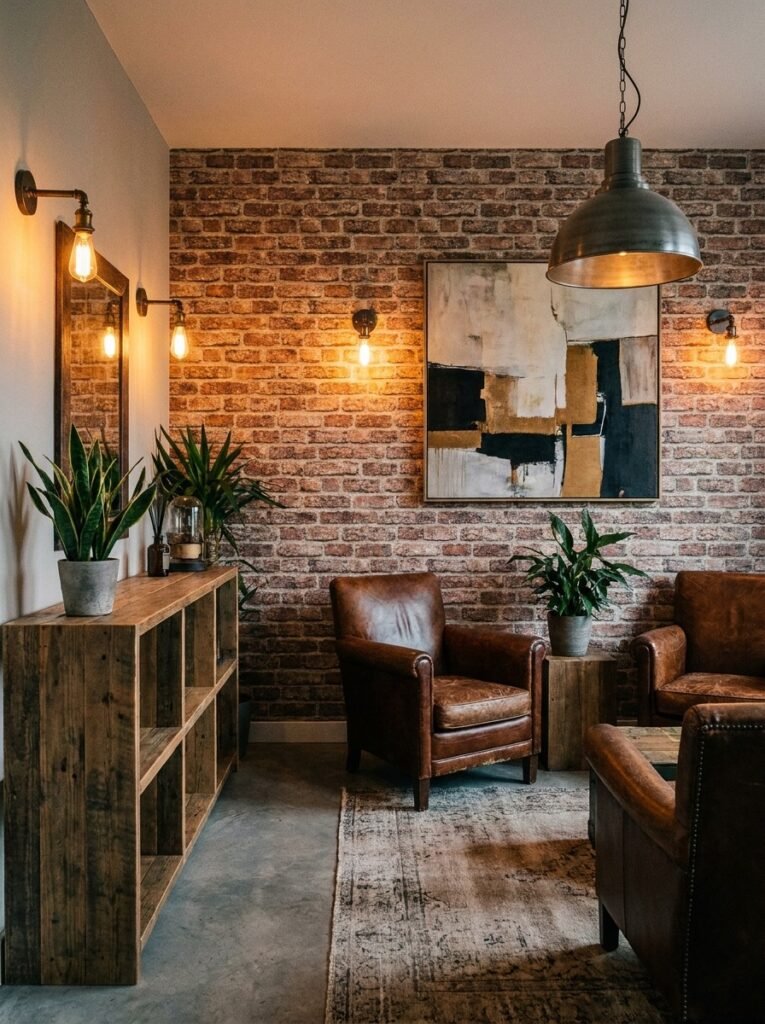
Faux brick paneling offers the industrial, exposed-brick look without the cost or structural work required for authentic masonry. Lightweight veneer panels install directly over existing drywall, providing the texture and character of real brick while remaining significantly more accessible for most homeowners and renters alike.
This style works particularly well in industrial, urban loft, or eclectic interiors seeking an exposed, raw aesthetic. Choose a panel finish that mimics natural brick variation in tone and texture for the most authentic appearance, avoiding overly uniform patterns that can look artificial upon closer inspection.
13. 3D Textured Wall Panels
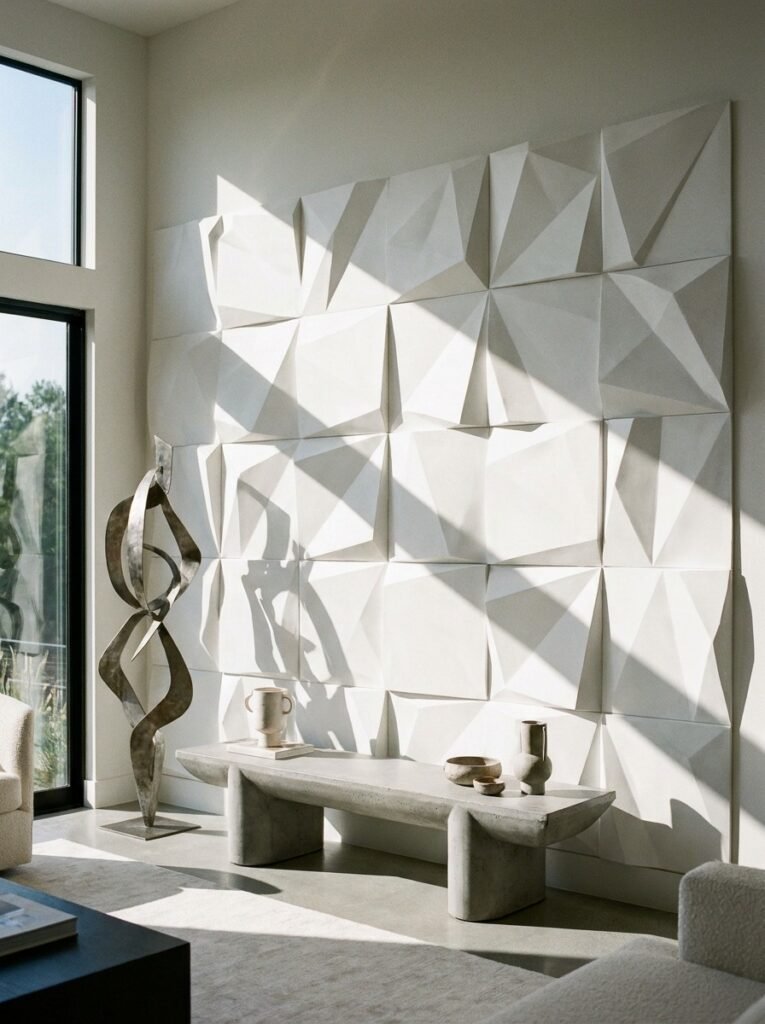
Three-dimensional textured wall panels create dramatic shadow play through raised geometric or organic shapes, adding sculptural interest that flat wall treatments simply cannot achieve. These panels catch and reflect light differently throughout the day, making the wall feel genuinely alive and dynamic rather than static.
This paneling style suits modern and contemporary interiors especially well, often installed as a single statement wall rather than throughout an entire room. Choose a white or light-colored panel to maximize the shadow contrast, or paint them a bold color for an even more dramatic, attention-grabbing effect.
14. Ceiling to Floor Paneling
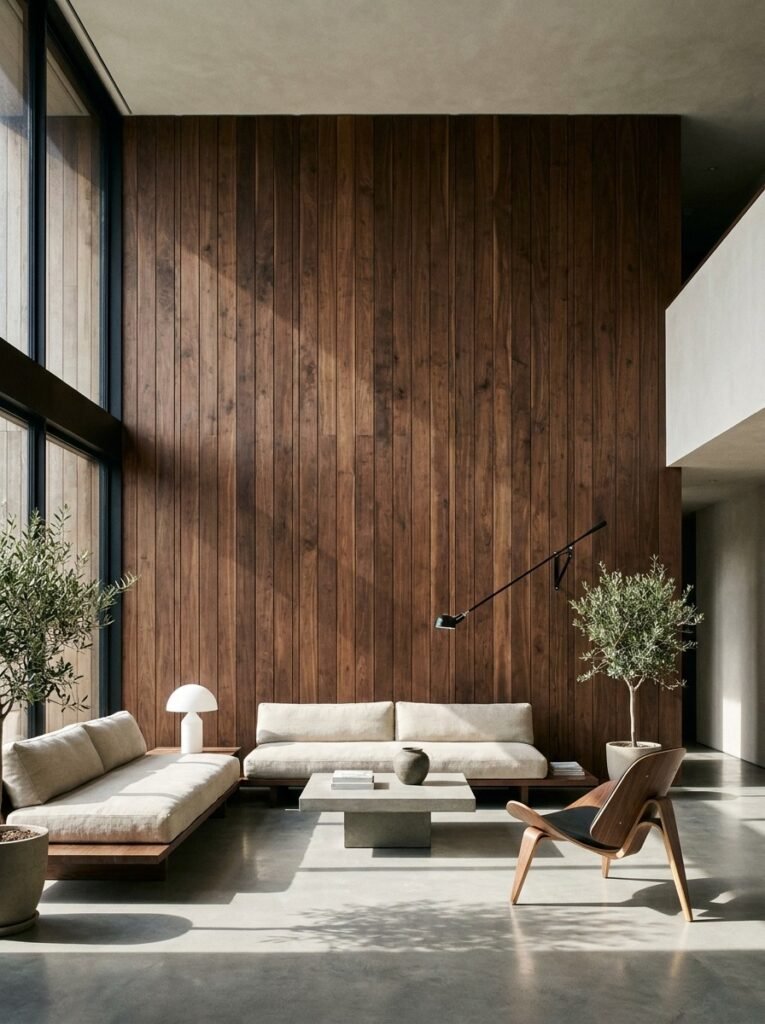
Full ceiling-to-floor paneling creates a dramatic, cohesive architectural statement, extending texture and dimension across the entire vertical span of the wall rather than stopping at a traditional chair-rail height. This approach makes a bold design commitment, often becoming the defining feature of the entire room.
This treatment works particularly well in rooms with higher ceilings, where the extended paneling emphasizes the room’s height and creates a sense of grandeur. Choose a consistent material and finish throughout to maintain a clean, cohesive look across the full vertical expanse of the wall.
15. Chair Rail with Paneling
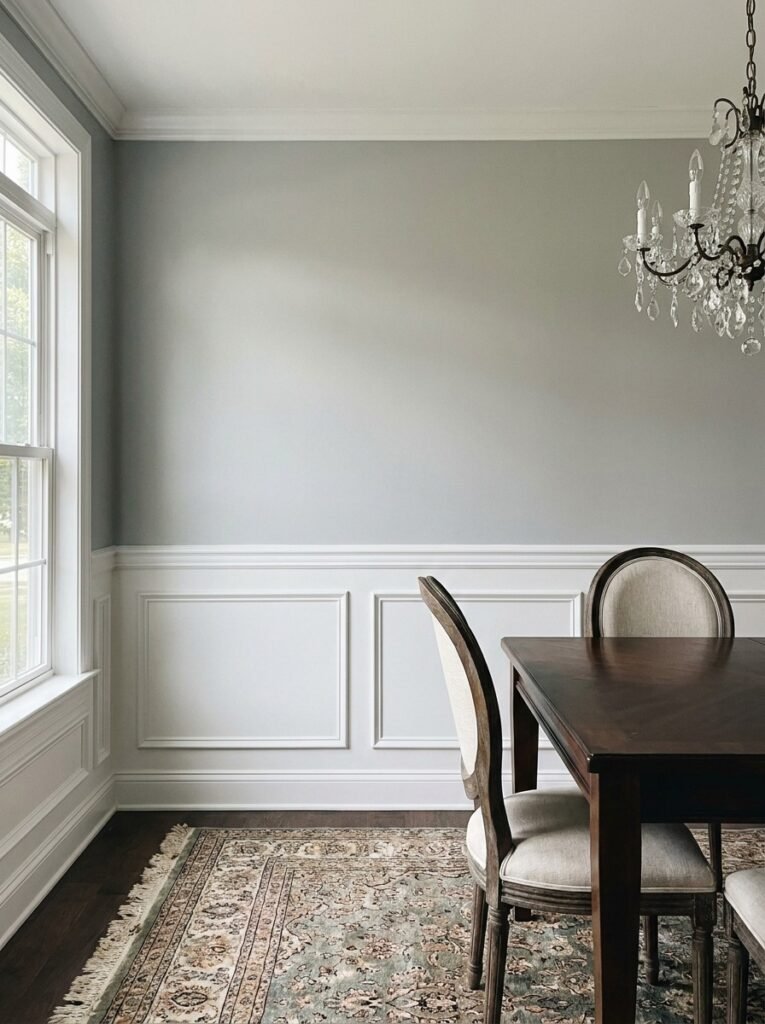
Adding paneling below a chair rail creates a classic, layered wall treatment that combines practicality with architectural detail. This traditional approach protects the lower wall from chair-back scuffs while also adding visual interest through simple recessed panel molding beneath the rail.
Paint the lower paneled section a different color or finish than the upper wall for definition and contrast. This detail works beautifully in dining rooms and formal living spaces, adding a refined, tailored look that elevates the room without requiring a complete wall renovation.
16. Dark Painted Paneled Wall
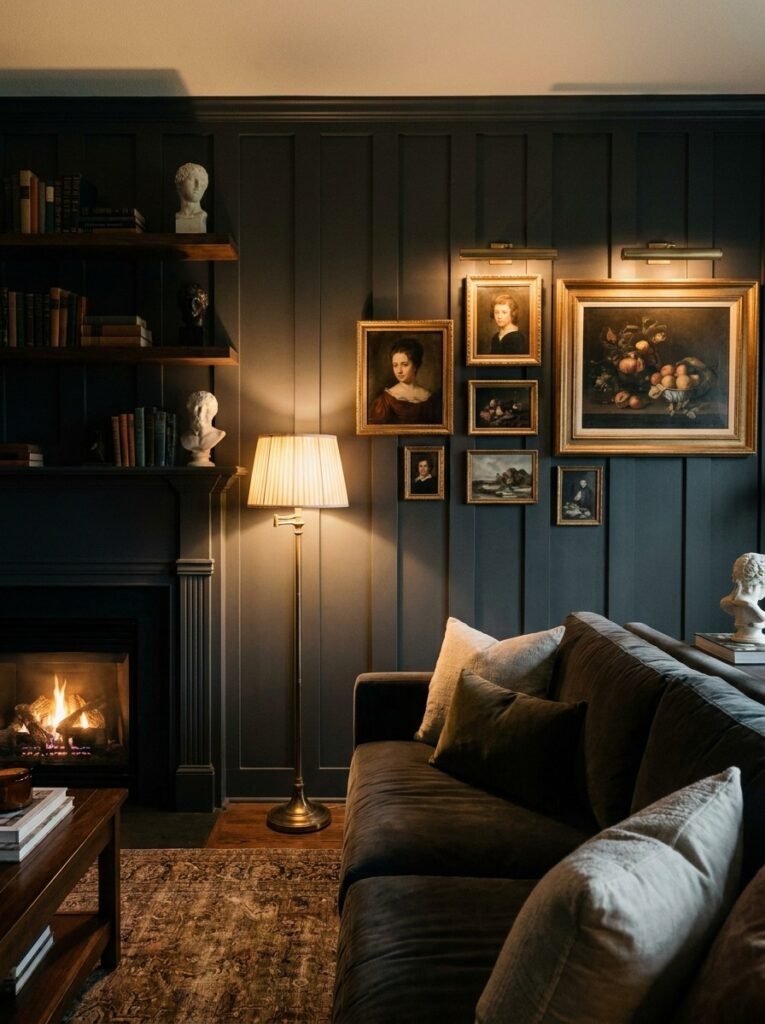
Painting an entire paneled wall a single dark color creates a moody, sophisticated atmosphere that showcases the paneling’s texture through subtle shadow variation rather than color contrast. This monochromatic approach allows the architectural detail to remain the focus without competing with a separate accent color.
Deep charcoal, navy, or forest green tones work particularly well for this dramatic effect, especially in rooms with adequate natural or artificial lighting to keep the space from feeling too enclosed. This treatment pairs beautifully with warm brass or gold accents throughout the rest of the room.
17. Coffered Ceiling Paneling
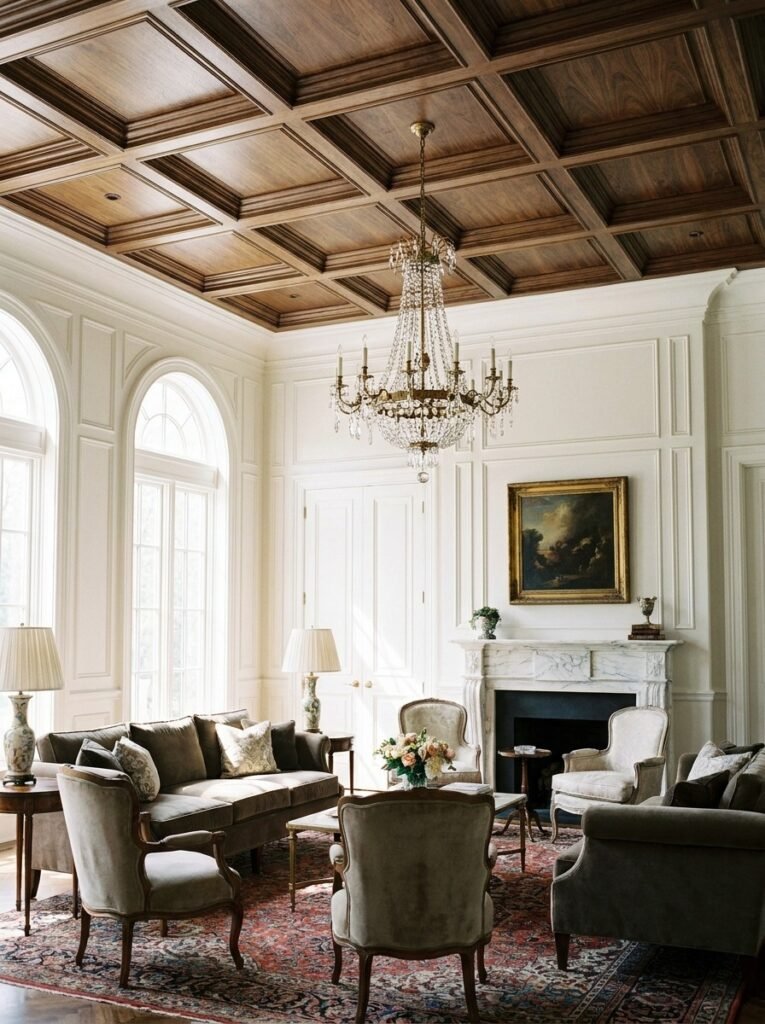
Coffered ceiling paneling extends the concept of wall paneling upward, creating a recessed grid pattern across the ceiling itself. This architectural detail adds significant depth and sophistication, commonly found in formal dining rooms, libraries, and primary bedrooms seeking a truly elevated design statement.
This treatment requires more substantial construction than standard wall paneling but delivers a dramatically impressive result. Paint the coffered grid in white for a classic, timeless look, or stain the wood beams for a warmer, more traditional finish throughout the room’s overhead design.
18. MDF Panel Accent Wall
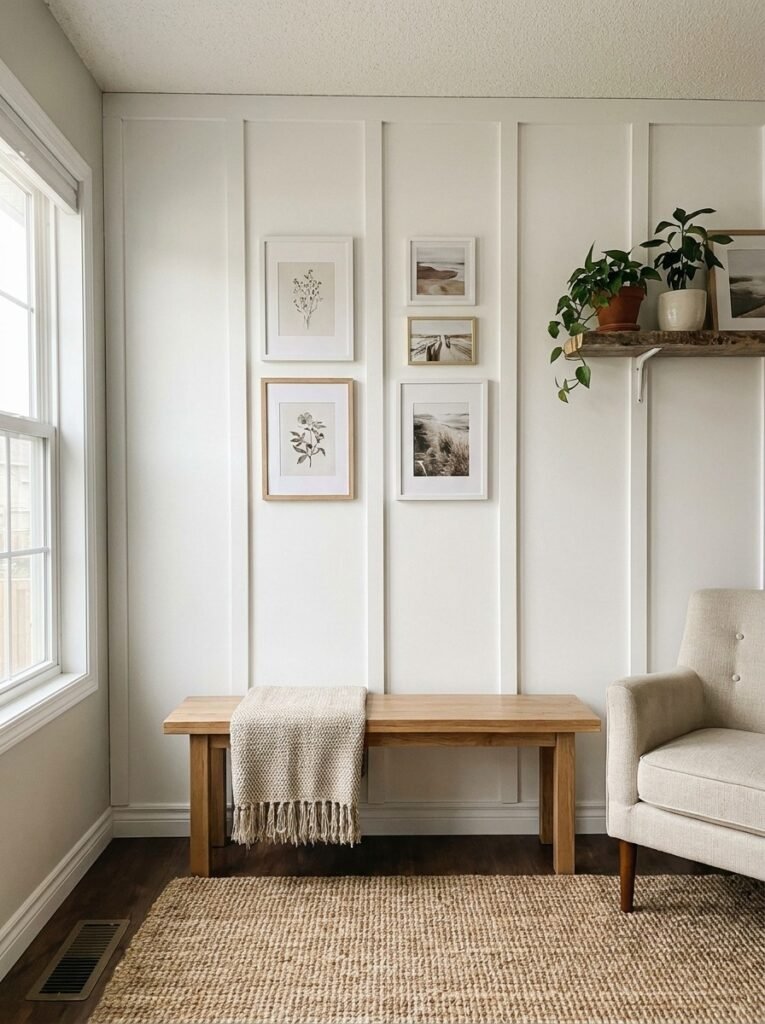
MDF, or medium-density fiberboard, offers an affordable and accessible material for DIY paneling projects, providing a smooth, paintable surface that mimics the look of solid wood at a fraction of the cost. This budget-friendly option has made wall paneling projects far more accessible to everyday homeowners.
Because MDF paints smoothly and evenly, it works particularly well for board and batten, raised panel, or geometric paneling styles where a crisp, finished appearance matters most. Seal and paint thoroughly for durability, especially in higher-traffic rooms where the paneling will see regular contact.
19. Grid Pattern Wall Molding
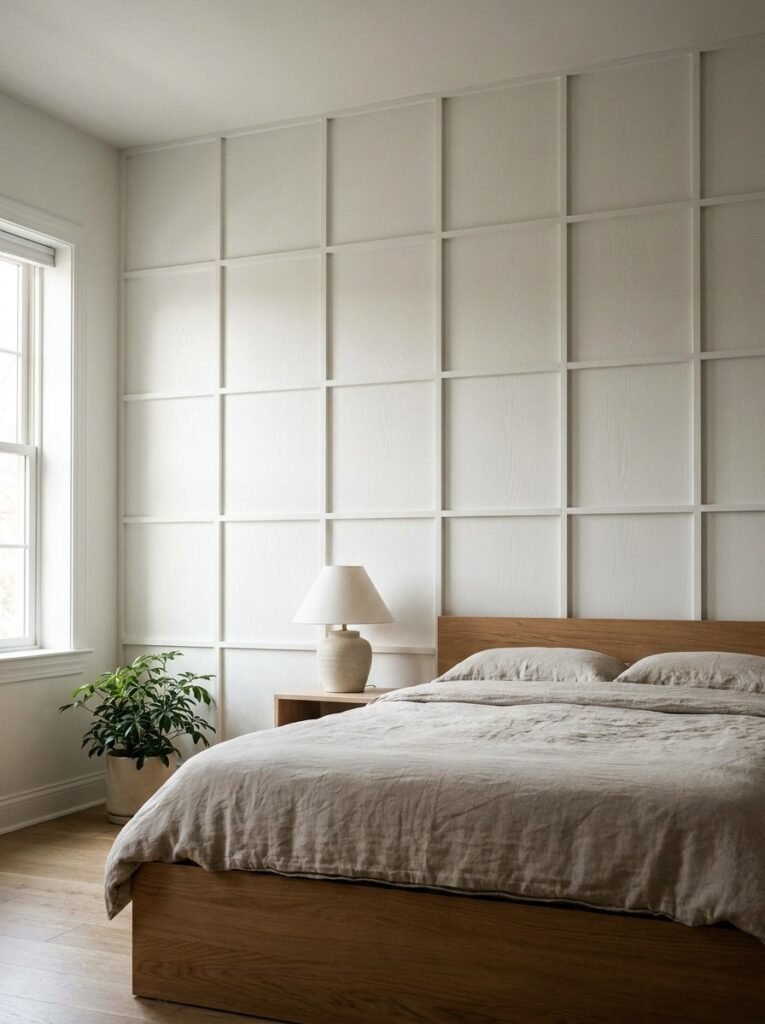
A grid pattern created with simple wood molding strips offers an understated way to add architectural interest to a wall without the depth or expense of full raised panel wainscoting. This budget-friendly technique uses thin strips arranged in a rectangular grid, then painted to match or contrast the wall color.
This approach works particularly well in bedrooms and living rooms seeking subtle texture rather than a dramatic focal point. Paint the entire wall, including the molding, a single color for a tone-on-tone effect, or add contrast by painting the molding a different shade than the background.
20. Half Wall Paneling Bedroom
Half-wall paneling behind the bed adds texture and definition to the headboard area without extending the full height of the wall. This approach creates a natural framing effect around the bed, drawing attention to this focal point while keeping the treatment contained to a manageable section.
Vertical slat or fluted paneling works particularly well for this application, adding subtle vertical lines that complement the bed’s height. Paint or stain the paneled section in a color that contrasts gently with the upper wall, creating definition without an overly dramatic visual break.
21. Bathroom Slat Wall Shower
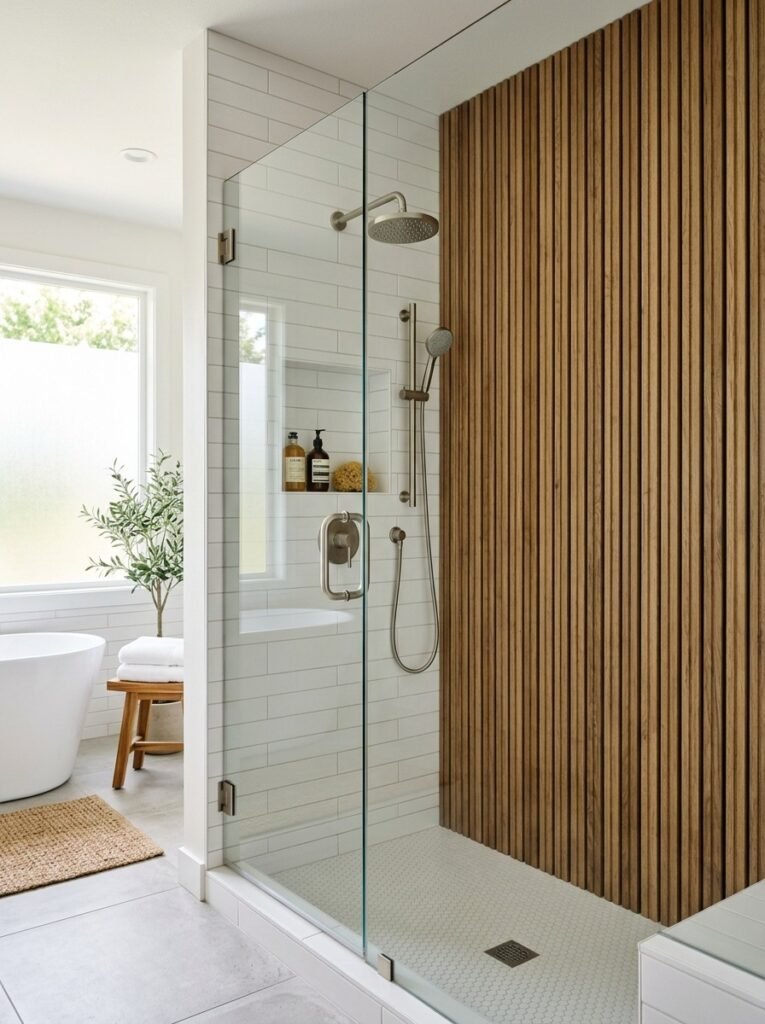
Wood slat paneling within a bathroom, particularly near a shower or tub area, adds warmth and a spa-like quality to a space typically dominated by cool tile and hard surfaces. Properly sealed and treated wood can withstand bathroom humidity while providing a natural textural contrast to surrounding tilework.
This treatment works beautifully as a feature wall behind a freestanding tub or as an accent within a larger shower enclosure. Choose a water-resistant wood treatment and proper sealing to ensure longevity in this consistently humid environment, pairing the paneling with matte black or brass fixtures for contrast.
22. Nursery Paneled Accent Wall
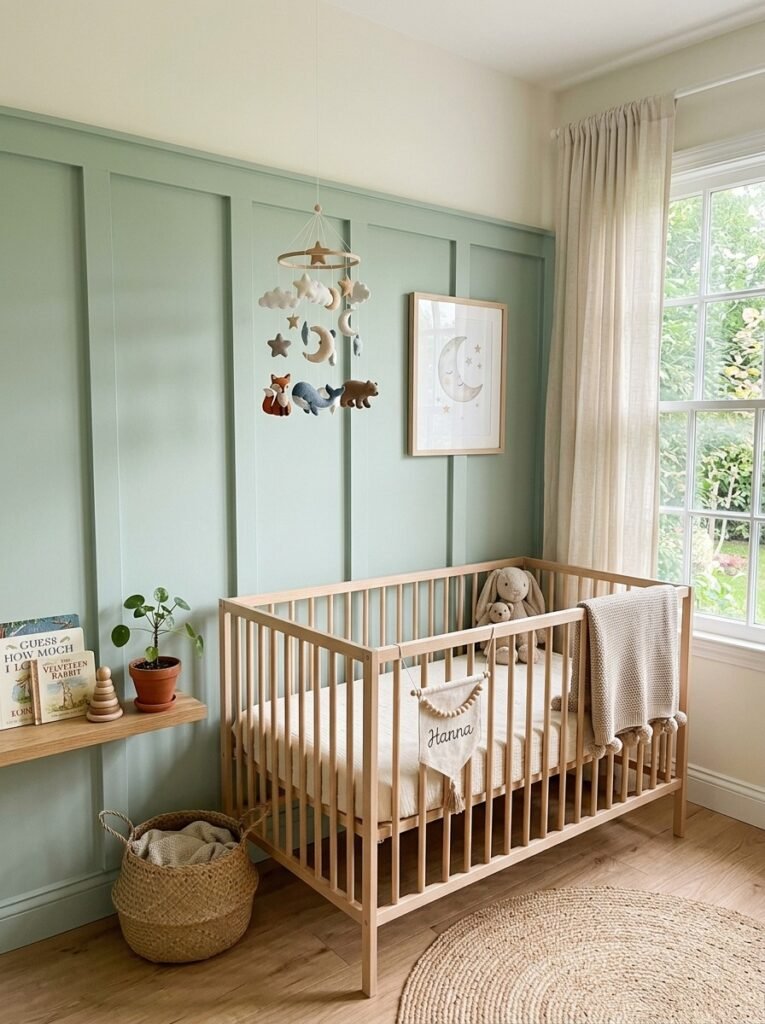
A paneled accent wall in the nursery adds gentle texture and sophistication to a room that will grow with your child over the years. Board and batten or simple grid molding painted in a soft pastel color creates a timeless backdrop that won’t feel outdated as your child transitions from infant to toddler.
Choose calming colors like sage green, soft blue, or warm cream for the paneled wall, ensuring the room feels soothing rather than overstimulating. This paneling detail adds a level of design sophistication that elevates the nursery beyond typical wallpaper or decal-based decor choices.
23. Staircase Paneled Wall
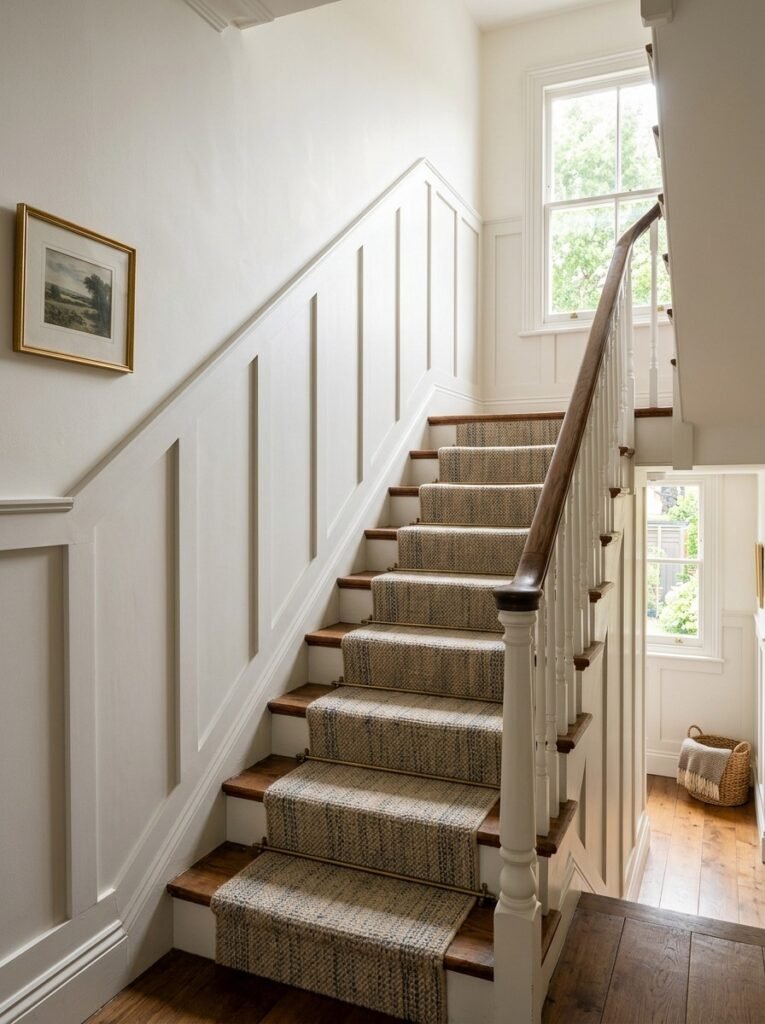
Paneling along a staircase wall adds architectural detail to a space that often goes completely undecorated, following the natural ascending line of the stairs for a genuinely custom, tailored look. This treatment requires careful measurement to account for the staircase’s changing angles but delivers an impressively polished result.
Paint the staircase paneling white for a timeless, classic look that brightens the often narrower stairwell space. This detail pairs beautifully with a stair runner rug or gallery wall, creating a cohesive, elevated design throughout one of the home’s most frequently used transitional areas.
24. Entryway Paneled Feature Wall
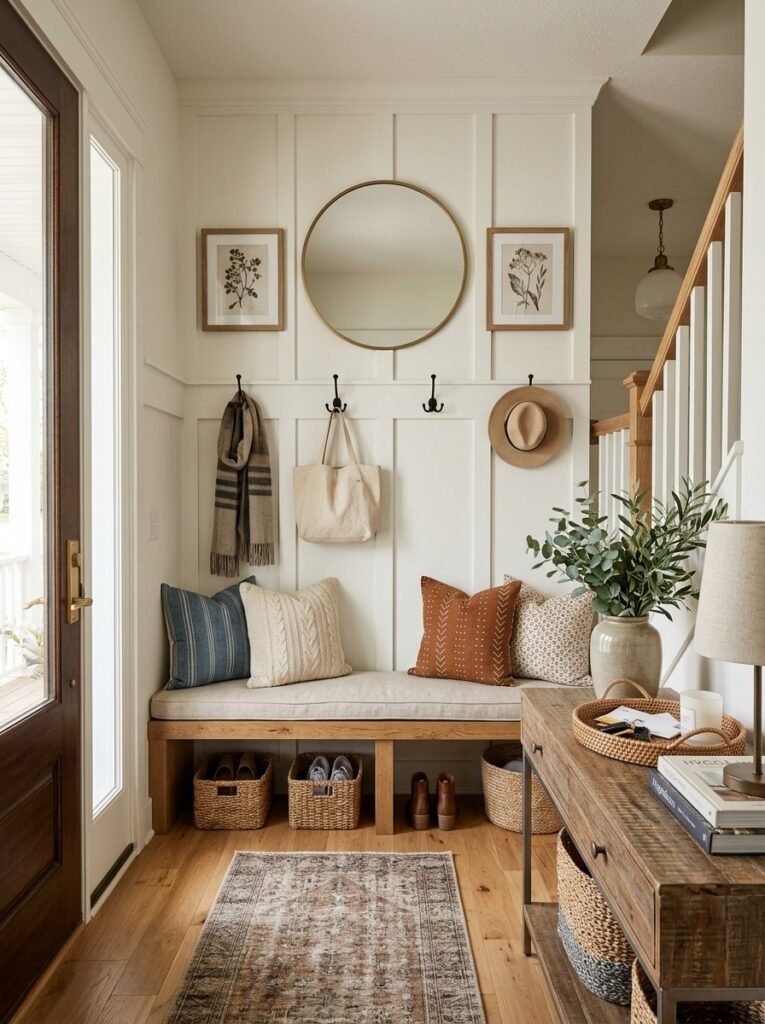
A paneled feature wall in the entryway creates an immediate, memorable first impression, setting the tone for the rest of the home before guests even step further inside. This architectural detail elevates a purely functional space, turning it into a genuine design statement from the moment the front door opens.
Pair the paneled wall with a built-in bench or console table for added function alongside the visual upgrade. This combination of style and practicality makes entryway paneling one of the most impactful design investments available for creating a truly welcoming home entrance.
Wall paneling offers one of the most versatile ways to add texture, architecture, and personality to a home, whether you’re drawn to the classic charm of shiplap or the dramatic sculptural quality of 3D geometric panels. These 24 ideas prove that paneling isn’t just a passing trend — it’s a design tool that suits nearly every style, room, and budget.
The key is choosing a paneling style that matches both your home’s existing architecture and how you actually want a space to feel. A moody dark-painted panel wall might be perfect for a cozy living room, while soft beadboard or a pastel nursery accent calls for a gentler, more understated touch.
Whether you tackle a full ceiling-to-floor treatment or start small with a single accent wall, wall paneling is one of those upgrades that consistently pays off in character and resale value alike. Save your favorite styles from this list, pick the room that needs it most, and start planning your own stylish paneling upgrade today.