
23 Ways to Make Your Own Natural Weed Killer
Store-bought weed killers often contain harsh chemicals that many gardeners would rather avoid around children, pets, and food gardens. The good news is that many effective weed control solutions can be made from simple household ingredients. These 23 ways to make your own natural weed killer will help you tackle unwanted growth using safer, more affordable alternatives.
1. Vinegar and Dish Soap Spray
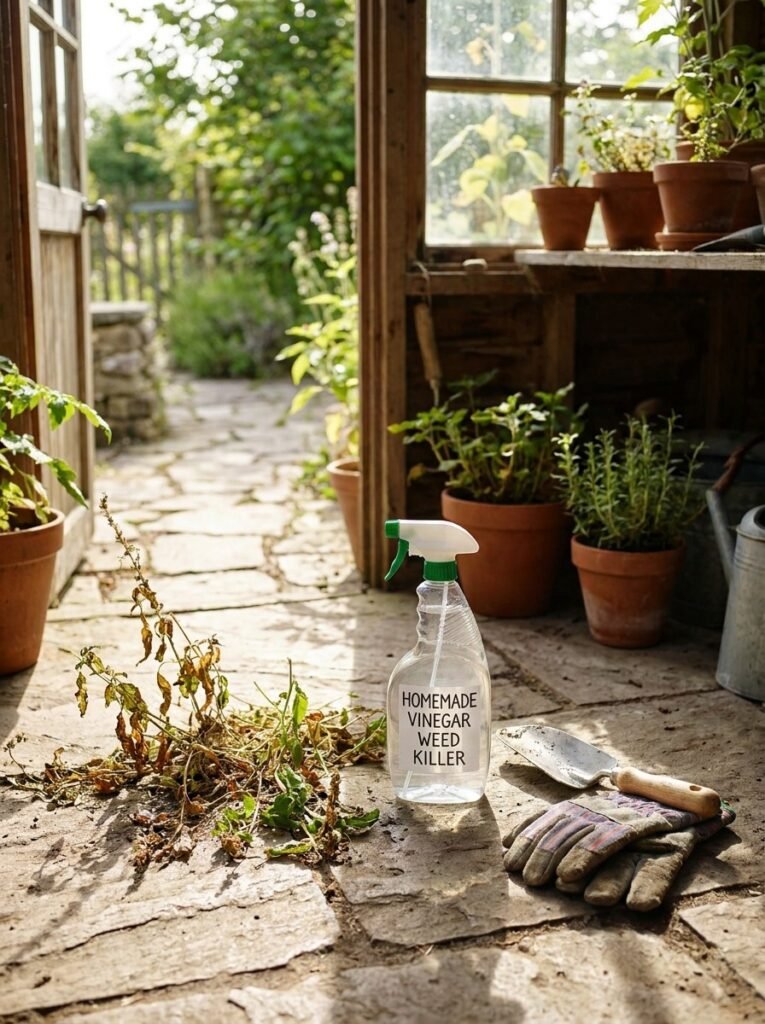
A simple mixture of white vinegar and a few drops of dish soap creates one of the most popular homemade weed killers, using the vinegar’s acetic acid to dry out plant leaves while the soap helps the solution stick to foliage. This combination works best on young, actively growing weeds.
Combine a gallon of white vinegar with about a tablespoon of dish soap in a spray bottle, applying directly to weed leaves on a sunny day for the most effective results. Reapplication may be needed for stubborn or well-established root systems over several treatments.
This affordable, accessible method uses ingredients most households already have on hand, offering a genuinely effective starting point for natural weed control throughout the garden.
2. Boiling Water Method
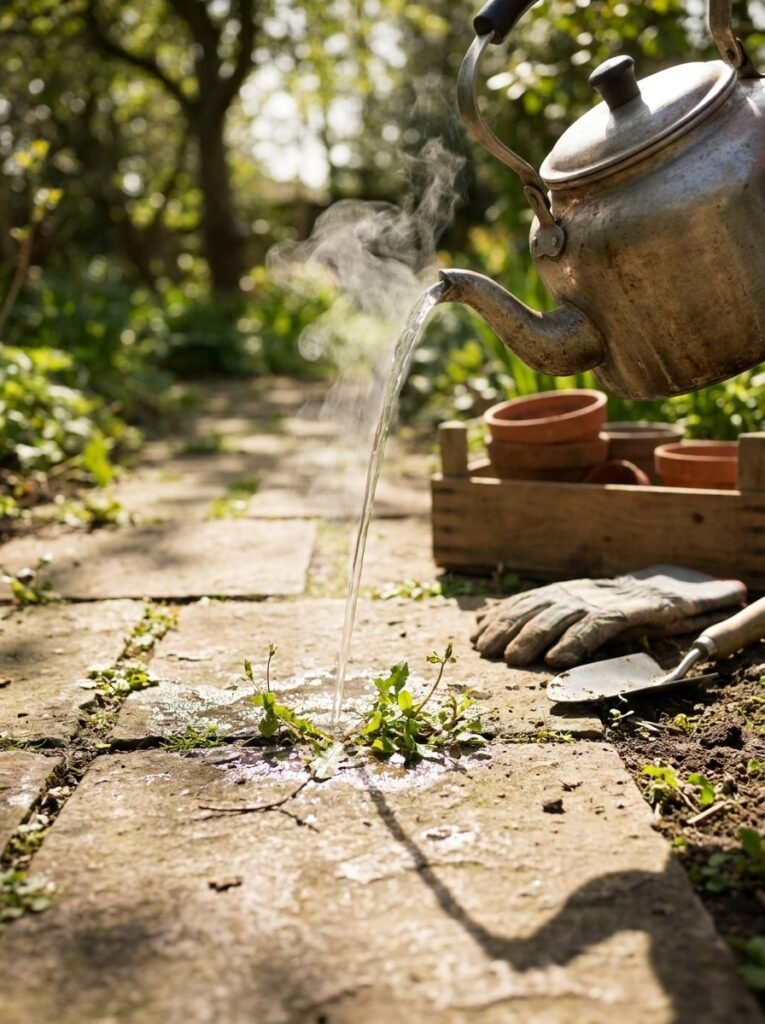
Boiling water offers one of the simplest, chemical-free ways to kill weeds, using heat to destroy plant cells on contact. This method works particularly well for weeds growing in cracks between pavers, driveways, or sidewalks where the water can be poured directly and precisely.
Carefully pour boiling water directly onto the weed’s base and surrounding root area, taking care to avoid splashing on skin or nearby desirable plants. This method typically kills the visible plant within a day or two, though deeper roots may require repeated applications.
This zero-cost method requires nothing more than water and a stove, making it one of the most accessible and immediately available natural weed control options for gardeners.
3. Salt and Vinegar Solution
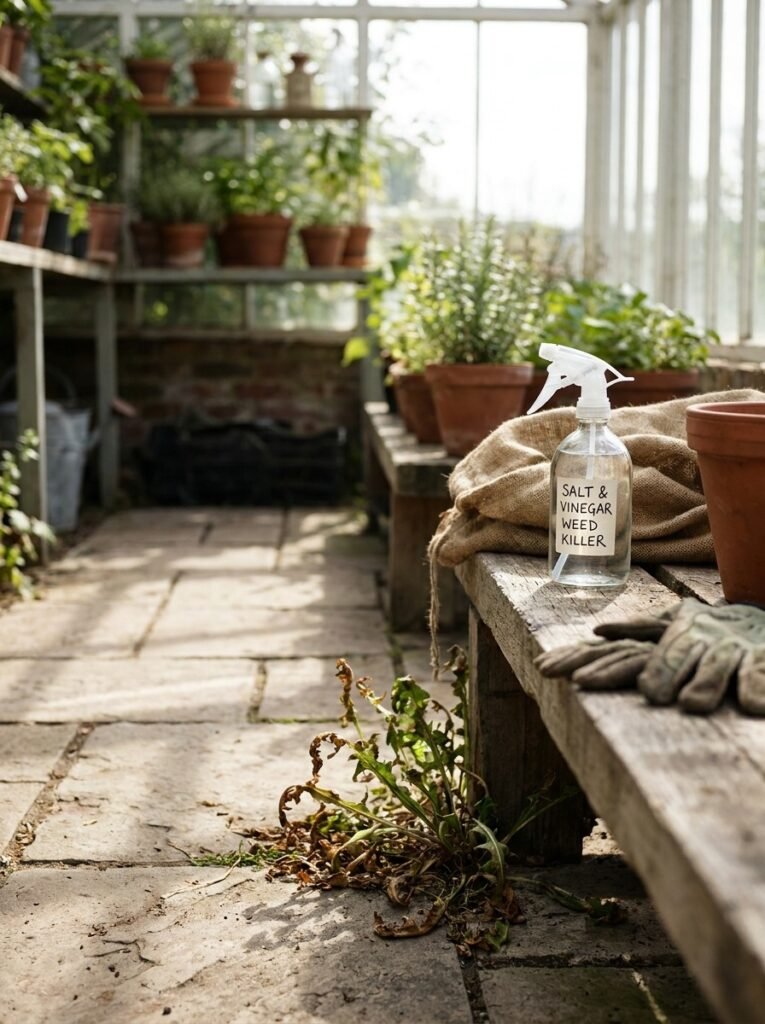
Combining salt with vinegar creates a more potent weed-killing solution, since salt draws moisture out of plant cells while the vinegar’s acidity further damages foliage. This stronger combination works well for particularly stubborn or well-established weeds resistant to vinegar alone.
Dissolve about a cup of salt into a gallon of white vinegar, adding a small amount of dish soap to help the solution adhere to leaves. Apply carefully and only to areas where you don’t intend to grow anything else, since salt can affect soil fertility for an extended period.
This stronger solution should be used selectively, reserved for driveways, walkways, or areas where long-term plant growth isn’t a concern for the surrounding soil.
4. Vodka and Vinegar Mix
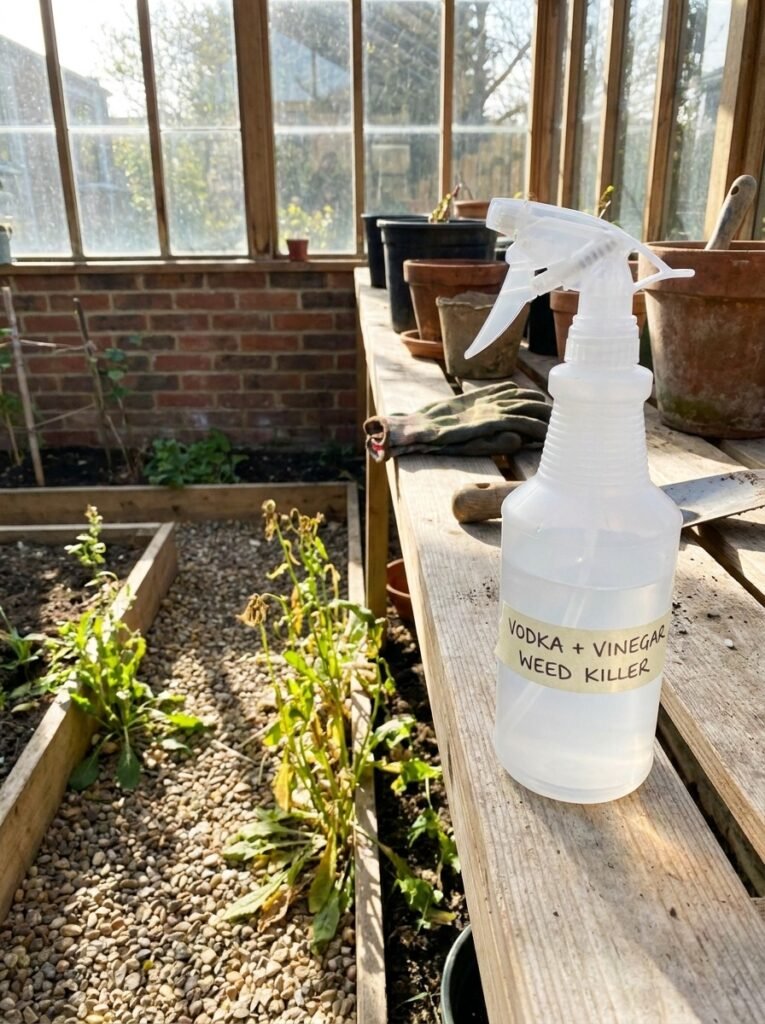
Adding vodka or another high-proof alcohol to a vinegar-based weed killer helps break down the waxy coating on some weed leaves, allowing the vinegar to penetrate more effectively. This combination works particularly well for weeds with a naturally protective, water-resistant leaf surface.
Mix a few tablespoons of vodka into your standard vinegar and dish soap spray, applying on a sunny day for the best results since alcohol enhances the vinegar’s drying effect in direct sunlight. This method proves especially useful for broadleaf weeds that typically resist standard vinegar treatments.
This enhanced formula addresses a common limitation of straight vinegar sprays, offering improved effectiveness against weeds with naturally resistant foliage.
5. Cornmeal Pre-Emergent
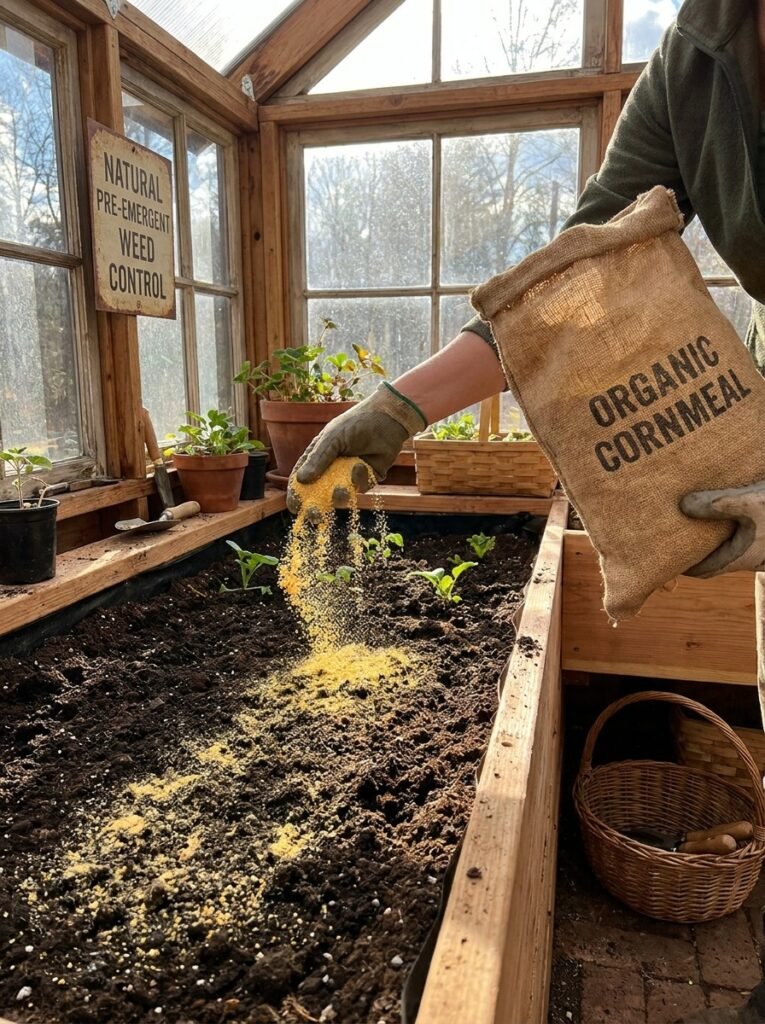
Corn gluten meal works as a natural pre-emergent, preventing weed seeds from germinating rather than killing existing plants. This proactive approach suits gardeners wanting to prevent future weed growth in garden beds or lawns before problems even begin to sprout.
Apply corn gluten meal evenly across garden beds or lawn areas in early spring before weed seeds germinate, watering lightly to activate its weed-suppressing properties. This method won’t affect already-established plants or existing weeds, making it purely preventative rather than a treatment for current growth.
This proactive method requires precise timing to be effective, working best as part of an ongoing seasonal weed prevention strategy rather than an immediate treatment solution.
6. Newspaper and Mulch Smothering
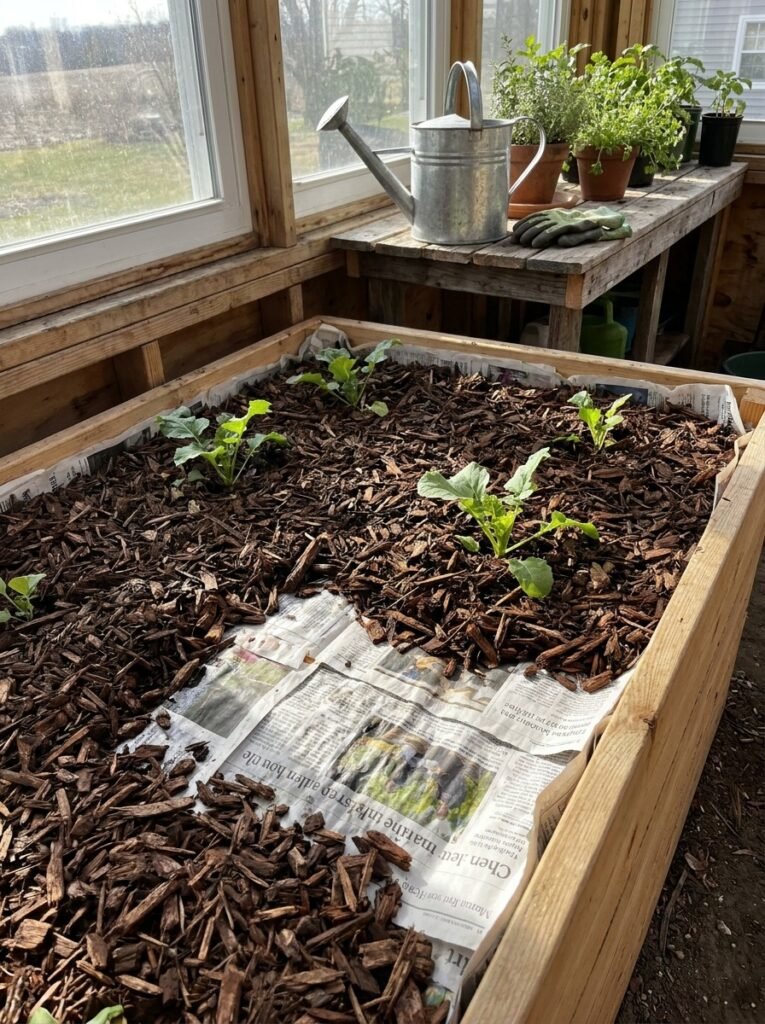
Layering newspaper beneath mulch smothers existing weeds by blocking sunlight, effectively suffocating the plants over time without any chemical intervention. This method also improves soil health as the newspaper breaks down naturally, adding organic matter to the garden bed.
Lay several sheets of newspaper directly over the weedy area, overlapping edges to prevent light from penetrating through gaps, then cover with two to three inches of mulch. This combination smothers current growth while also suppressing future weed germination throughout the treated area.
This sustainable method doubles as both weed control and soil improvement, offering genuine long-term garden bed maintenance beyond a single treatment application.
7. Baking Soda on Cracks
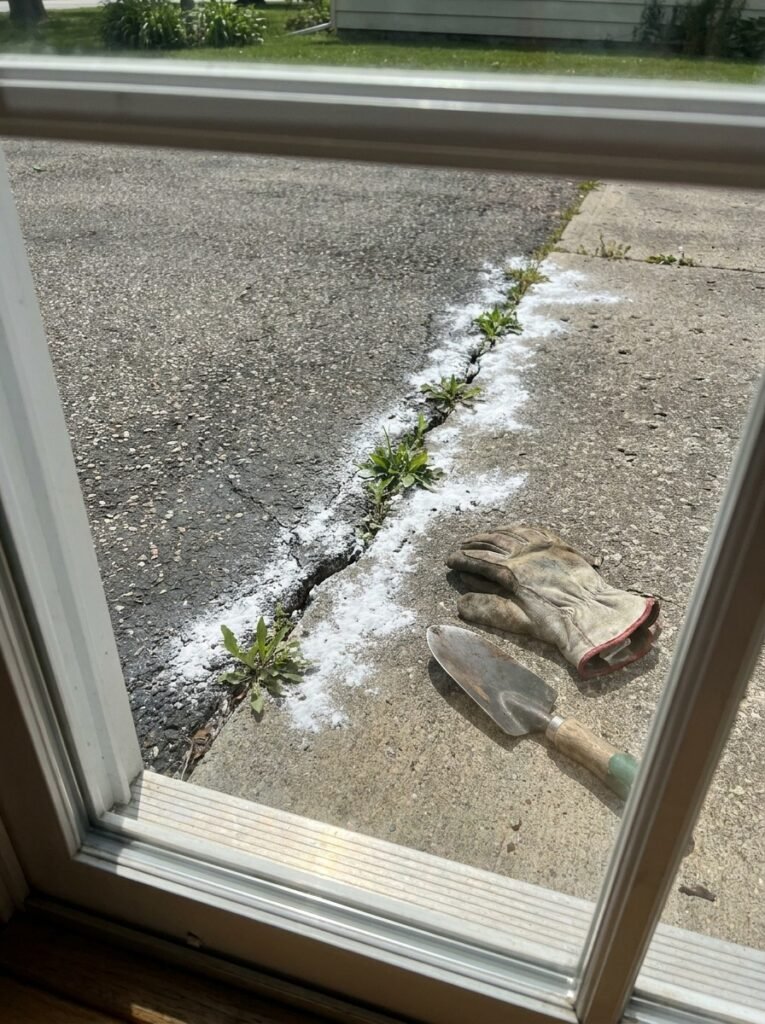
Baking soda offers a simple, affordable weed control solution for cracks in driveways, sidewalks, and patios, using its high sodium content to disrupt the plant’s water balance. This targeted method works particularly well for small, isolated weed growth in hardscape areas.
Sprinkle baking soda generously and directly onto weeds growing in pavement cracks, ensuring it makes contact with the base of each plant. This method works most effectively on dry days, allowing the baking soda to remain concentrated rather than washing away before it can take effect.
This inexpensive pantry staple provides a genuinely accessible weed control option, particularly convenient for households already keeping baking soda on hand for other purposes.
8. Citrus Oil Weed Spray
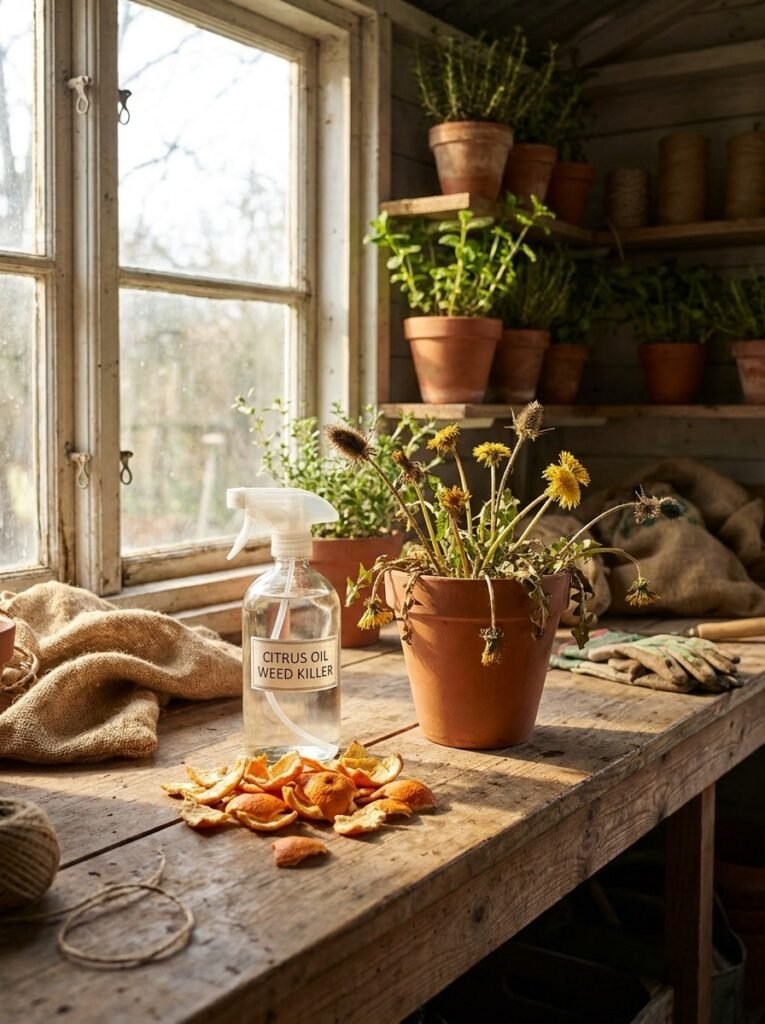
Citrus oil, particularly d-limonene extracted from orange peels, breaks down the waxy protective coating on weed leaves, causing them to dry out and die. This natural compound offers an effective, pleasant-smelling alternative to harsher chemical treatments for garden weed control.
Combine citrus oil concentrate with water according to product instructions, adding a small amount of dish soap to help the solution adhere to leaves during application. Spray directly onto weed foliage on a sunny day for the most effective results throughout the treated area.
This naturally derived option offers genuine effectiveness with a notably pleasant scent compared to vinegar-based alternatives, making application a more enjoyable gardening task.
9. Rubbing Alcohol Spray
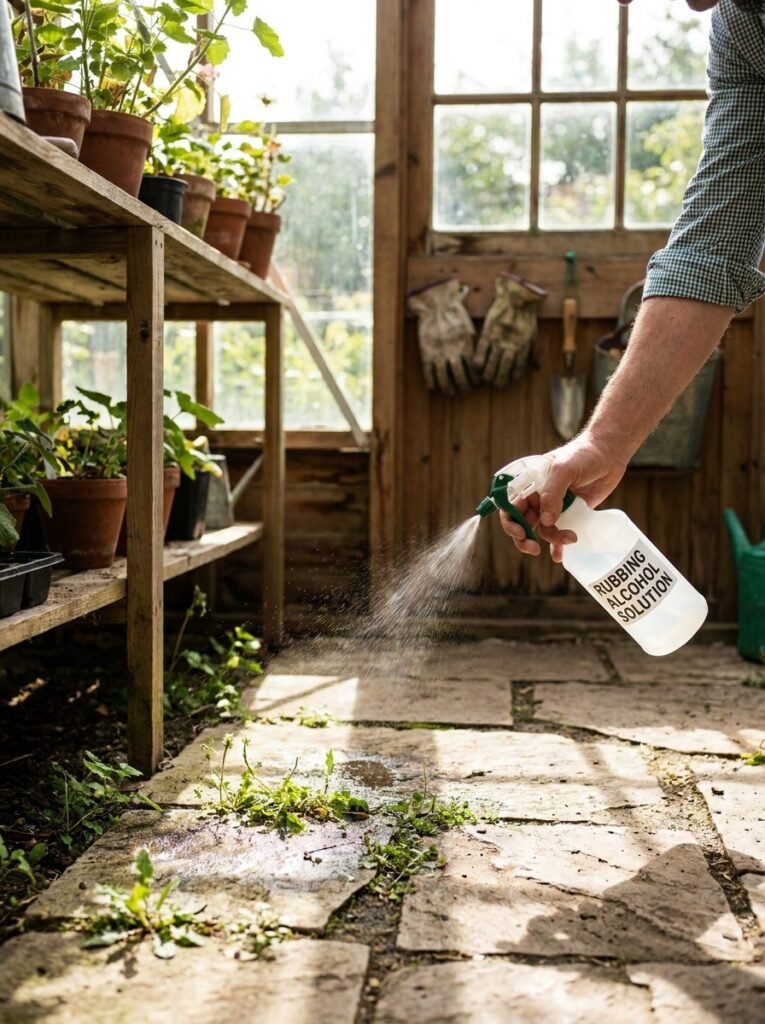
Rubbing alcohol dries out plant tissue rapidly, offering a fast-acting natural weed control option for small, isolated weed patches. This method works particularly well for spot treatment rather than large-scale garden bed application, given the relative cost compared to other natural methods.
Mix isopropyl alcohol with water in a spray bottle at a roughly one-to-one ratio, applying directly to weed foliage on a sunny, dry day for optimal effectiveness. This solution typically shows visible results within hours, wilting treated plants relatively quickly compared to some slower-acting alternatives.
This fast-acting option proves particularly useful for immediate, visible results on small weed problems where instant gratification matters more than large-area coverage.
10. Vinegar and Epsom Salt
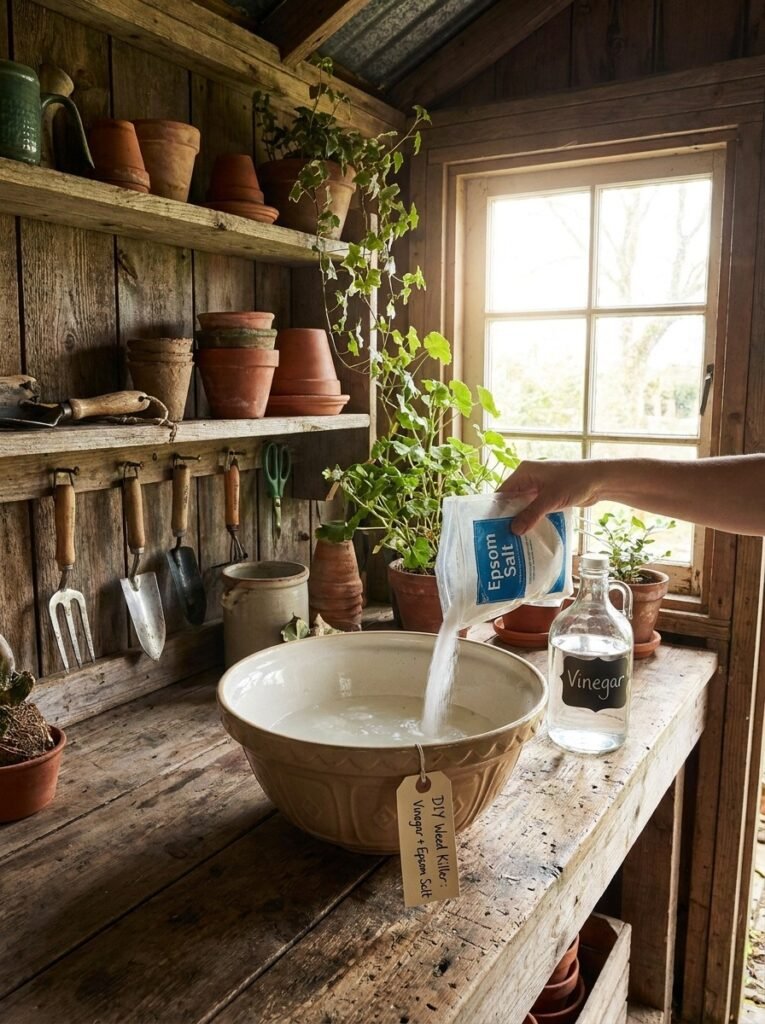
Combining vinegar with Epsom salt creates an alternative to table salt-based recipes, offering magnesium sulfate’s plant-stressing properties alongside vinegar’s acidic weed-killing action. This combination provides similar potency to salt-based recipes while potentially causing less long-term soil disruption.
Dissolve about a half cup of Epsom salt into a gallon of vinegar, adding dish soap to help the solution cling to weed foliage during application. This mixture works well for driveway and walkway weeds where soil health preservation matters less than in garden beds.
This alternative recipe offers gardeners another option within their natural weed control toolkit, particularly useful for those wanting to rotate between different homemade formulas.
11. Flame Weeding Torch
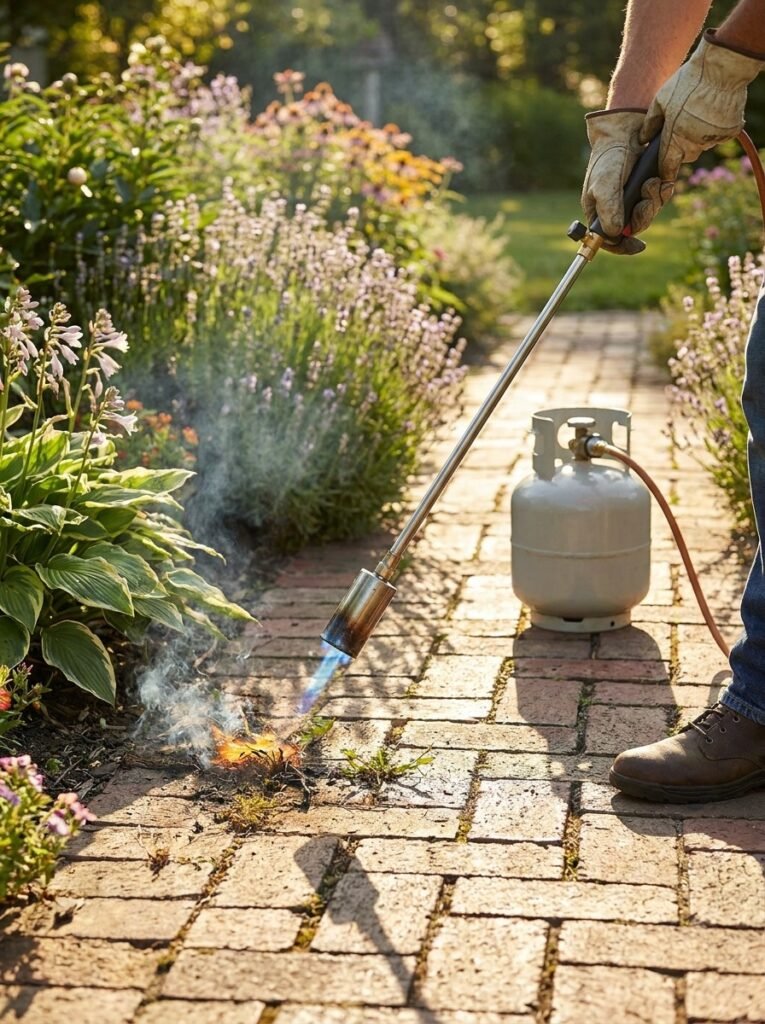
A flame weeding torch uses controlled heat to destroy weed cells instantly, offering a chemical-free method particularly effective for driveways, walkways, and gravel areas. This tool requires careful handling but delivers immediate, visible results without any spray or residue left behind.
Choose a propane-powered weeding torch specifically designed for this purpose, passing the flame quickly over weed foliage rather than holding it in place, which causes the cell walls to rupture without needing to fully burn the plant. Always follow proper fire safety precautions during use.
This tool-based method suits larger properties or those with extensive hardscaping needing regular weed maintenance, delivering fast, chemical-free results across bigger areas.
12. Cardboard Sheet Mulching
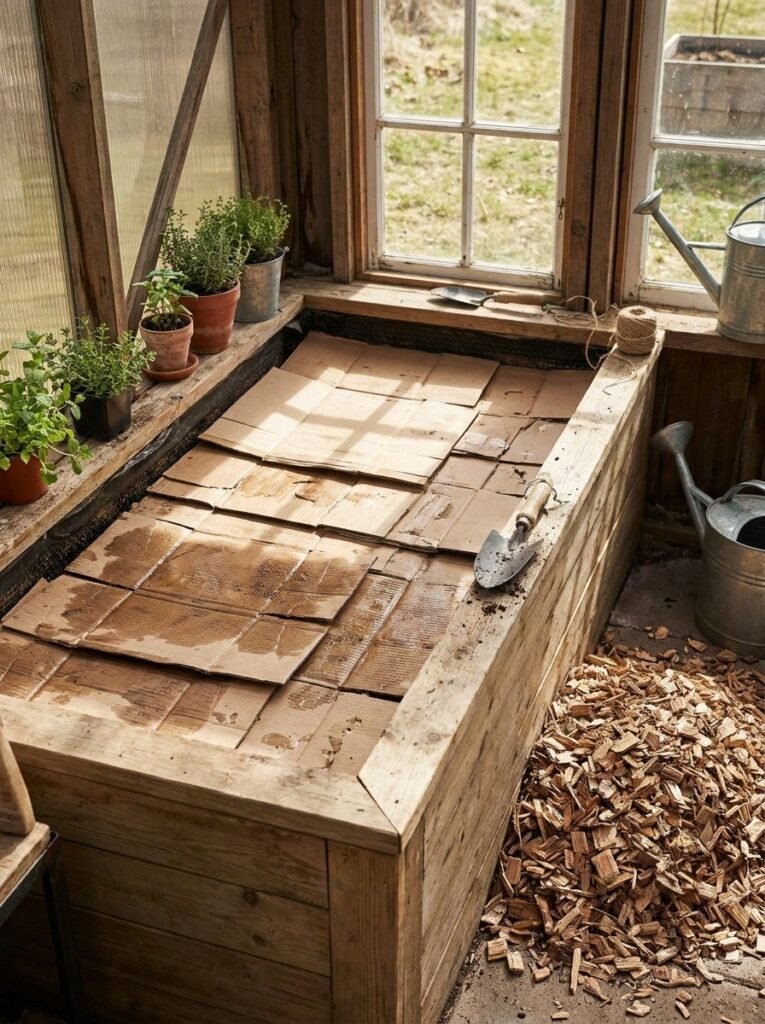
Cardboard sheet mulching smothers existing weeds by completely blocking sunlight, similar to the newspaper method but using thicker, more durable material for longer-lasting suppression. This technique works particularly well for larger garden areas or preparing new beds for planting.
Lay flattened cardboard boxes directly over the weedy area, removing any tape or labels, then overlap edges generously before covering with several inches of mulch or compost. This combination smothers current growth while the cardboard breaks down slowly, improving soil structure over time.
This sustainable, often free method repurposes shipping boxes many households already have on hand, offering genuine environmental benefit alongside effective weed suppression.
13. Hand Pulling After Rain
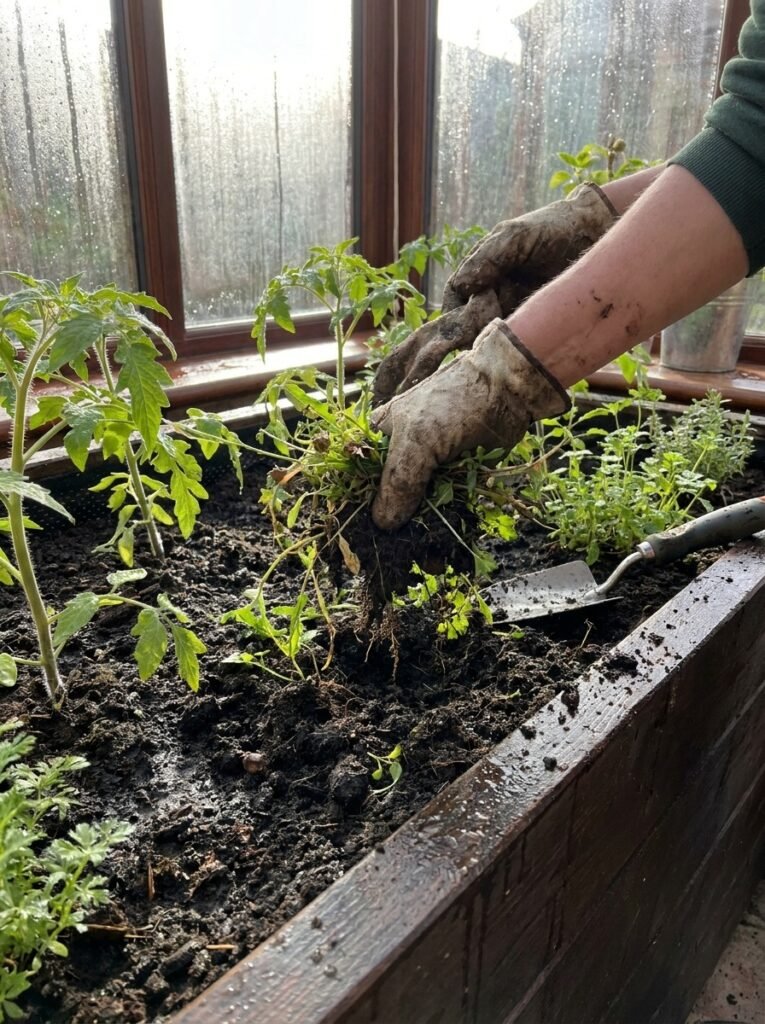
Hand pulling weeds after rainfall or thorough watering remains one of the most effective, completely chemical-free methods available, since moist soil allows roots to release more easily without breaking off underground. This timing significantly improves the success rate of complete root removal.
Wait until soil is genuinely moist but not muddy, gripping weeds at the base and pulling steadily and slowly to extract the entire root system intact. This method proves particularly effective for smaller garden beds where thoroughness matters more than covering large areas quickly.
This zero-cost, chemical-free method requires only time and effort, offering the most direct and immediately verifiable weed removal results available to any gardener.
14. Vinegar and Orange Oil Blend
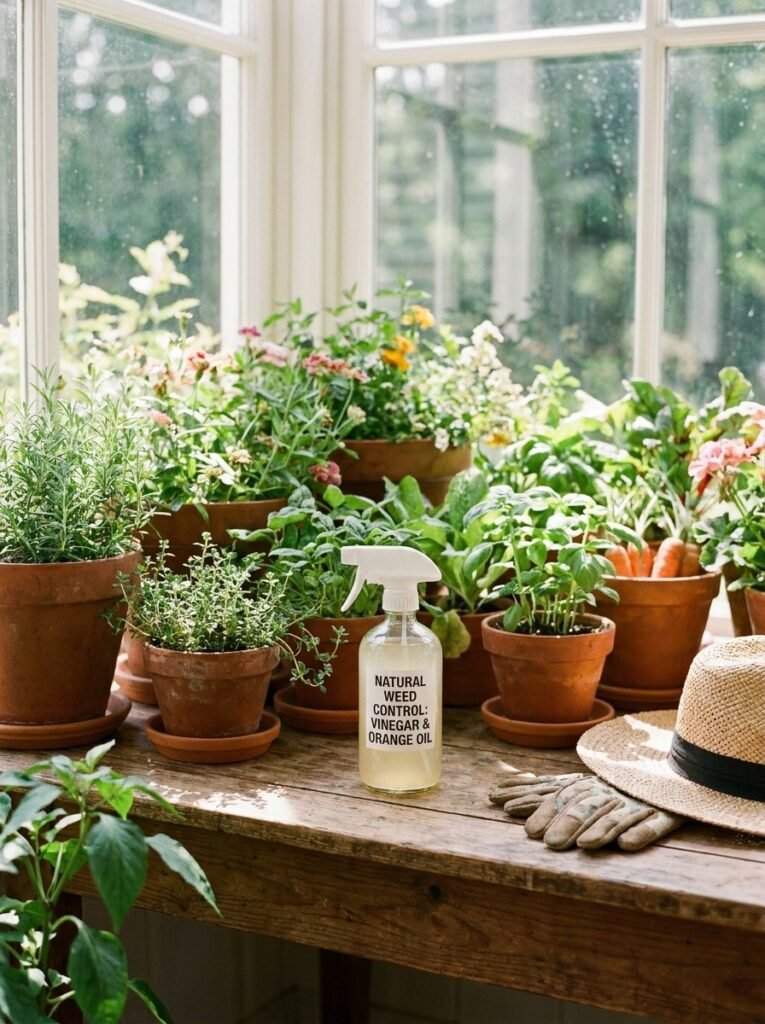
Combining vinegar with orange oil merges two effective natural weed-killing compounds into one enhanced solution, using the orange oil to break down leaf coatings while vinegar’s acidity causes cellular damage. This combination often proves more effective than either ingredient used alone.
Mix vinegar with a small amount of orange oil concentrate and a few drops of dish soap, shaking well before each application since the oil and vinegar may separate over time. Apply directly to weed foliage on a sunny day for the most effective, fast-acting results.
This combined formula offers enhanced effectiveness for gardeners who have found single-ingredient solutions insufficient for their particular weed challenges throughout the growing season.
15. Borax Solution for Driveways
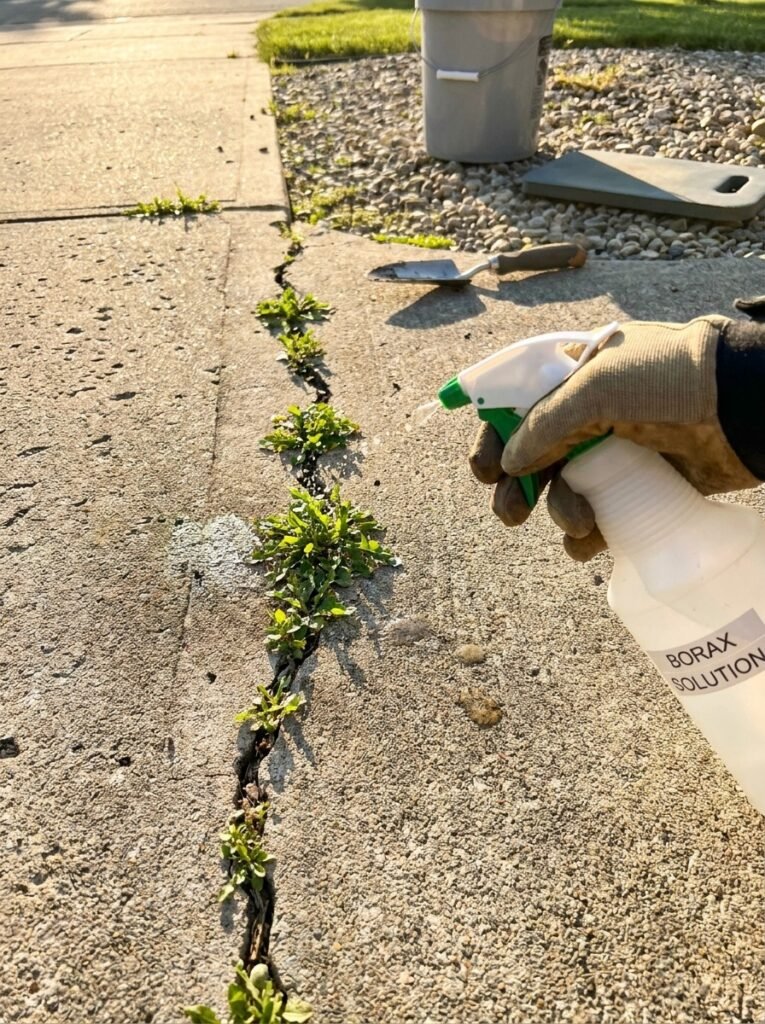
Borax dissolved in water creates an effective weed treatment specifically suited for driveways, walkways, and other hardscape areas where you don’t intend to grow anything else, since the compound can significantly affect soil fertility for an extended period afterward.
Dissolve about ten ounces of borax into four gallons of water, applying directly to weeds in pavement cracks or gravel areas only. Avoid any contact with desirable plants, lawn areas, or garden beds, since borax can cause lasting harm to soil health well beyond the treated weeds.
This targeted solution should be reserved exclusively for hardscape applications, given its potential long-term impact on soil where future planting might otherwise be desired.
16. Clove Oil Spray
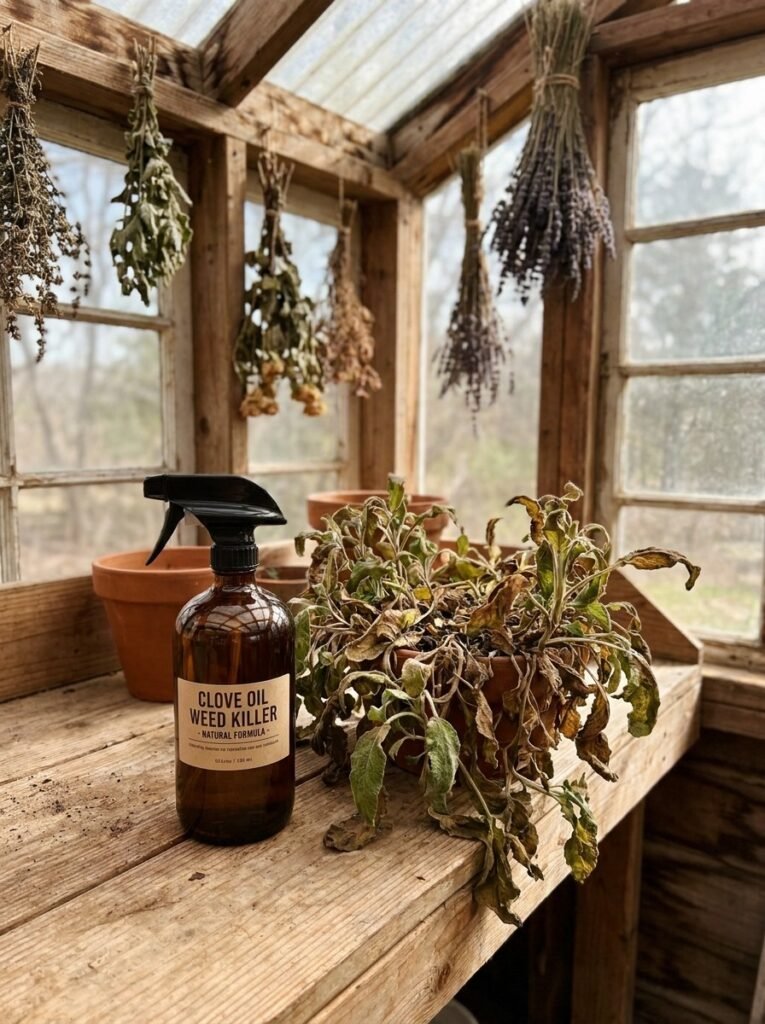
Clove oil contains eugenol, a natural compound that damages plant cell membranes on contact, offering an aromatic, plant-based alternative to synthetic herbicides. This natural option works particularly well for young, actively growing weeds with tender foliage.
Mix clove oil concentrate with water according to product concentration, adding a small amount of dish soap to improve adhesion to leaf surfaces. Apply on a warm, sunny day for optimal effectiveness, since heat enhances the oil’s weed-damaging properties throughout the treated area.
This naturally derived option offers genuine plant-based weed control with a distinctly pleasant aroma, appealing to gardeners seeking effective alternatives to harsher commercial products.
17. Steam Weeding Method
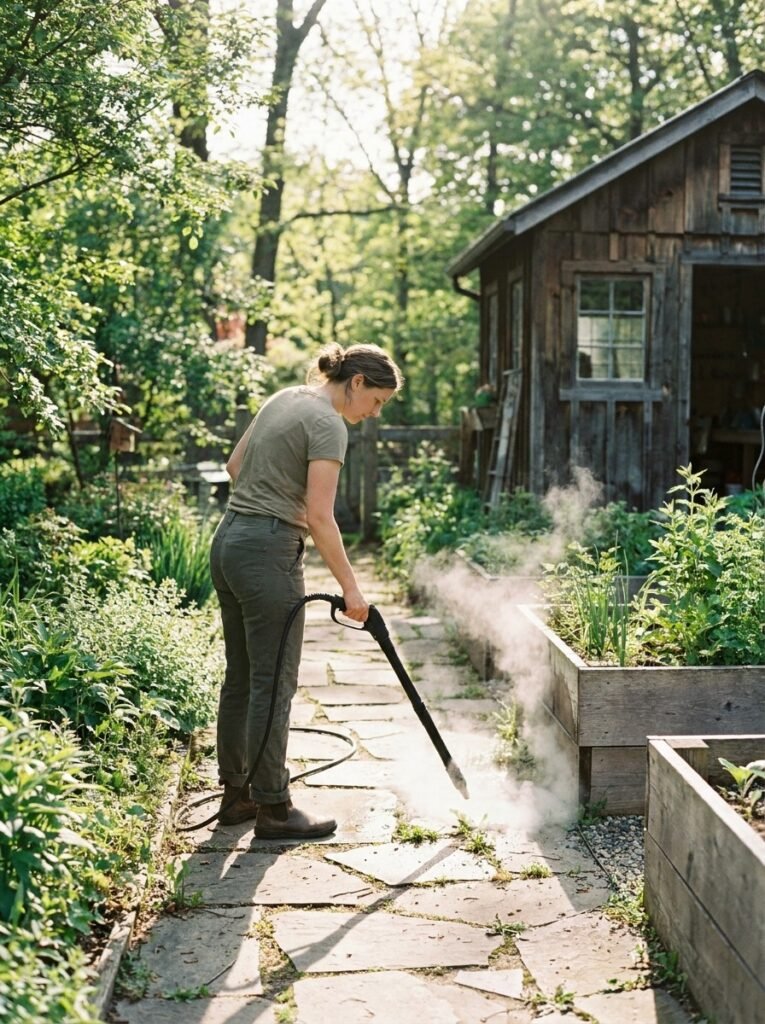
Steam weeding uses concentrated heat and moisture to kill weeds instantly, offering a completely chemical-free method that works well across driveways, patios, and garden pathways. This technique has grown in popularity as an environmentally conscious alternative to both chemical and flame-based methods.
Choose a steam weeding tool specifically designed for outdoor use, applying concentrated steam directly to weed foliage for several seconds until the plant visibly wilts. This method proves particularly effective for larger properties needing regular treatment across extensive hardscaped areas.
This modern tool-based approach delivers reliable, chemical-free results, suiting gardeners willing to invest in specialized equipment for ongoing, larger-scale weed management needs.
18. Landscape Fabric Barrier
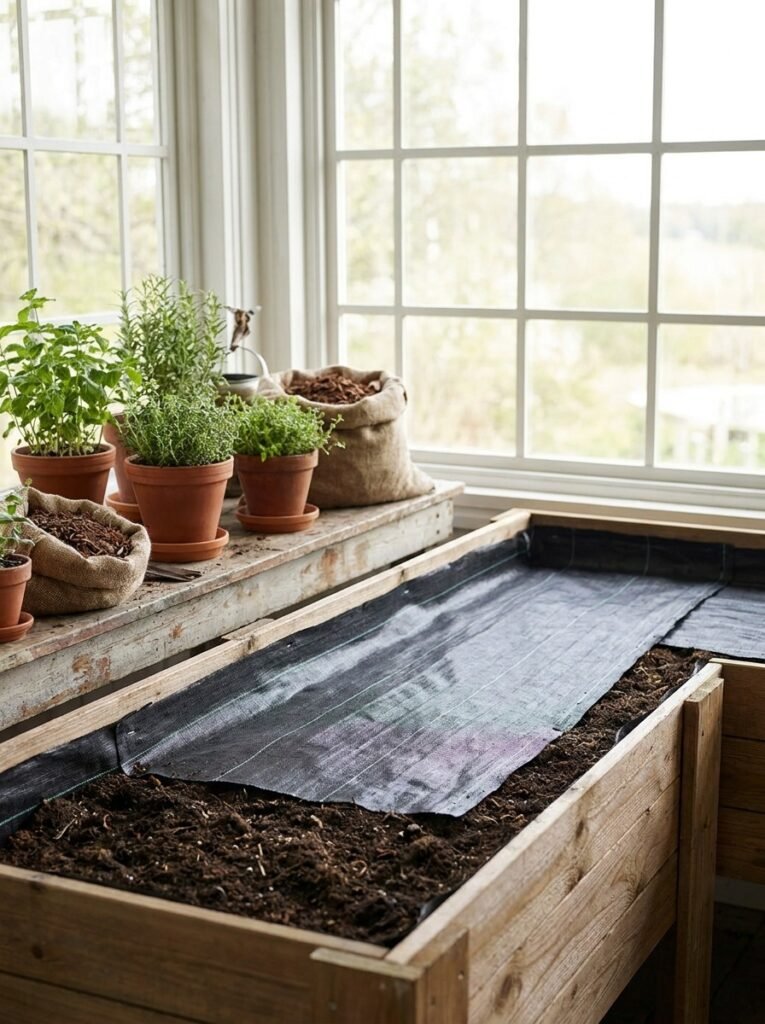
Landscape fabric creates a physical barrier that prevents weed seeds from receiving the sunlight needed to germinate, while still allowing water and air to reach the soil below. This preventative method works particularly well for new garden beds or areas being replanted.
Lay landscape fabric directly over prepared soil, cutting small holes for desired plants while leaving the surrounding area covered. Top with mulch for both aesthetic appeal and additional weed suppression, creating a long-lasting barrier that requires minimal ongoing maintenance throughout the growing season.
This preventative method requires upfront installation effort but delivers lasting weed suppression, reducing the need for repeated chemical or manual treatments over time.
19. Vinegar Soap and Salt Trio
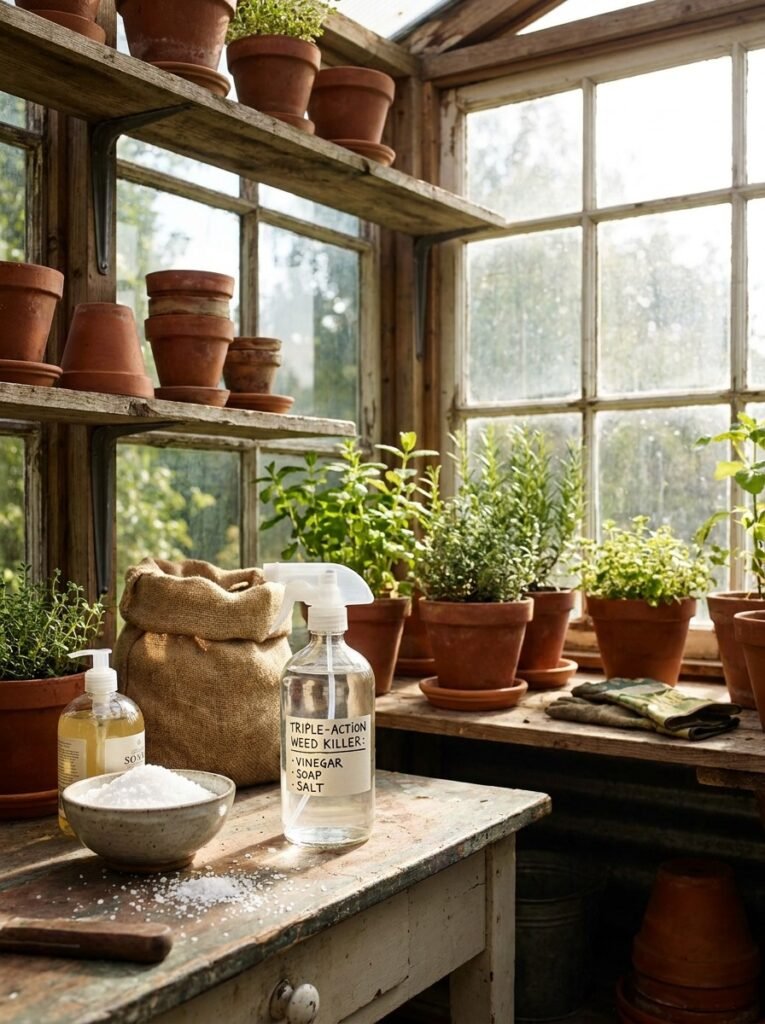
Combining all three common natural weed-killing ingredients, vinegar, dish soap, and salt, creates one of the most potent homemade solutions available, addressing weeds through multiple mechanisms simultaneously. This triple-action approach often succeeds where single-ingredient methods have previously failed.
Mix a gallon of vinegar with a cup of salt and a tablespoon of dish soap, stirring until the salt fully dissolves before transferring to a spray bottle. Apply directly to stubborn, well-established weeds, reserving this stronger formula for areas where soil health isn’t a primary concern.
This maximum-strength natural recipe should be used judiciously, saved for particularly persistent weeds that have resisted gentler treatment approaches throughout the season.
20. Diluted Bleach for Pavement Cracks
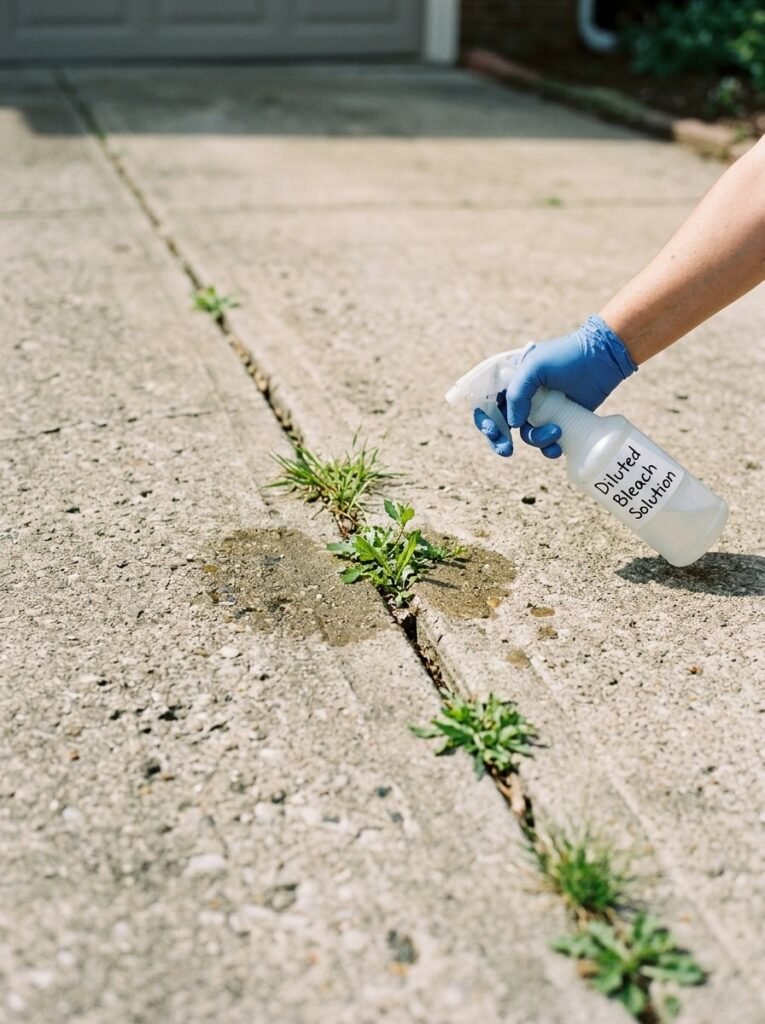
Diluted bleach offers an effective weed treatment specifically for pavement cracks and hardscape areas, though it requires careful, targeted application given its potential impact on surrounding soil and desirable plants. This method should be reserved exclusively for non-planting areas.
Dilute bleach significantly with water, applying only directly onto weeds in driveway or sidewalk cracks while avoiding any contact with grass, garden beds, or nearby plants you wish to preserve. Always wear gloves and avoid runoff into storm drains or waterways during application.
This targeted method requires careful, limited use given its environmental considerations, best reserved for isolated hardscape weed problems rather than broader garden application.
21. Cover Crop Suppression
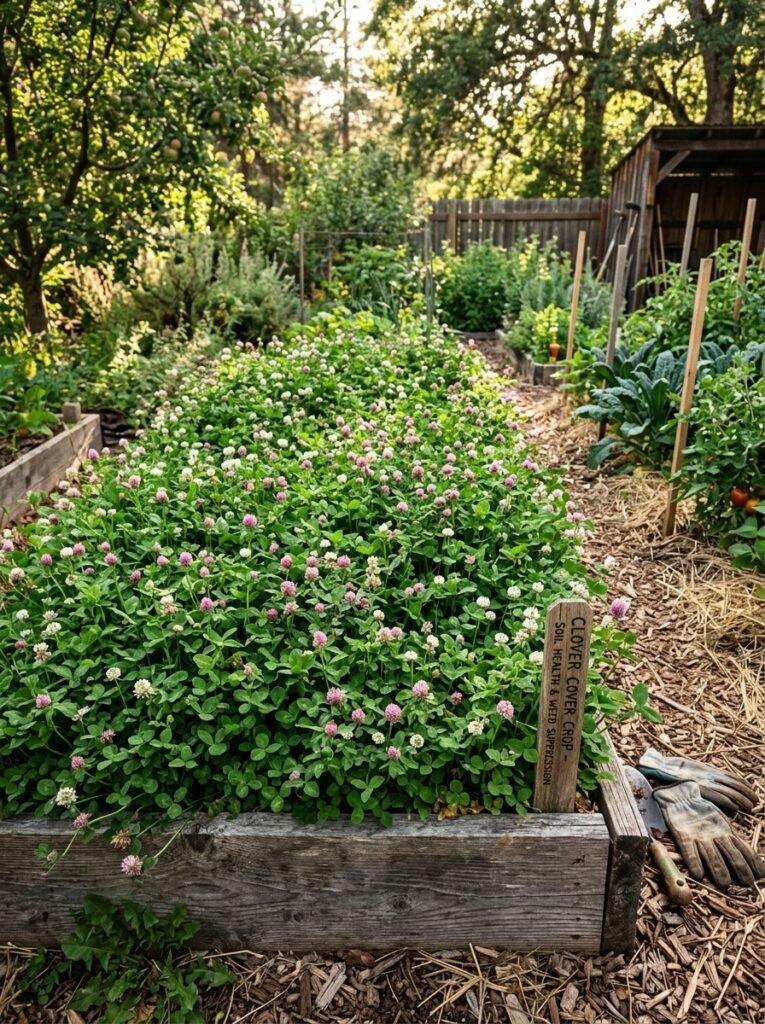
Planting a dense cover crop, like clover or buckwheat, naturally suppresses weed growth by outcompeting unwanted plants for sunlight, water, and nutrients throughout the growing season. This long-term strategy improves soil health while preventing weeds from establishing in the first place.
Choose a cover crop appropriate for your climate and growing season, planting it densely across garden beds during periods when the space isn’t actively producing food or ornamental plants. This living mulch approach requires patience but delivers lasting weed suppression alongside genuine soil improvement.
This proactive, sustainable strategy addresses weed problems before they start, offering long-term garden health benefits beyond simple weed elimination alone.
22. Horticultural Vinegar Concentrate
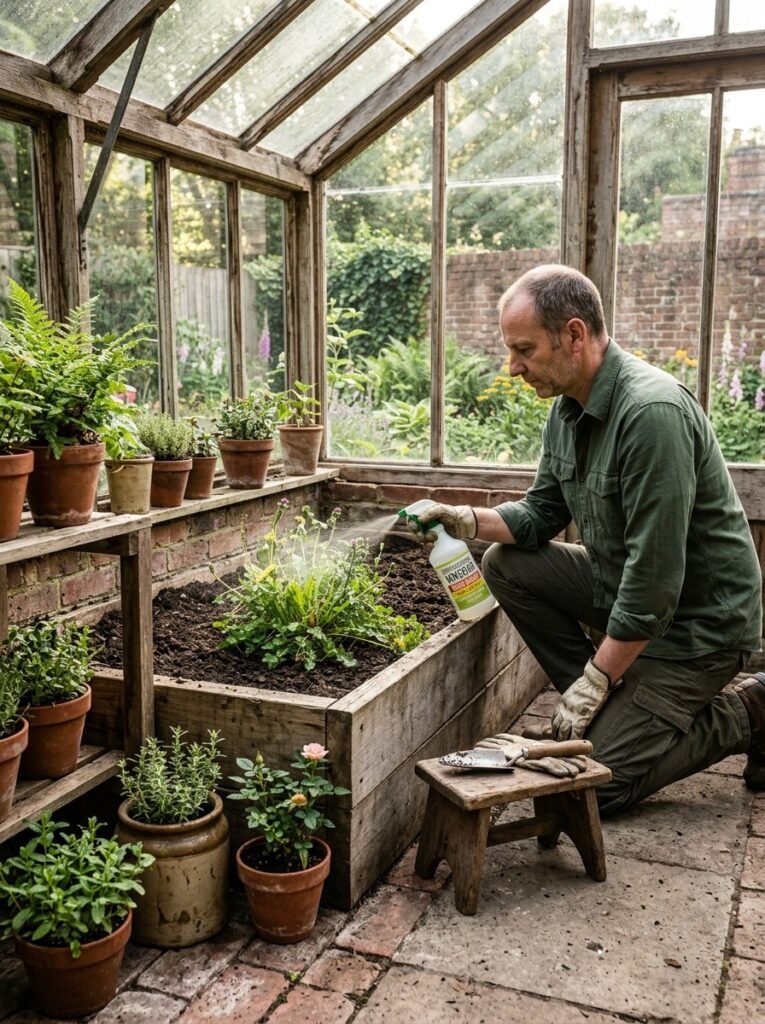
Horticultural vinegar, available at significantly higher acetic acid concentrations than standard household vinegar, offers more potent weed-killing power for particularly stubborn or well-established plants. This stronger formula requires careful handling given its increased strength compared to typical kitchen vinegar.
Purchase horticultural-grade vinegar specifically formulated for weed control, following label instructions carefully since the higher concentration can cause skin and eye irritation if handled improperly. Apply directly to weed foliage, wearing protective gloves and eyewear throughout the application process.
This more potent option suits gardeners who have found standard household vinegar insufficient, offering genuinely enhanced effectiveness for persistent weed problems throughout the yard.
23. Black Plastic Solarization
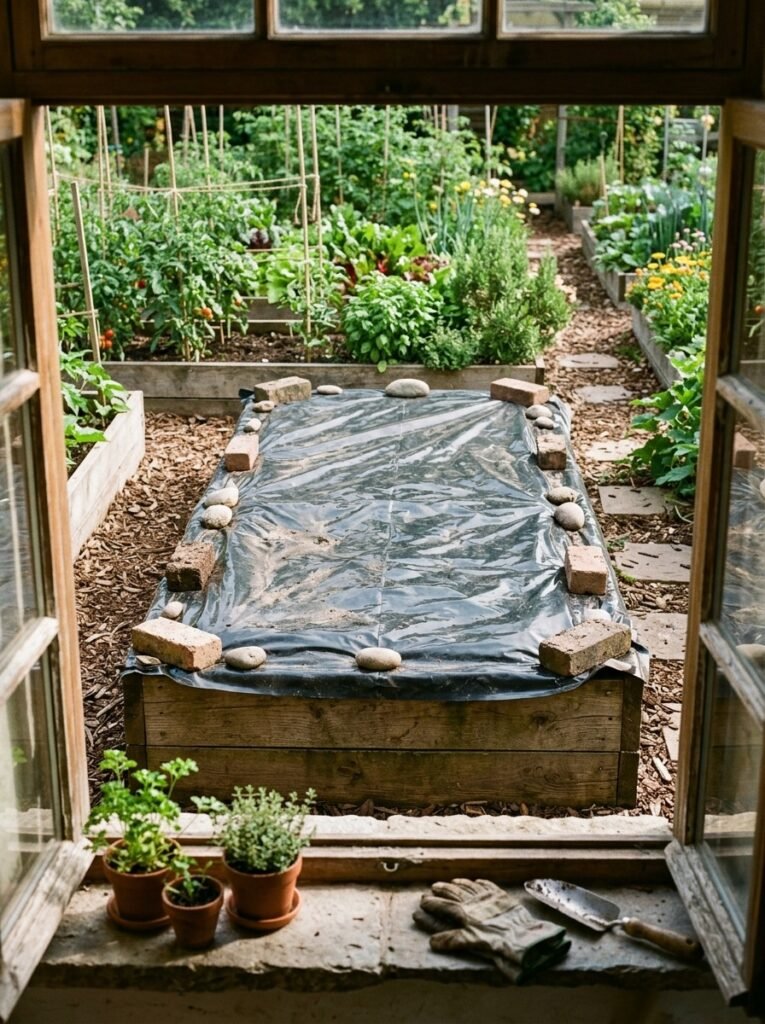
Solarization uses black plastic sheeting to trap heat from the sun, raising soil temperature high enough to kill existing weeds and their seeds over an extended period. This chemical-free method works particularly well for preparing new garden beds during the hottest months of summer.
Lay black plastic sheeting tightly over the weedy area, securing the edges with rocks or soil to trap heat effectively, leaving it in place for four to six weeks during peak summer sun exposure. This process kills weeds, seeds, and even some soil-borne pathogens through sustained heat.
This patient, chemical-free method requires significant time investment but delivers thorough, long-lasting results for preparing garden beds free of existing weed pressure.
Effective weed control doesn’t have to mean reaching for harsh commercial herbicides, since many of the most reliable solutions are already sitting in your pantry or garage. From vinegar and boiling water to cornmeal and cover crops, these 23 methods show that natural weed killers range from quick, spot-treatment sprays to longer-term preventative strategies that keep weeds from taking hold in the first place.
The right method really depends on where the weeds are growing and how much soil health matters in that spot. Vinegar, salt, and borax-based solutions work well on driveways and pavement cracks where future planting isn’t a concern, while gentler methods like hand pulling, mulching, and cover crops protect soil quality in garden beds and lawns.
Whichever approach you choose, natural weed control often takes a bit more patience and repeat treatment than chemical alternatives, but it comes with genuine peace of mind around children, pets, and the surrounding ecosystem. Save your favorite methods from this list, match them to the right spots in your yard, and enjoy a healthier approach to keeping weeds at bay.