
22 Porch Decorating Ideas to Elevate Your Entryway
Your porch is the first glimpse guests get of your home, so a thoughtful design can instantly create a welcoming impression. Whether you have a spacious front porch or a compact entryway, simple decorating choices can make the area feel stylish, comfortable, and inviting. From layered doormats and seasonal flowers to cozy seating and statement lighting, these porch decorating ideas offer plenty of inspiration for creating an entrance that feels personal and Pinterest-worthy.
1. Layered Doormats for a Welcoming Entrance
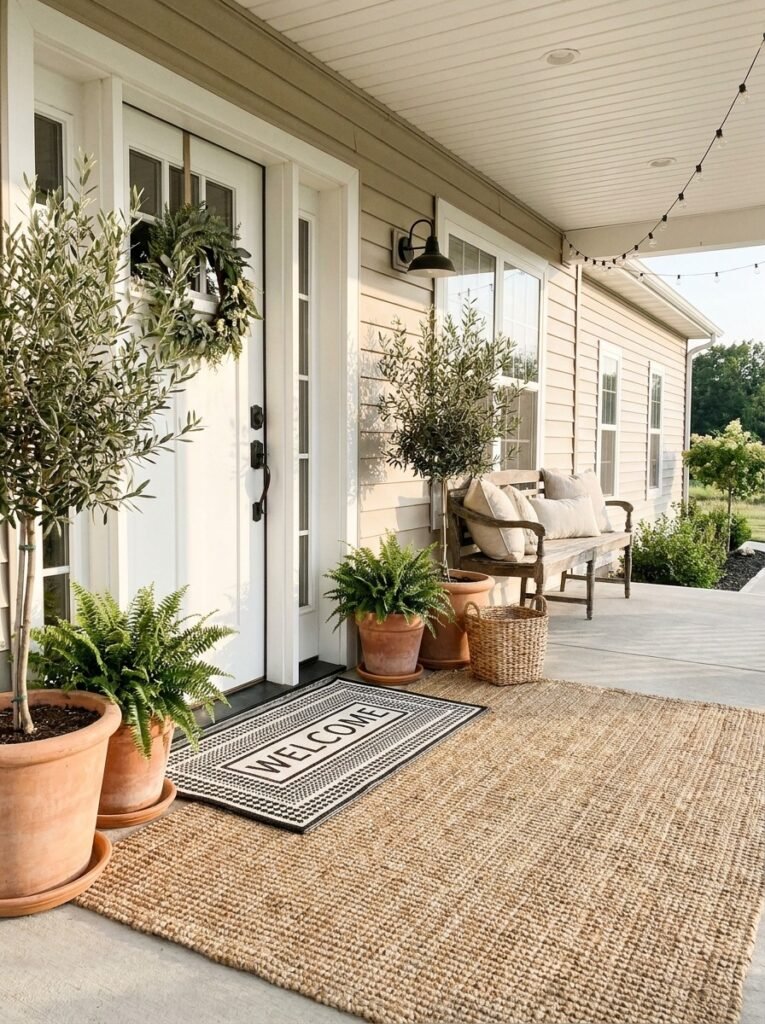
Layering doormats is one of the easiest ways to give your porch an instant decorating upgrade. Start with a larger textured rug, such as jute or sisal, and place a smaller patterned mat directly on top. The combination adds dimension while making the entrance feel intentionally styled. Choose complementary colors that work with your door and exterior. Neutral tones are timeless, while subtle stripes, checks, or botanical patterns can introduce personality without overwhelming the space.
To make the arrangement feel complete, surround the mats with a few carefully chosen accessories. Matching planters, a small lantern, or a seasonal wreath can help frame the doorway beautifully. Keep enough open space around the mats so the entrance remains practical and easy to use. For a Pinterest-inspired look, photograph the porch from slightly farther away so the layered textures, doorway, plants, and surrounding architectural details all work together.
2. Add Oversized Potted Plants
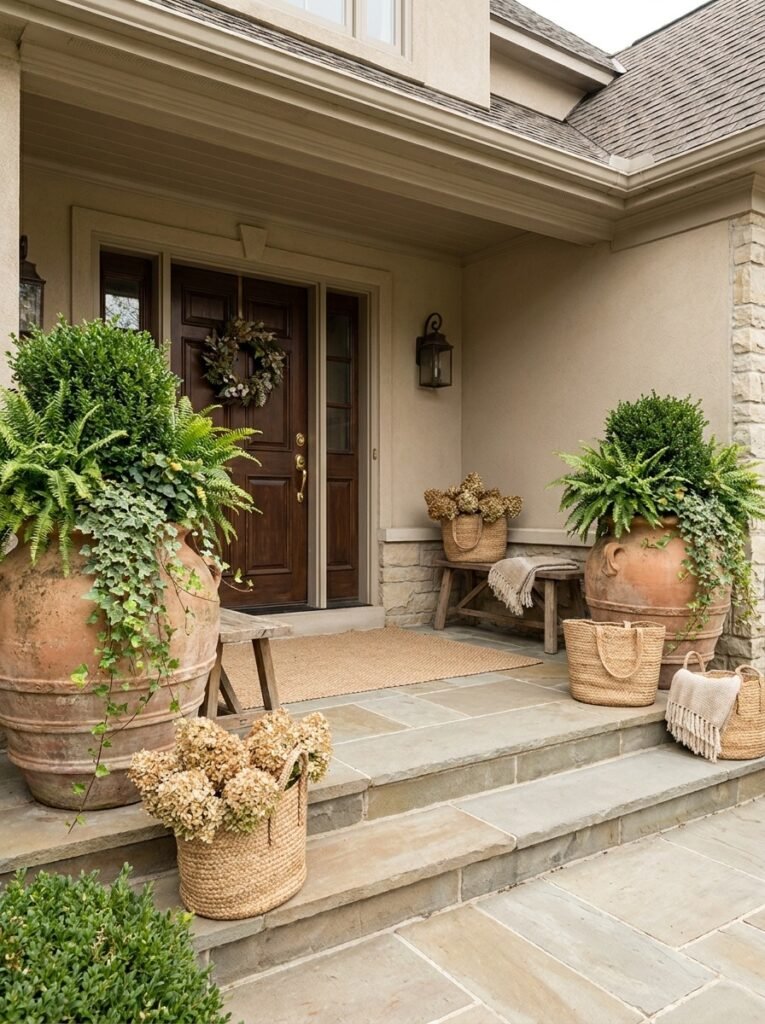
Large potted plants can make even a simple porch feel lush and thoughtfully designed. Place matching oversized planters on either side of the front door for a balanced appearance, or use different containers for a more relaxed arrangement. Olive trees, palms, ferns, topiary plants, and flowering shrubs can all create beautiful focal points. Select plants according to your climate and the amount of sunlight your porch receives throughout the day.
Container style matters almost as much as the greenery itself. Terracotta brings warmth, while concrete creates a contemporary appearance and woven planters offer natural texture. If your porch is narrow, choose tall plants with a relatively slim profile so they add height without blocking the walkway. Combining different leaf shapes can also create visual interest. Keep the surrounding decorations simple, allowing the plants to become the natural stars of your entrance.
3. Create a Cozy Porch Seating Area
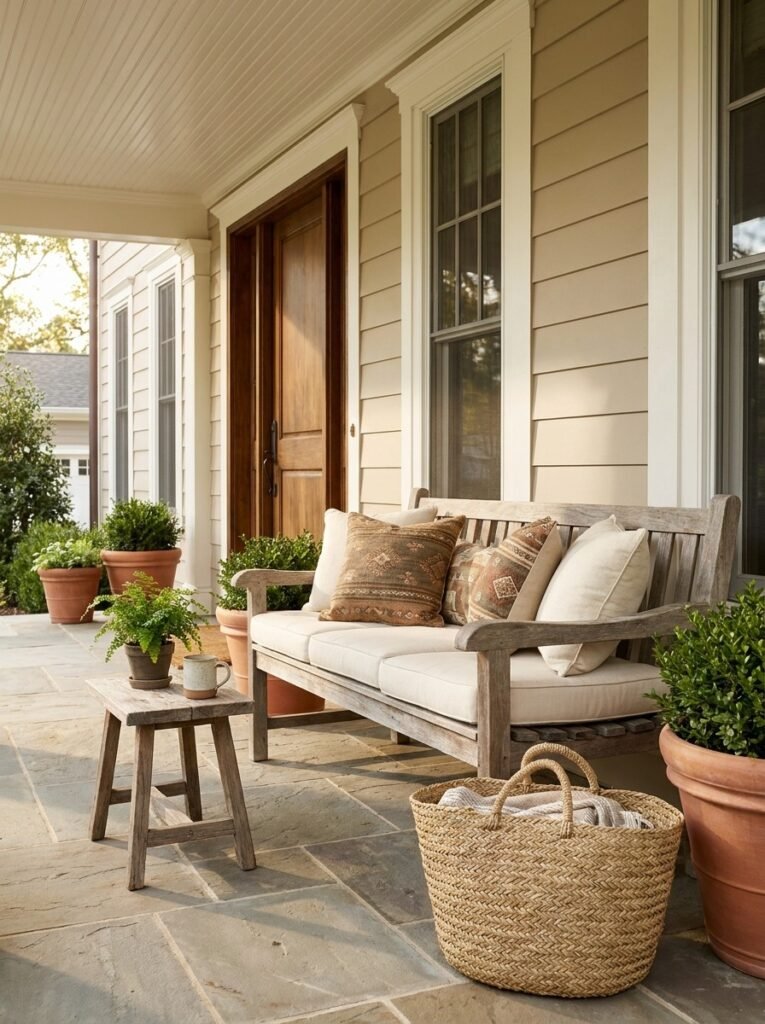
A small seating area can transform your porch from a simple passageway into an inviting place to relax. A compact wooden bench works particularly well because it provides seating without taking up too much floor space. Add weather-resistant cushions and a couple of decorative pillows to introduce softness and color. If you have additional room, consider a small side table where you can place a drink, lantern, or seasonal floral arrangement.
For a more comfortable and polished appearance, coordinate your seating accessories with the rest of your exterior. A neutral cushion paired with botanical or striped pillows creates an effortlessly timeless look. Add a textured outdoor rug underneath the seating area to visually define the space. Even a tiny porch can benefit from one thoughtfully arranged chair or bench, proving that comfort and style do not require a large outdoor footprint.
4. Hang a Statement Wreath
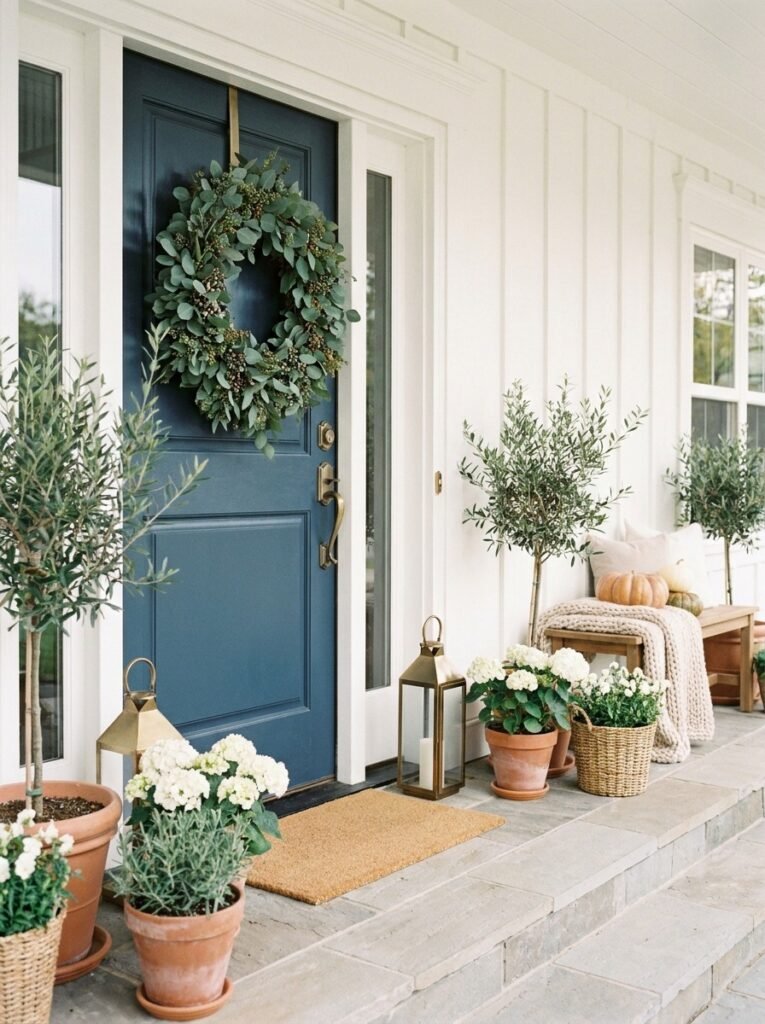
A statement wreath is a classic way to make your front door feel decorated without adding too many accessories. Instead of choosing a tiny wreath that disappears against the door, select an appropriately sized design that creates a clear focal point. Eucalyptus, dried grasses, preserved leaves, flowers, or simple greenery can all work beautifully. For year-round decorating, choose a natural arrangement with understated colors that complements your home’s exterior.
You can also change the wreath throughout the year to keep the porch feeling fresh. Bright florals work beautifully during spring and summer, while dried leaves and berries introduce autumn warmth. Evergreen branches are perfect for winter. Consider coordinating the wreath with your doormat, planters, and door color rather than matching everything exactly. A little variation keeps the entrance looking collected and personal while still maintaining a cohesive overall design.
5. Use Warm Outdoor Lighting
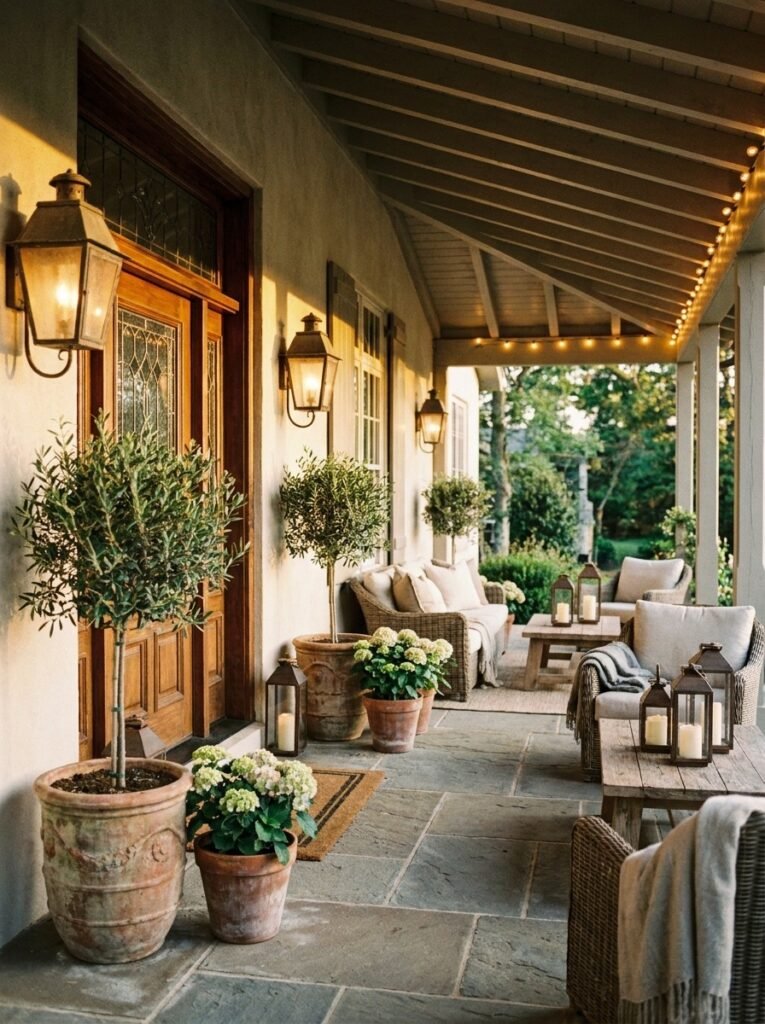
Outdoor lighting can dramatically change the mood of a porch once the sun goes down. Wall sconces beside the door provide practical illumination while adding architectural character. Lanterns placed near the steps or doorway can create smaller pools of warm light. If your porch has a ceiling, consider a decorative pendant or flush-mount fixture that complements the home’s overall style. Warm-toned bulbs generally create a softer and more inviting atmosphere than harsh cool lighting.
Think of porch lighting as both functional and decorative. Make sure steps, pathways, and door hardware are sufficiently visible while avoiding overly bright fixtures that dominate the space. Solar lanterns can be useful where electrical connections are limited, while subtle string lights can add charm to covered porches. Layering several modest light sources usually produces a more sophisticated effect than relying on one extremely bright fixture.
6. Decorate With Seasonal Flowers
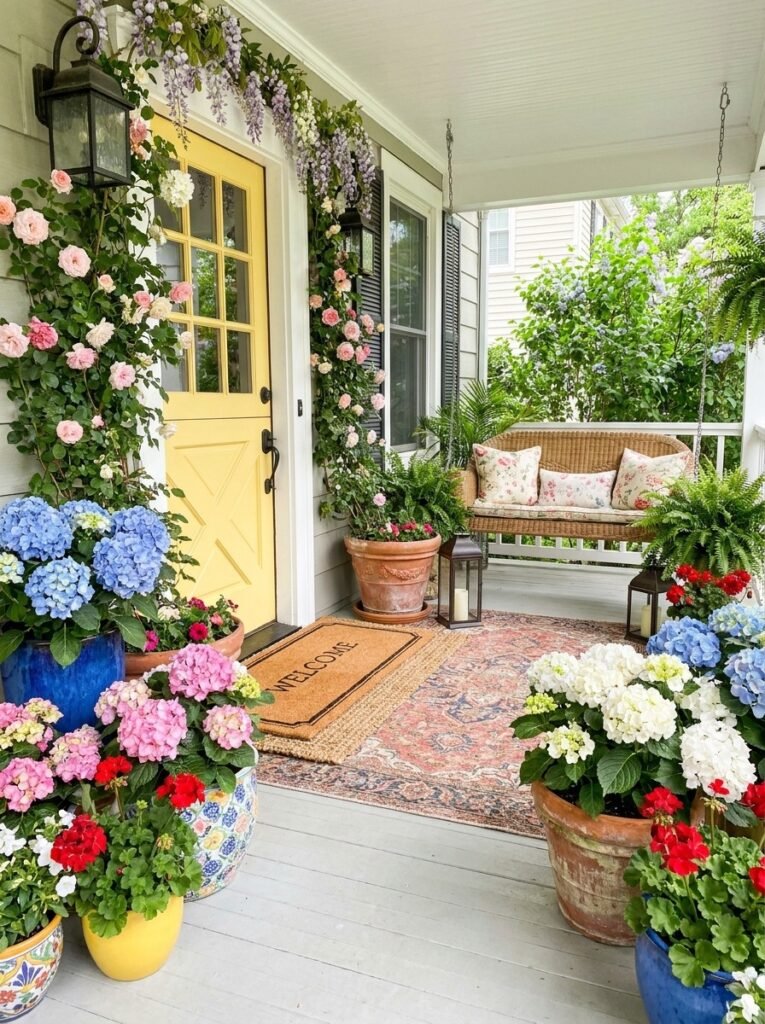
Seasonal flowers are an easy way to bring color and personality to your porch. Instead of filling every available corner with plants, choose two or three strategic locations for colorful containers. Place flowering pots near the door, along the steps, or beside a seating area. Hydrangeas, geraniums, petunias, marigolds, and pansies can provide different colors and textures depending on your season and climate.
When choosing flowers, consider how their colors interact with your home’s exterior. A neutral porch can handle vibrant blooms, while a colorful door may look better with softer white, pink, or lavender flowers. Mixing containers of different heights can create a layered display without making the porch feel crowded. Remember to select varieties suited to your available sunlight and maintain them regularly so the arrangement stays fresh and welcoming throughout the season.
7. Style a Classic Farmhouse Porch
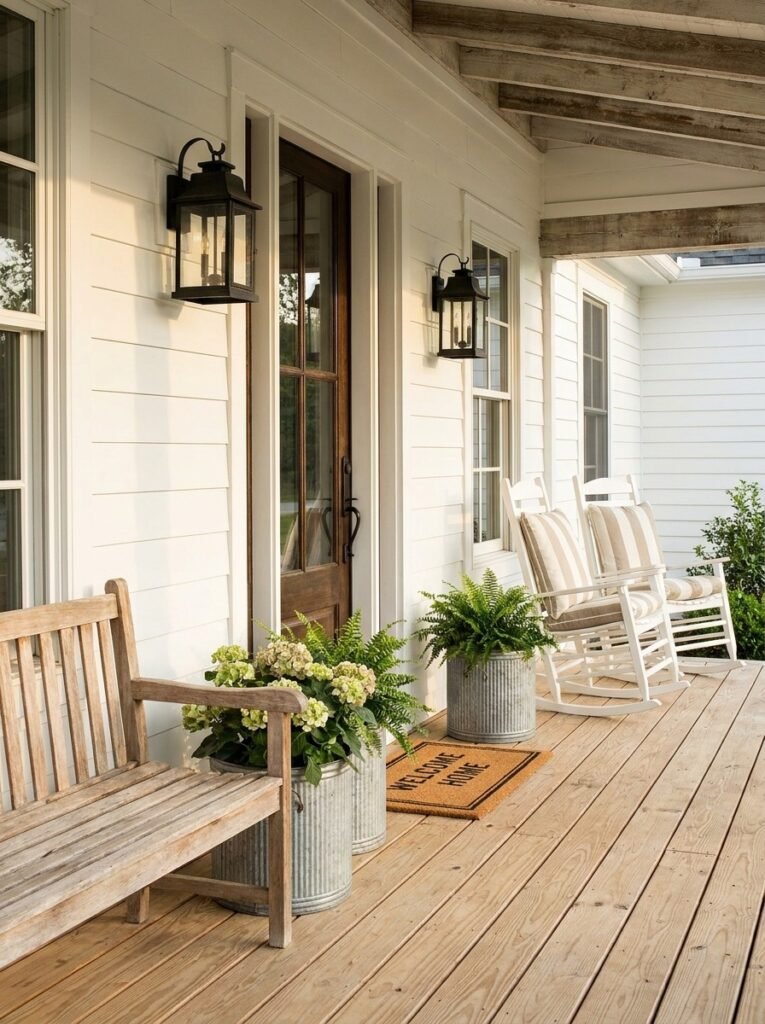
Farmhouse porch decorating works beautifully when natural textures are combined with simple, functional pieces. A wooden bench, rocking chair, woven basket, galvanized planter, and neutral cushions can establish the look without making the space feel overly themed. White, cream, charcoal, natural wood, and muted green are especially effective farmhouse colors. Keep patterns understated with stripes, checks, or simple botanical prints for a relaxed appearance.
The secret to a successful farmhouse porch is balancing rustic elements with comfortable details. A weathered wooden piece can look inviting when paired with soft cushions and healthy greenery. Add a classic lantern near the doorway and a simple wreath for additional character. Avoid filling every surface with farmhouse accessories. Leaving some open space allows the natural materials and architecture to remain visible, creating the comfortable, uncomplicated atmosphere associated with farmhouse style.
8. Choose a Bold Front Door Color
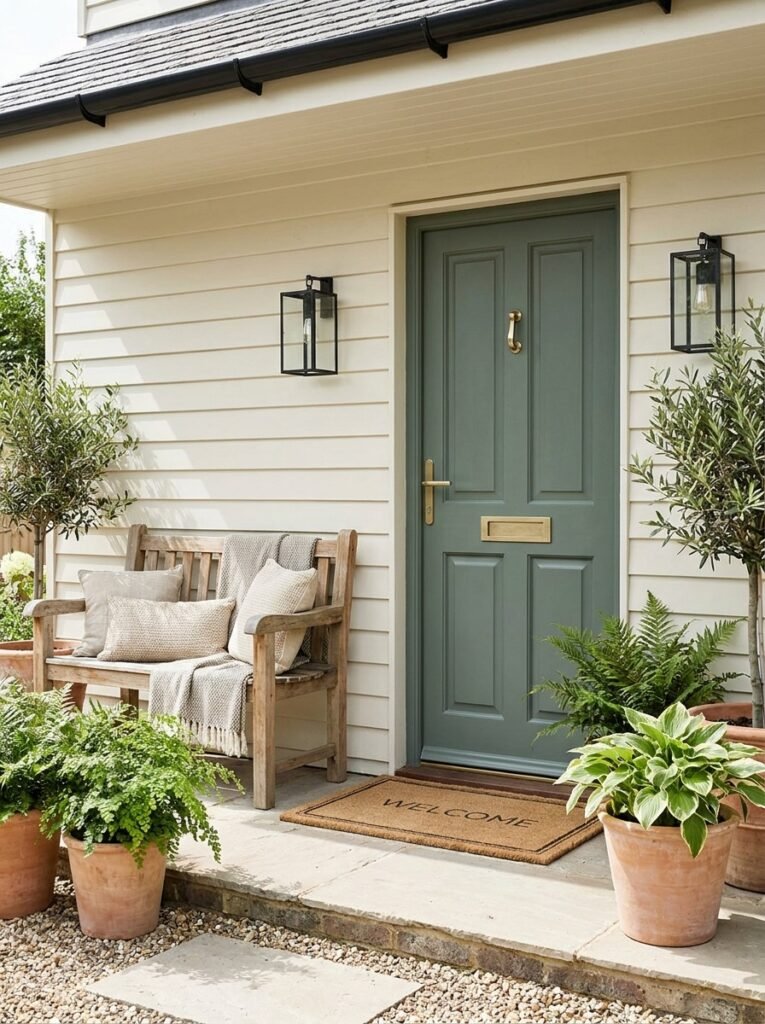
A bold front door can become the centerpiece of your porch while requiring very little additional decoration. Shades such as deep green, navy, charcoal, terracotta, muted yellow, or rich blue can add personality to an otherwise neutral exterior. Choose a color that complements the siding, brick, stone, or landscaping around your home. Even a modest porch can feel dramatically refreshed when the door receives a thoughtful coat of paint.
Once you introduce a strong door color, keep surrounding decorations relatively restrained. Neutral planters and natural wood accessories can soften the look, while black or brass hardware can provide a polished finishing touch. A simple wreath and understated doormat are often enough to complete the arrangement. The goal is to let the door remain the focal point rather than competing with it through too many bright colors or decorative objects.
9. Add a Small Porch Swing
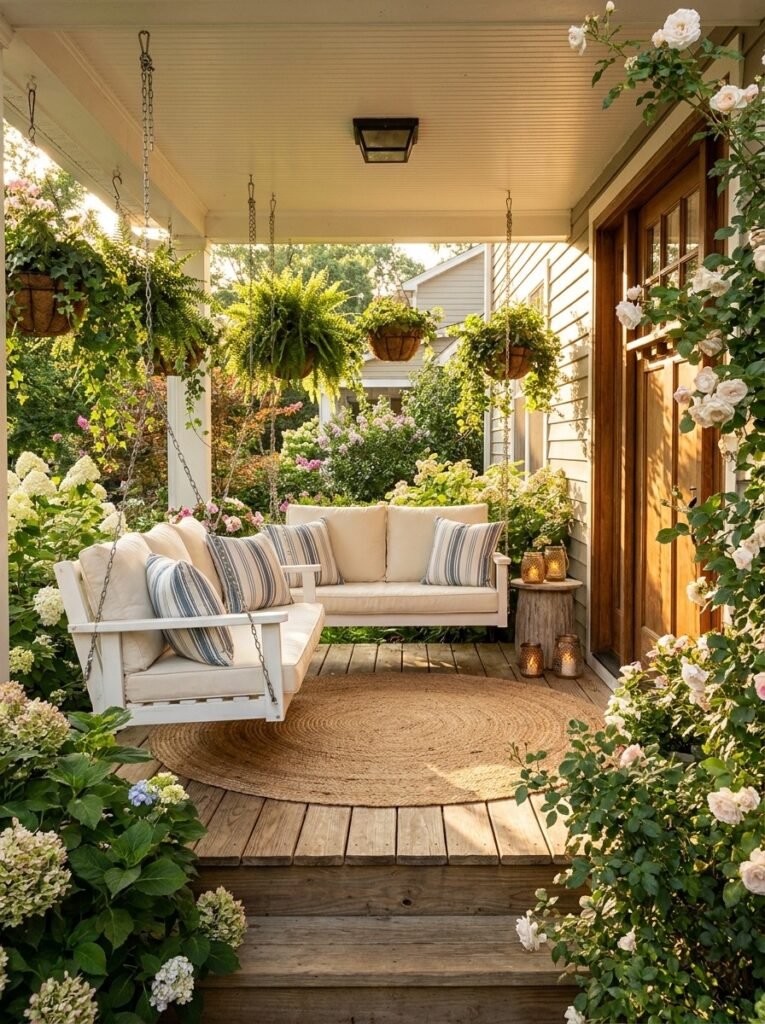
A porch swing instantly gives an entryway a relaxed and nostalgic feeling. If your porch has enough structural support, choose a compact swing that fits comfortably without interfering with the walkway. Wooden swings look timeless, while painted versions can coordinate with the home’s trim or front door. Add weather-resistant cushions and a soft outdoor throw to make the seating feel comfortable and inviting.
Decorate around the swing rather than overcrowding it. A small side table can hold drinks or books, while hanging plants can add greenery above and around the seating area. A woven outdoor rug underneath helps define the space visually. For safety, make sure the swing is properly installed using suitable hardware and structural support. With thoughtful styling, even a simple swing can become the defining feature of a charming porch.
10. Create a Minimalist Porch
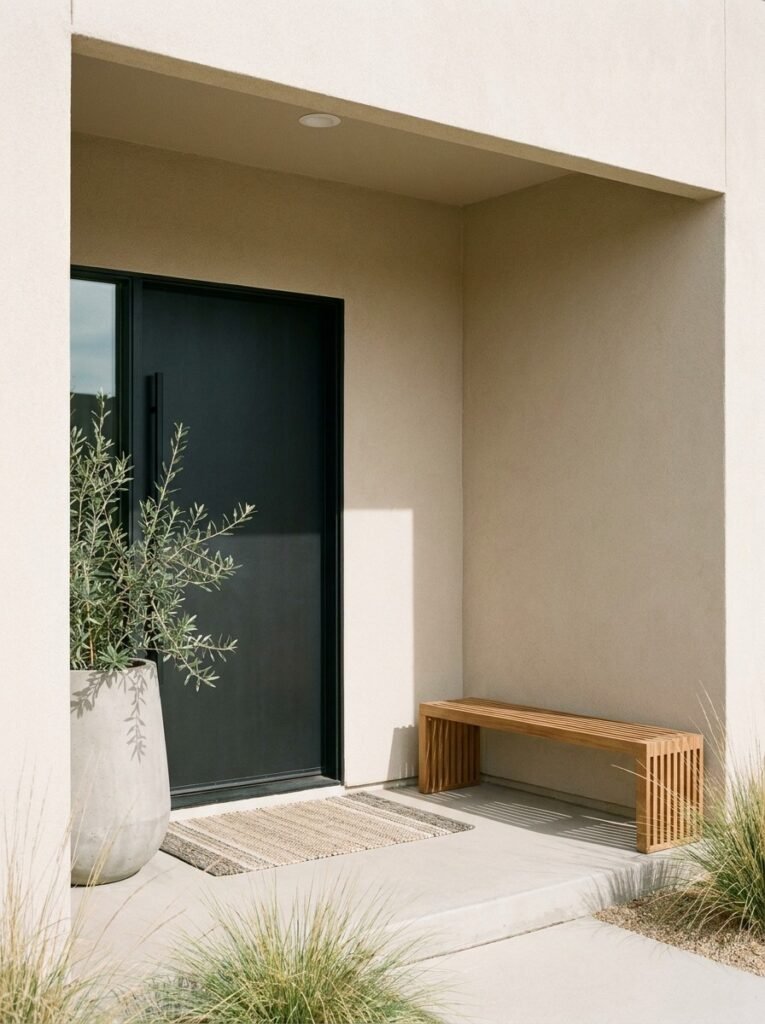
A minimalist porch focuses on simplicity, clean lines, and carefully selected accessories. Instead of filling the entrance with numerous decorative pieces, choose a few items that provide both beauty and function. A streamlined bench, sculptural planter, simple doormat, and understated wall light may be all you need. Neutral colors such as white, beige, charcoal, gray, and natural wood can create a calm and contemporary appearance.
Minimalism does not mean the porch has to feel cold or empty. Introduce warmth through natural materials, soft textures, and greenery. A large plant can provide an organic contrast against clean architectural lines, while a woven mat adds subtle texture beneath the doorway. Keep pathways clear and avoid unnecessary decorative clutter. The result should feel intentional and peaceful, with every object contributing to the overall composition rather than simply occupying space.
11. Incorporate Natural Wood Accents
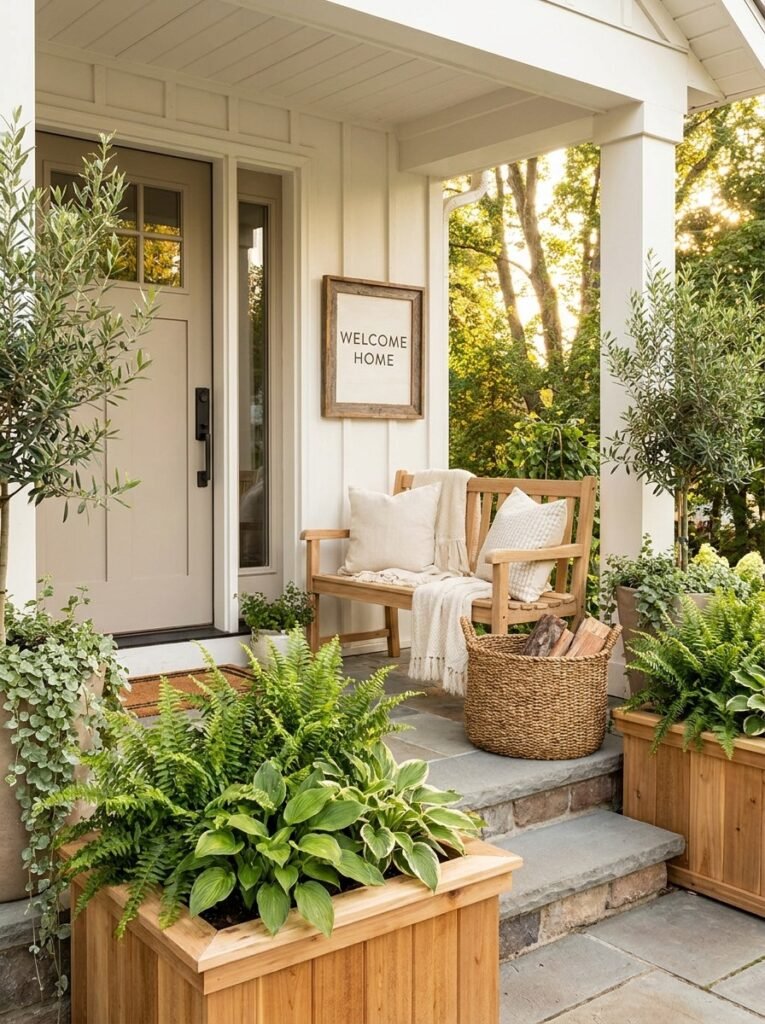
Natural wood can make a porch feel warmer and more connected to its surroundings. Consider incorporating a wooden bench, planter boxes, small side table, shutters, or decorative sign. Light woods create an airy Scandinavian or coastal feeling, while darker stained wood can produce a richer traditional appearance. Choose finishes that complement existing exterior materials instead of introducing too many competing wood tones.
You can soften wooden elements with greenery and textiles. A simple cushion on a bench makes it more comfortable, while potted plants add color and organic shapes. Woven baskets and jute rugs can reinforce the natural theme without making the porch look overly rustic. Because wood has a strong visual texture, you do not need many accessories. A few well-chosen pieces can provide enough warmth and character to make the entrance feel inviting.
12. Add Hanging Planters
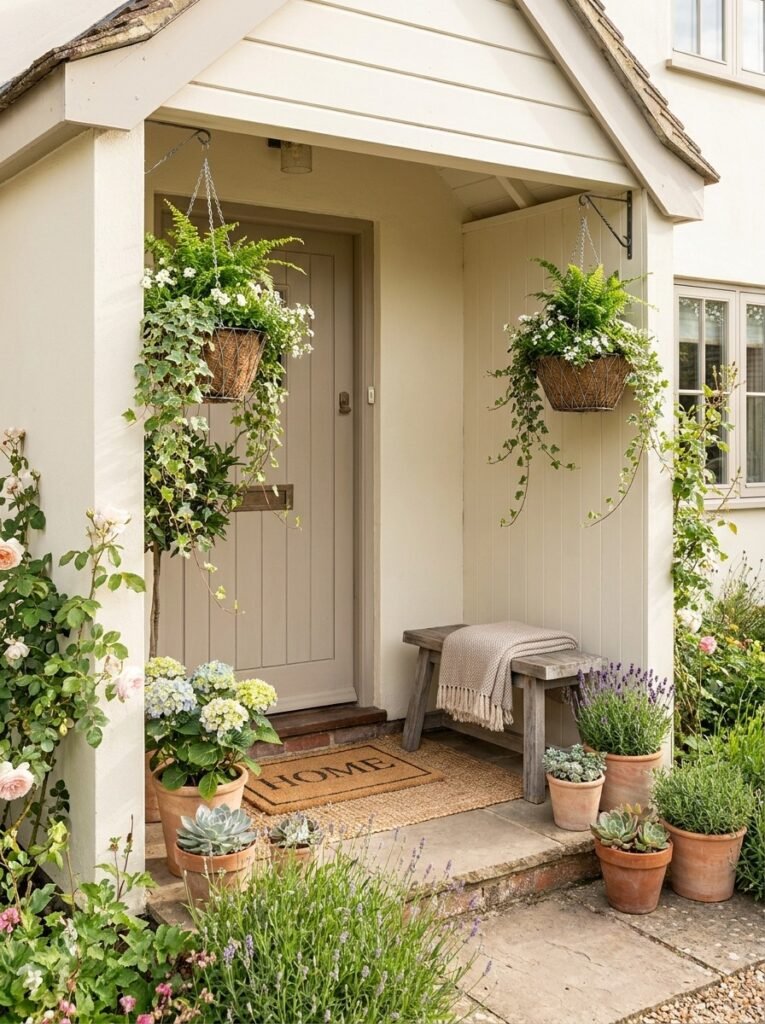
Hanging planters are especially useful when floor space is limited. Suspending greenery from the porch ceiling draws the eye upward while keeping the walkway open. Trailing plants such as ivy, ferns, pothos, or flowering varieties can create a soft cascading effect. Use attractive baskets, ceramic pots, or simple metal planters depending on your home’s decorating style.
When arranging hanging plants, vary their heights slightly rather than placing everything at exactly the same level. This creates movement and makes the porch feel more natural. Make sure the containers are securely installed and positioned where they will not obstruct people walking underneath. Watering requirements should also be considered before choosing the location. A few lush hanging plants can turn a plain porch into a charming garden-inspired retreat.
13. Try Black-and-White Porch Decor
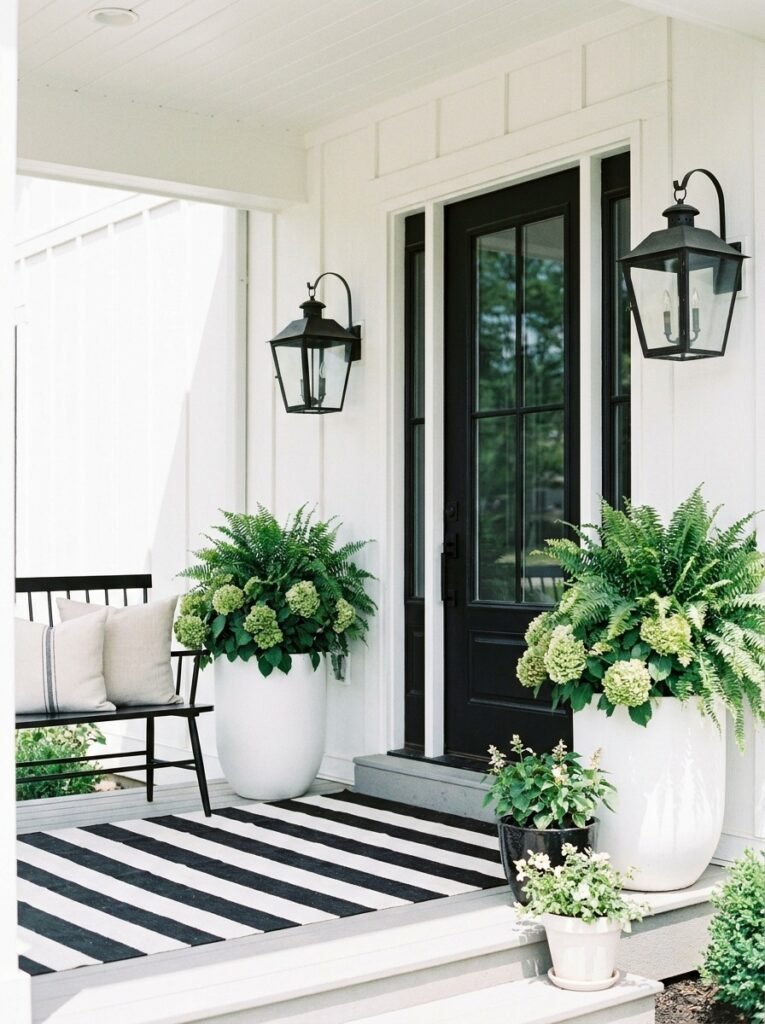
Black and white create a timeless combination that works across many architectural styles. Use a black front door, dark lanterns, white planters, or a striped rug to establish the palette. The contrast makes architectural details stand out and gives even a small entryway a crisp, polished appearance. Green plants can provide a natural accent without disrupting the simple color scheme.
To prevent the porch from feeling too stark, introduce texture rather than additional colors. Woven baskets, natural wood, textured cushions, and greenery can soften the strong contrast. A black-and-white patterned doormat can also add visual interest without becoming overwhelming. Keep the number of patterns limited and repeat the main colors throughout the arrangement. This creates a cohesive porch that looks sophisticated, organized, and especially appealing in photographs.
14. Use Lanterns as Porch Accessories
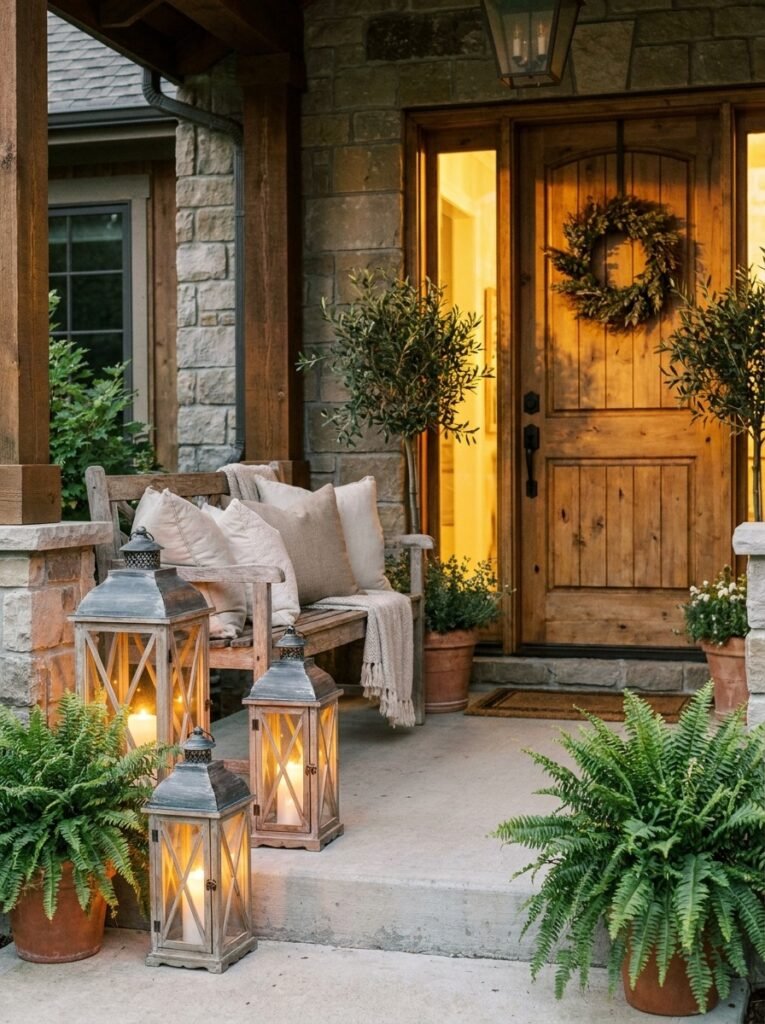
Lanterns can add warmth and character to a porch during both daytime and evening. Arrange two or three lanterns in different sizes near the doorway, steps, or seating area to create a layered display. Black metal lanterns provide a classic appearance, while brass, bronze, or natural wood versions can introduce warmth. Battery-operated candles are a convenient option for creating a soft glow without dealing with open flames.
Rather than scattering lanterns randomly, use them to frame important areas of the porch. A pair beside the front door can emphasize the entrance, while a small grouping beside a bench can make the seating area feel cozy. Combine lanterns with greenery or a woven basket for additional texture. Keep the display practical by ensuring the lanterns do not obstruct pathways or create hazards around doors and stairs.
15. Decorate With a Welcoming Sign
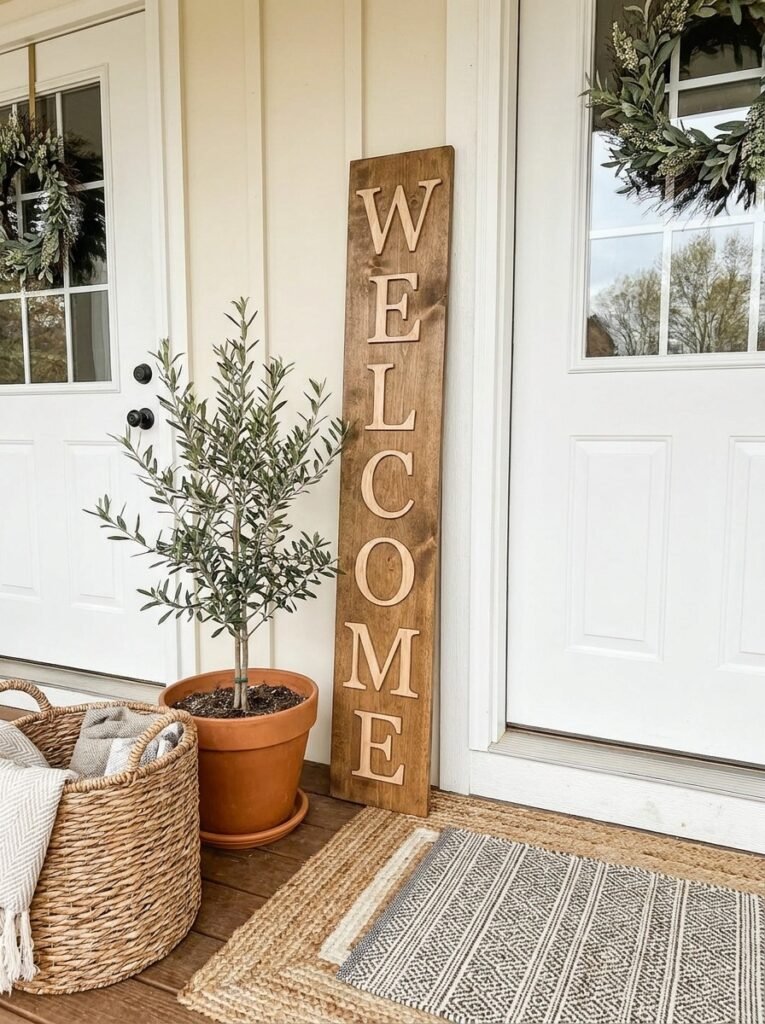
A welcoming sign can add personality to your porch while making the entryway feel more intentional. Choose a vertical wooden sign, framed message, or small wall plaque that complements your home’s style. Natural wood works well for farmhouse and cottage spaces, while simple black lettering can suit contemporary homes. Keep the wording understated so the sign feels decorative rather than visually overwhelming.
Placement is important when decorating with signs. Lean a tall sign beside the doorway if you have enough floor space, or mount a smaller design near the entrance. Pair it with a plant or lantern so it becomes part of a larger arrangement rather than standing alone. Avoid overcrowding the doorway with multiple messages and signs. One thoughtful statement usually creates a more polished and Pinterest-friendly appearance.
16. Style a Coastal-Inspired Porch
A coastal-inspired porch can create a relaxed atmosphere even if your home is far from the beach. Use a palette of white, cream, soft blue, sandy beige, and natural wood to establish the seaside feeling. Woven furniture, jute rugs, linen-look cushions, and simple greenery provide texture without making the design feel overly themed. A blue door can become a beautiful focal point against a light exterior.
Keep coastal decorating subtle by focusing on materials and colors rather than filling the porch with obvious nautical decorations. A few natural accessories can suggest a relaxed beach-house mood without becoming kitschy. Choose weather-resistant furniture and fabrics for durability, especially if the porch receives strong sun or moisture. With a restrained palette and plenty of natural texture, your porch can feel breezy, bright, and effortlessly comfortable.
17. Build a Cottage Garden Entrance
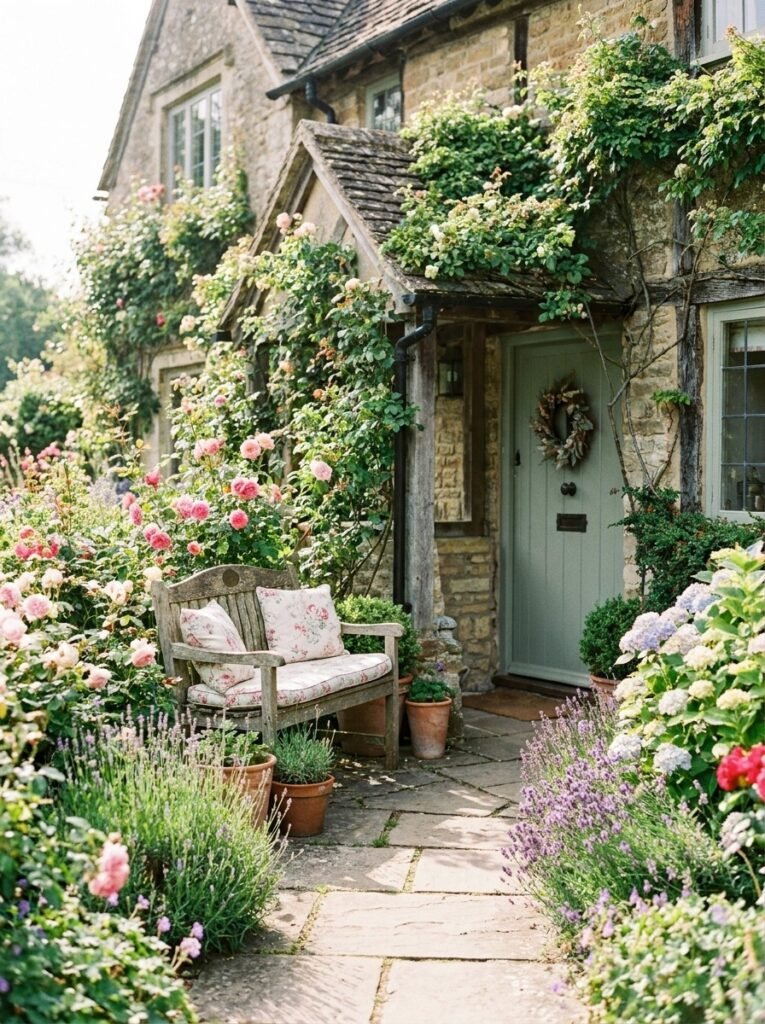
A cottage-inspired porch works beautifully when flowers and greenery appear abundant but naturally arranged. Use terracotta pots, weathered containers, wooden planters, and overflowing baskets to create a relaxed garden effect. Combine plants with different heights, leaf shapes, and flower colors rather than selecting everything from one variety. Soft pinks, whites, purples, and greens can create a romantic palette around the entrance.
The key to a cottage garden look is avoiding overly symmetrical arrangements. Place containers at slightly different heights and allow some plants to spill naturally over their edges. A vintage-style bench or small wooden chair can enhance the cozy atmosphere without requiring much space. Keep pathways accessible and choose plants suited to your climate. The finished porch should feel charming and established, as though the garden has naturally grown around the home.
18. Add an Outdoor Rug
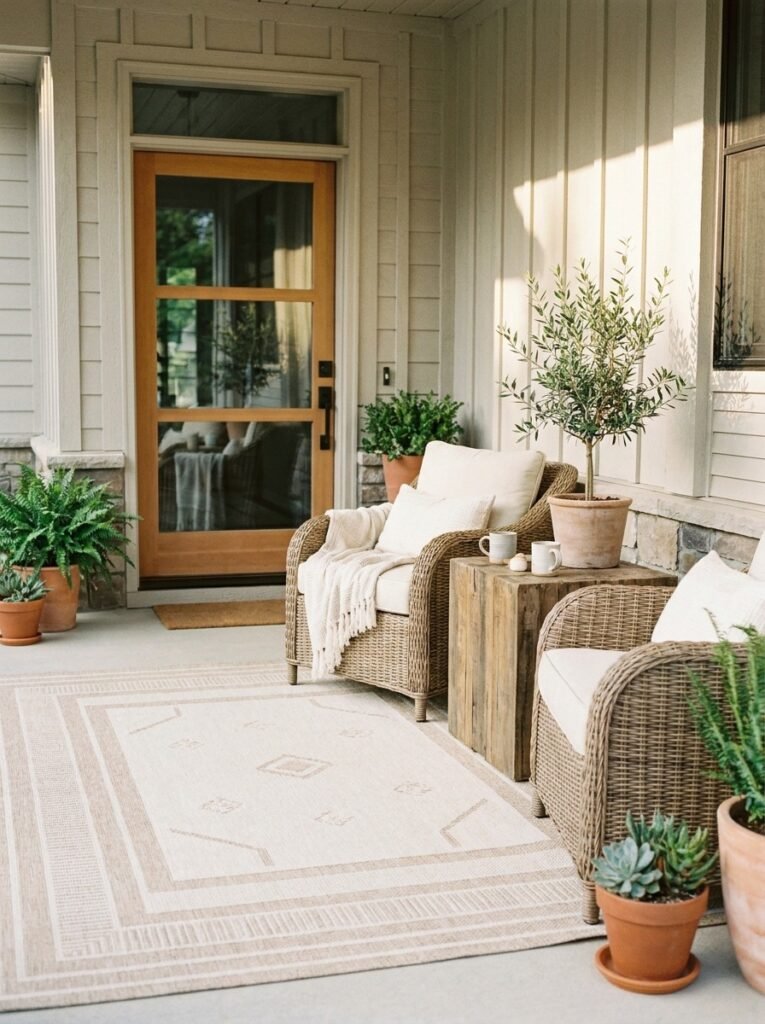
An outdoor rug can instantly make a porch feel more like an extension of your indoor living space. Choose a weather-resistant rug in a pattern and color palette that complements your exterior. Stripes, subtle geometric designs, botanical motifs, and neutral patterns are versatile choices. A larger rug can visually connect seating pieces, while a smaller rug beneath the doorway can simply define the entrance.
When selecting a porch rug, prioritize durability and easy maintenance. Outdoor rugs should be able to handle moisture, dirt, and sunlight without quickly losing their appearance. Consider the rug’s placement carefully so doors can open freely and walkways remain clear. Pairing the rug with coordinated cushions and planters creates a cohesive look. This simple addition can provide color, softness, and visual structure without requiring a major renovation.
19. Decorate a Small Porch With Vertical Layers
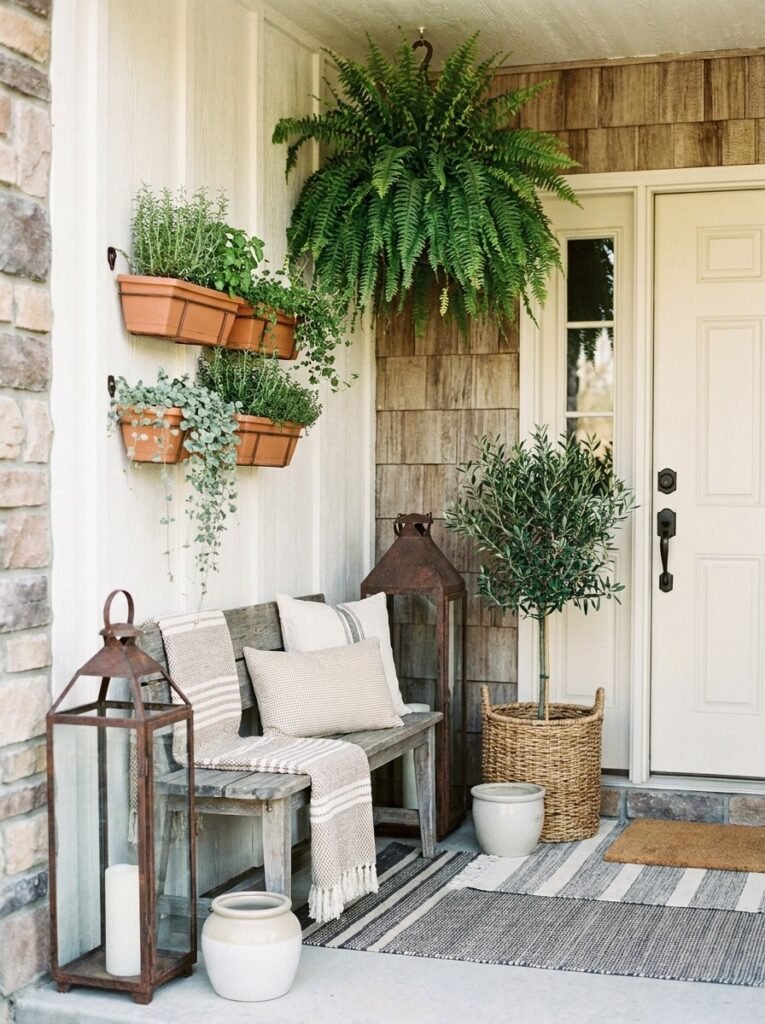
Small porches can still look beautiful when you decorate upward instead of spreading accessories across the floor. Use wall-mounted planters, hanging baskets, tall lanterns, vertical signs, or narrow planters to create visual height. A slim bench can provide seating without consuming too much space. Keeping the floor relatively open makes the porch feel larger and allows the entrance to remain functional.
Choose a limited color palette to prevent a compact porch from feeling visually crowded. Repeating two or three colors across the mat, planters, cushions, and door accessories can create cohesion. Look for furniture with slim profiles and containers that provide height without excessive width. By combining different levels—floor, seating, wall, and ceiling—you can create depth and personality even in the smallest entryway.
20. Incorporate Rustic Vintage Pieces
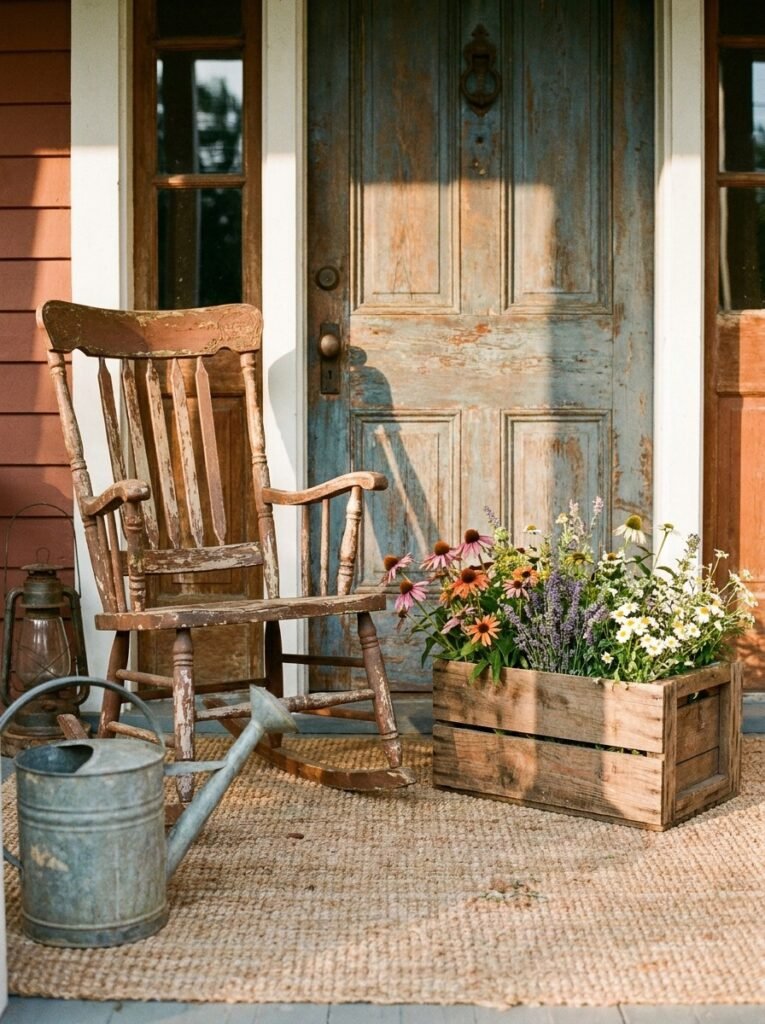
Vintage pieces can give a porch a sense of history and personality. Look for an old wooden chair, weathered stool, antique watering can, reclaimed crate, or aged metal planter that can become part of the arrangement. These pieces do not need to be perfectly restored; their worn surfaces and imperfections can provide the character that makes rustic decorating appealing.
Balance vintage accessories with practical modern elements so the porch remains comfortable and functional. A weather-resistant cushion can make an antique chair usable, while fresh plants can bring life to an old planter. Avoid placing too many aged pieces together, which can make the space feel cluttered. One or two distinctive vintage accents surrounded by greenery and simple neutral decor can create a beautifully collected appearance.
21. Create a Neutral and Cozy Porch
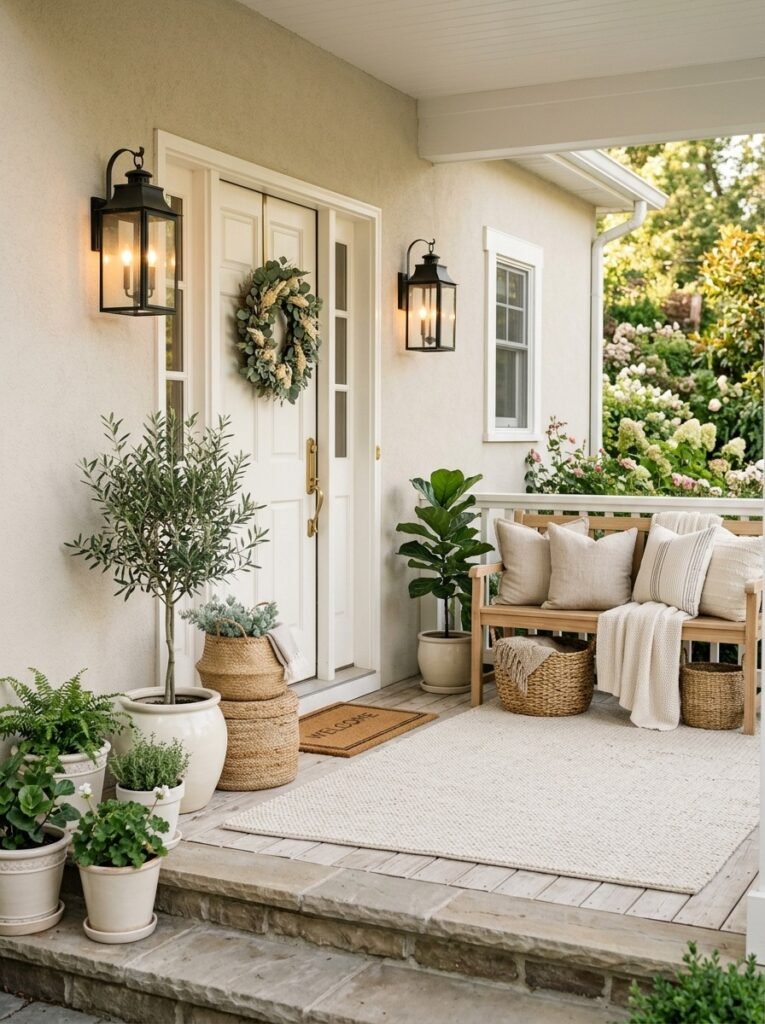
A neutral porch can feel incredibly calming when you combine several shades and textures instead of relying on one flat color. Cream, beige, taupe, warm gray, natural wood, and muted green work beautifully together. Add a woven rug, textured cushions, ceramic planters, and a wooden bench to create depth. This palette is especially useful if you want decorations that remain attractive through different seasons.
The most important part of neutral decorating is introducing texture. Without texture, too many pale colors can make a porch look bland. Combine smooth ceramic with rough wood, woven fibers, soft cushions, and leafy plants to create visual contrast. Small amounts of darker accents, such as black lanterns or charcoal hardware, can provide definition. The result is a sophisticated entrance that feels warm, peaceful, and easy to update.
22. Refresh the Porch for Every Season
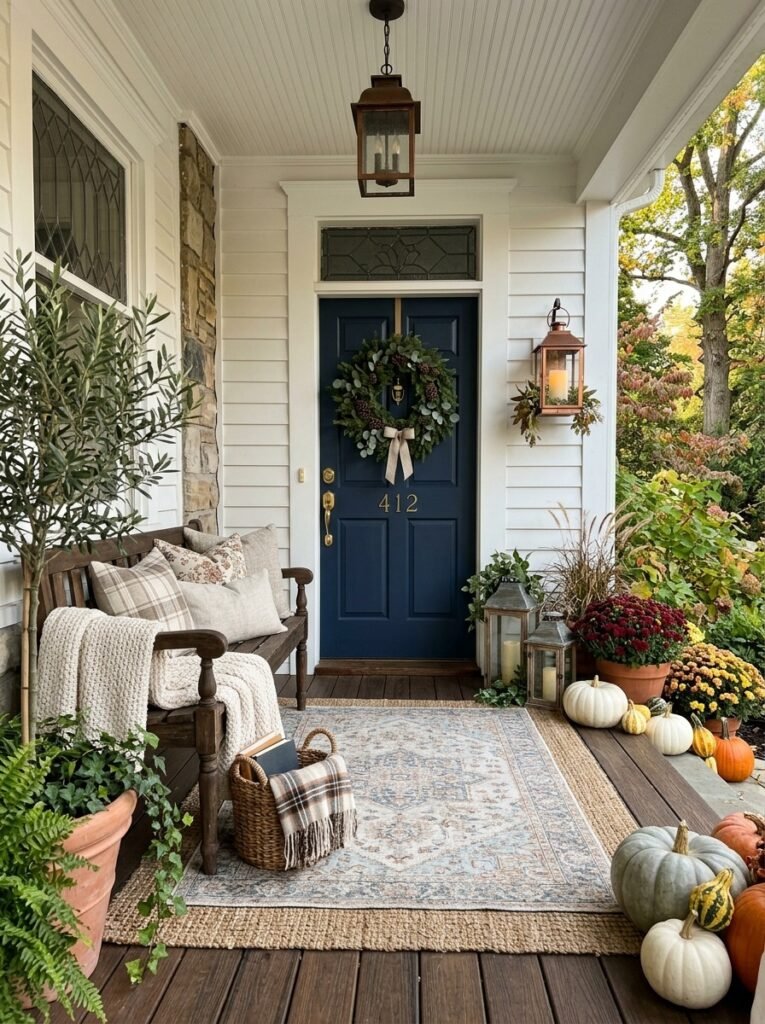
A versatile porch can be refreshed throughout the year without requiring a complete decorating makeover. Start with a neutral foundation of furniture, planters, rugs, and lighting that works in every season. Then change smaller accessories according to the time of year. Spring flowers, summer greenery, autumn pumpkins, and winter evergreens can each create a different atmosphere while maintaining the same basic arrangement.
Seasonal decorating works best when you focus on a few intentional changes rather than covering every surface. Replace a wreath, swap flower containers, change cushion covers, or add a seasonal basket near the door. Keep your core pieces durable and timeless so they can remain in place year-round. This approach saves money and storage space while allowing your porch to feel fresh, welcoming, and visually interesting throughout every season.
Your porch does not need a complete makeover to make a beautiful first impression. Simple additions like layered doormats, colorful planters, cozy seating, warm lighting, seasonal flowers, and a welcoming wreath can transform an ordinary entrance into a stylish and inviting space. The best porch decorating ideas are those that reflect your home’s personality while keeping the area practical and comfortable.
Whether you prefer farmhouse charm, modern minimalism, cottage style, or a cozy neutral look, start with a few elements you genuinely love. Mix textures, add greenery, and refresh small details throughout the seasons. With a little creativity, your porch can become more than an entryway—it can be a warm extension of your home that welcomes everyone who arrives.