
21 Craft Room Ideas to Organize Your Creative Space
A well-organized craft room can make the difference between feeling inspired and feeling overwhelmed every time you sit down to create. Whether you’re working with a full spare room or just a small corner, these 21 craft room ideas will help you build a functional, beautiful space that keeps your supplies accessible and your creativity flowing.
1. Pegboard Wall Organization
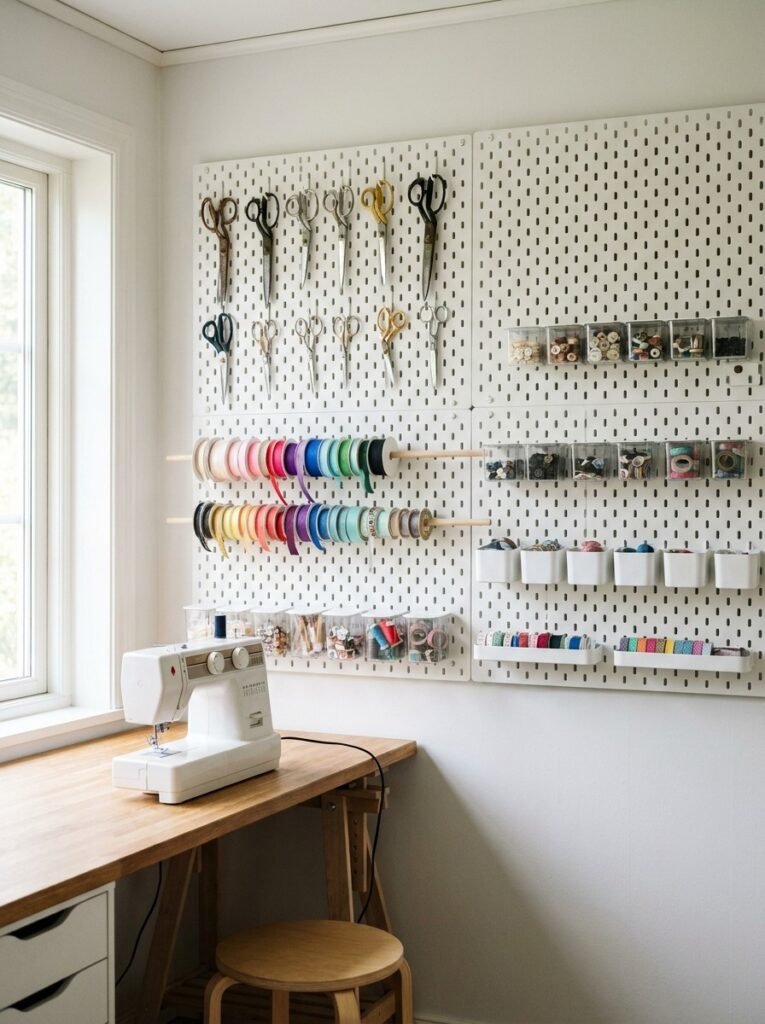
A pegboard wall is one of the most versatile storage solutions for a craft room, allowing you to customize the layout as your supplies and projects change. Hooks, small shelves, and baskets can be rearranged easily, making it simple to keep frequently used tools within arm’s reach at all times.
Paint the pegboard to match your room’s color scheme for a cohesive look rather than leaving it plain. Group similar items together, like all cutting tools in one section and ribbon spools in another, so everything stays easy to find during future projects.
2. Rolling Cart Storage System
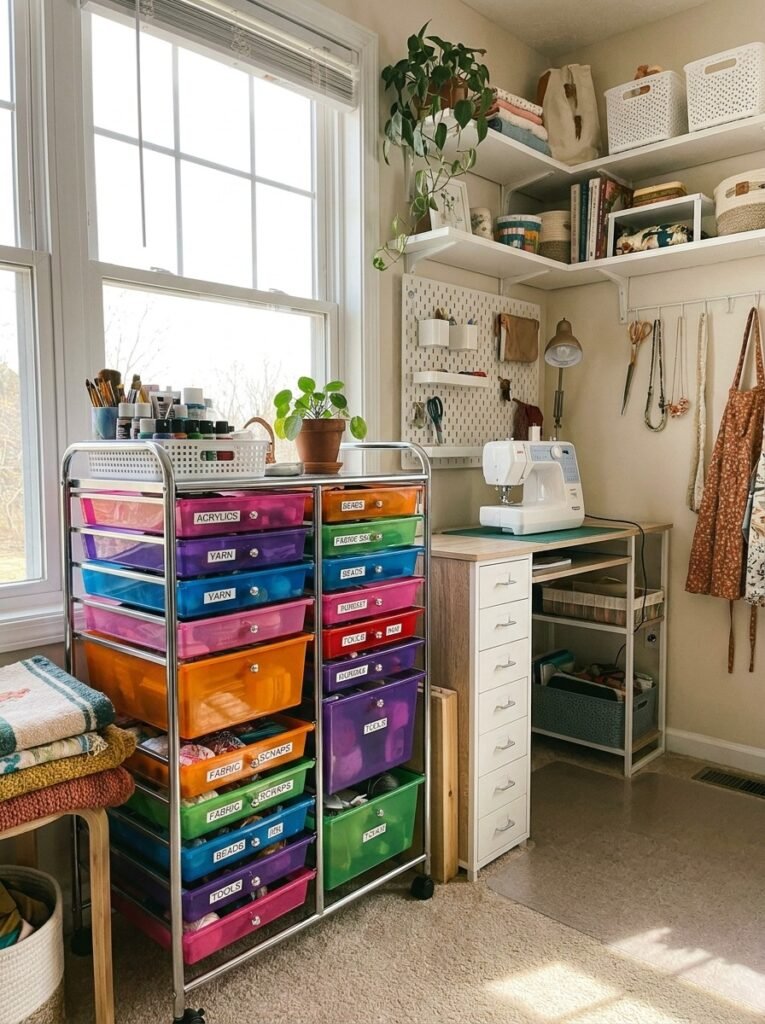
Rolling carts offer flexible, mobile storage that can move wherever your project takes you, whether that’s the craft table, kitchen counter, or living room floor. Multiple tiers allow you to sort supplies by category or project, keeping everything contained in one easy-to-transport unit rather than scattered across the room.
Label each tier or bin clearly so supplies are easy to locate at a glance. This system works especially well in small craft spaces or shared rooms, since the entire cart can be tucked into a closet or corner when not actively in use.
3. Ribbon and Trim Organizer
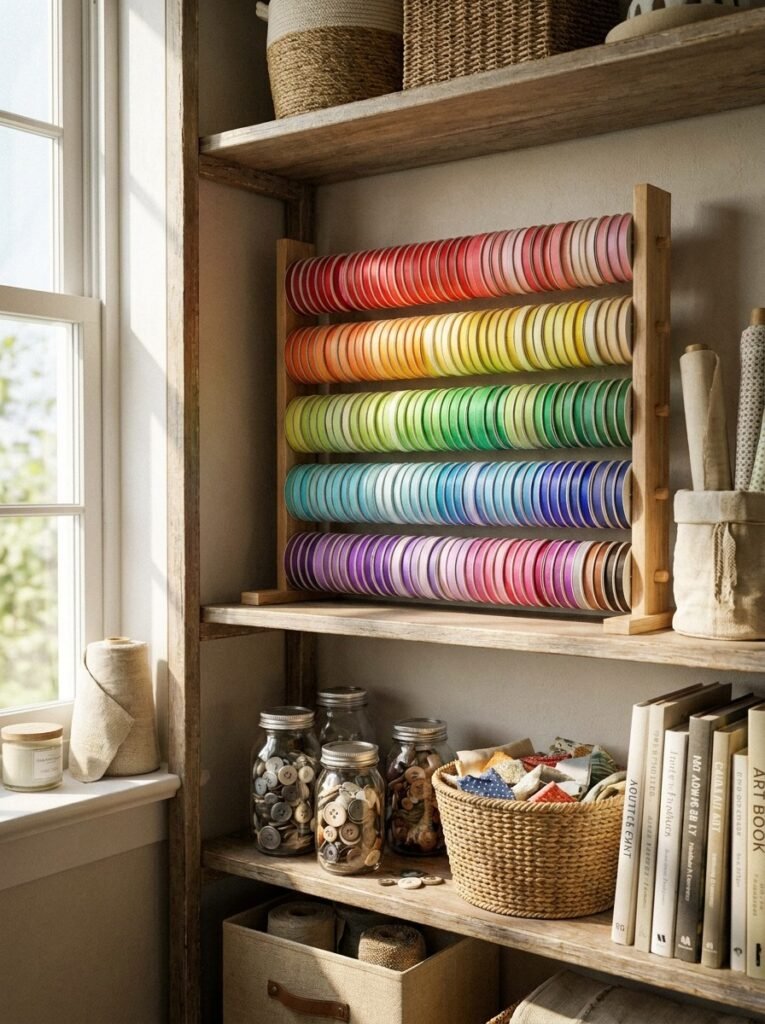
A dedicated ribbon and trim organizer keeps one of the trickiest craft supplies from becoming a tangled mess. Mounting spools on a dowel rod or wall rack allows you to see every color and pattern at once, making it easy to grab exactly what you need without digging through a drawer.
Arrange ribbons in a rainbow gradient for both function and visual appeal, since the display itself becomes a decorative element in the room. This organization method works well for washi tape, twine, and trim in addition to traditional ribbon spools.
4. Craft Table with Storage
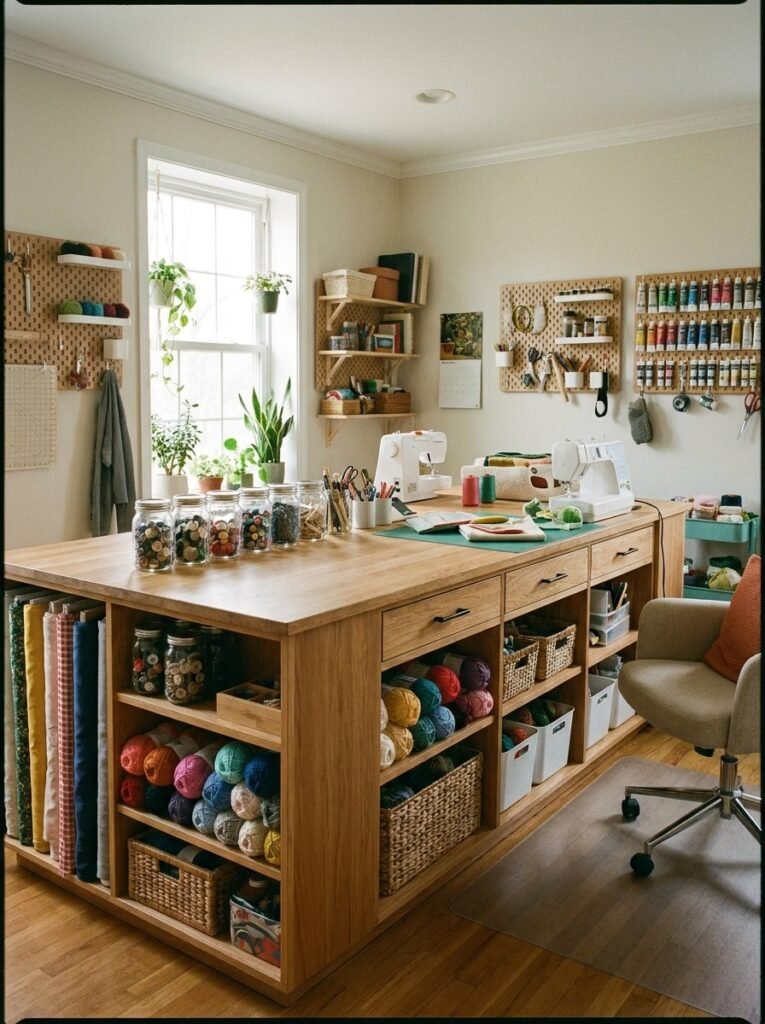
A craft table with built-in storage maximizes your workspace by combining a large work surface with drawers or shelving directly underneath. This setup keeps essential tools and supplies close at hand while you work, reducing the need to get up and search through separate storage areas mid-project.
Choose a table sized appropriately for your typical projects, whether that means sewing, scrapbooking, or painting. Open shelving beneath the table works well for frequently used bins, while closed drawers help keep smaller, less attractive supplies out of view.
5. Fabric Storage Shelving
Open shelving is one of the best ways to store fabric, since it lets you see your full collection at a glance rather than digging through bins or drawers. Folding fabric consistently and organizing by color or type keeps the shelving looking tidy while also making inventory easy to assess.
For fabric prone to fading, consider shelving away from direct sunlight or adding curtains that can be closed when the room isn’t in use. This display method turns your fabric stash into a colorful, motivating part of the room’s overall decor.
6. Washi Tape Display Wall
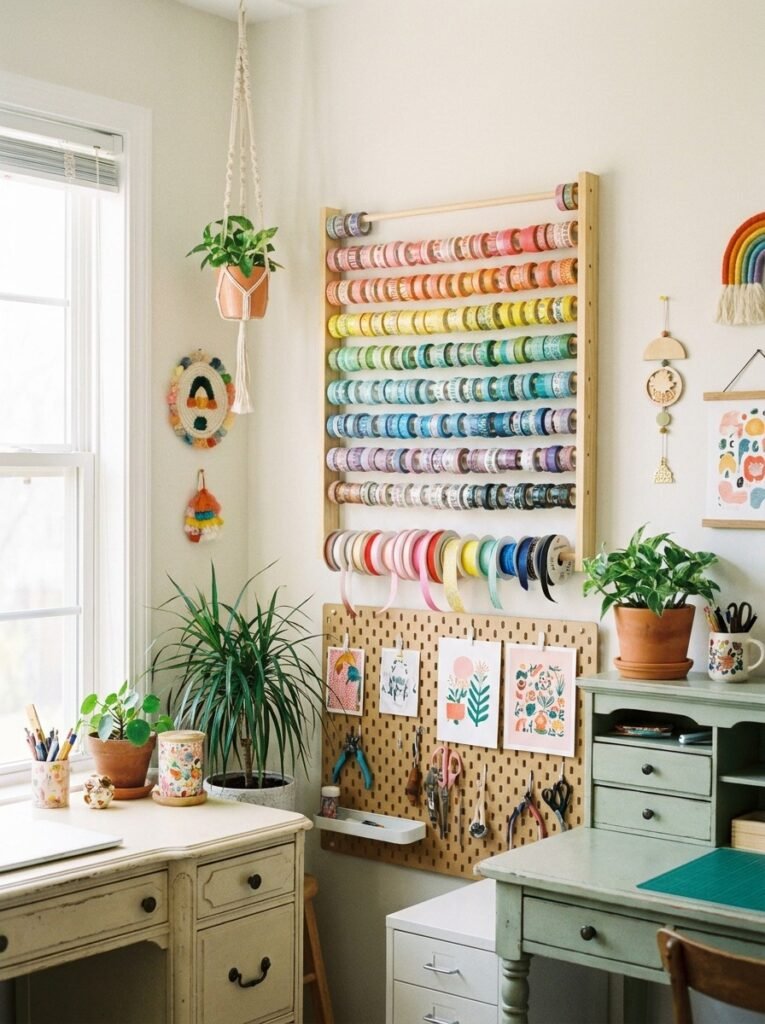
A dedicated washi tape display keeps this popular craft supply organized and easy to browse, rather than buried in a drawer where rolls get lost or forgotten. A simple dowel or small shelving unit lets you see every pattern and color at once, encouraging more frequent, intentional use of your collection.
Arrange rolls by color family or pattern style for the most visually pleasing display. This small styling detail doubles as decor, adding a playful pop of color and pattern to an otherwise plain wall or shelf in the craft room.
7. Clear Bin Labeling System
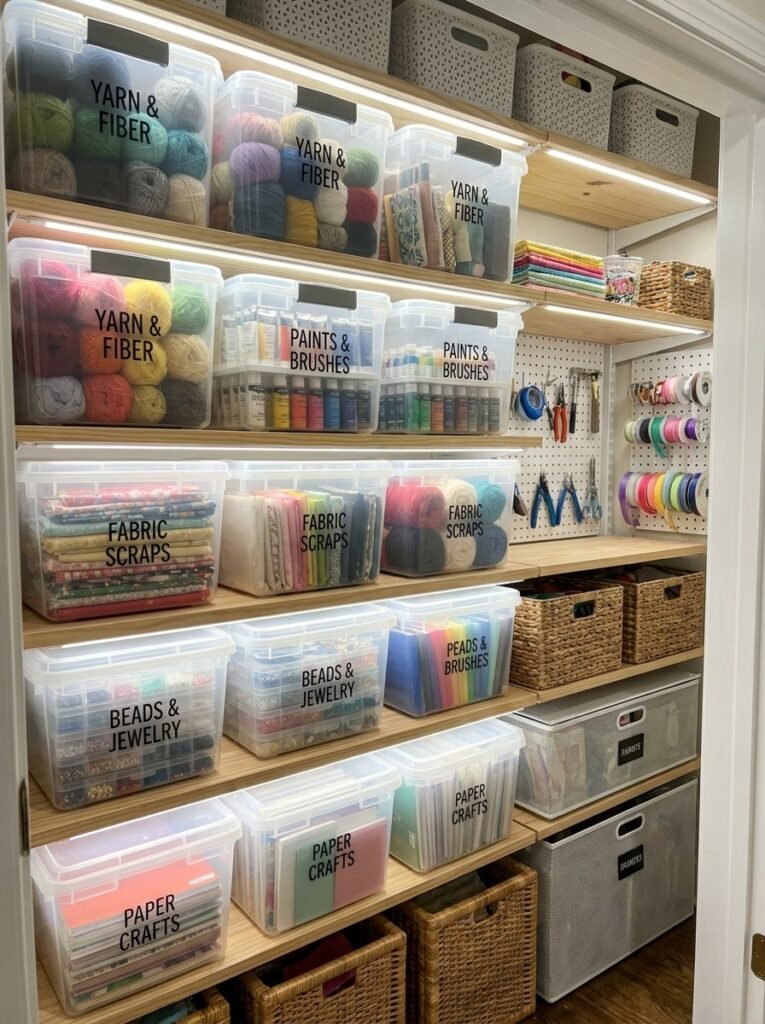
Clear bins paired with a consistent labeling system make it easy to find supplies without opening multiple containers to search. Because the contents are visible through the clear plastic, you can quickly locate what you need, saving time during projects and reducing the frustration of a disorganized supply closet.
Use a label maker or simple printed tags for a uniform, polished look across all your storage bins. Group bins by category, such as painting supplies, paper goods, or sewing notions, and stack similar-sized containers together for the most efficient use of shelf space.
8. Vintage Sewing Machine Corner
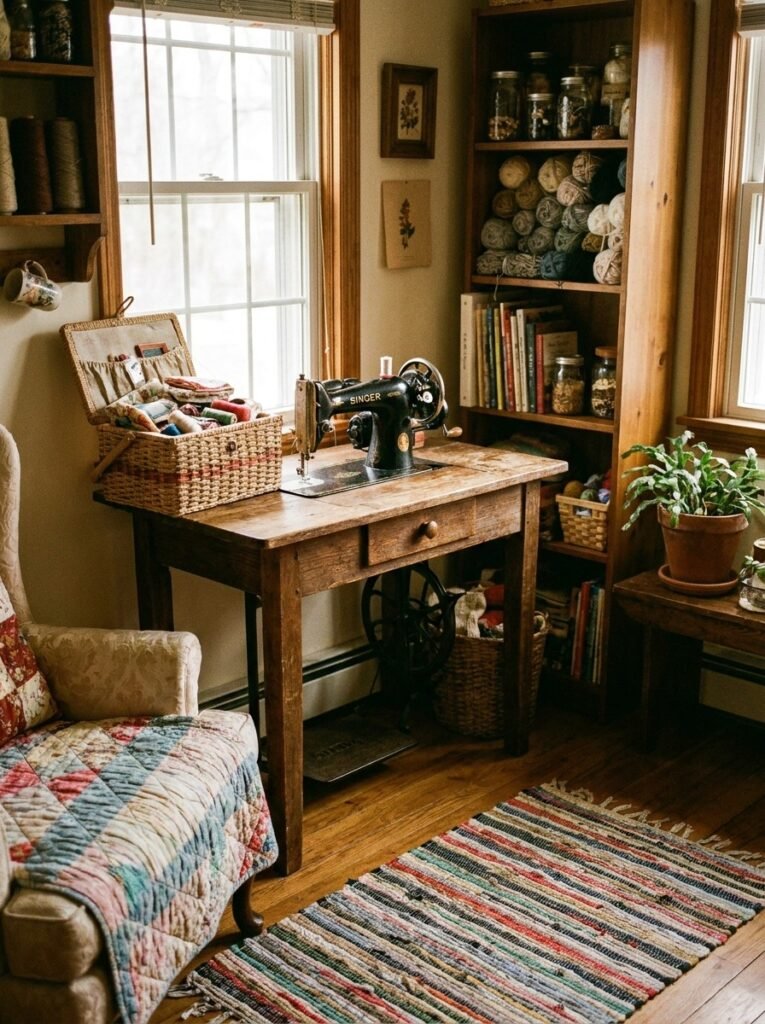
A vintage sewing machine corner adds character and old-world charm to a craft room, especially for those who love working with fabric. Whether functional or purely decorative, a classic sewing machine becomes a natural focal point, paired beautifully with a wicker basket for thread, needles, and other small notions.
Position this corner near a window for the best natural light while sewing. Add a small vintage stool or chair to complete the nostalgic feel, creating a dedicated nook that feels both functional and like a piece of curated decor.
9. Pinterest Inspiration Wall
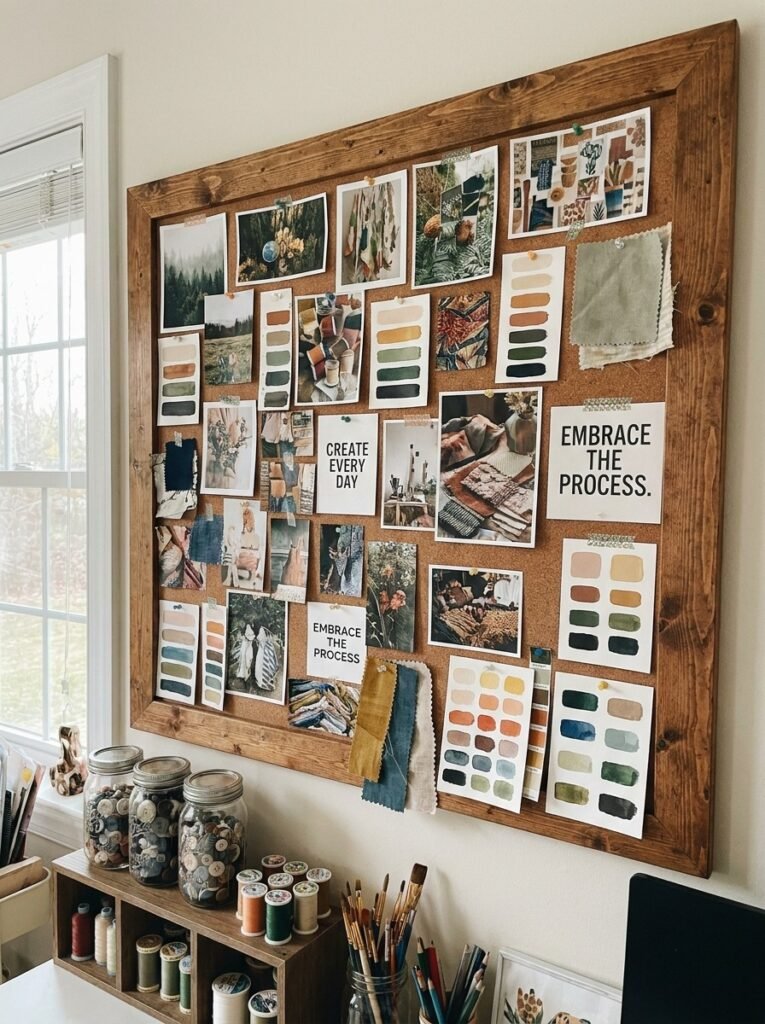
An inspiration wall gives you a dedicated space to pin project ideas, color palettes, and fabric swatches, keeping your creative vision visible while you work. This ever-changing display helps maintain motivation and provides quick visual reference during the planning stages of any new craft or sewing project.
Use a large corkboard or magnetic board framed to match your room’s decor for a polished look. Rotate the pinned images and swatches regularly to reflect your current projects, keeping the wall feeling relevant and genuinely useful rather than outdated.
10. Craft Closet Conversion
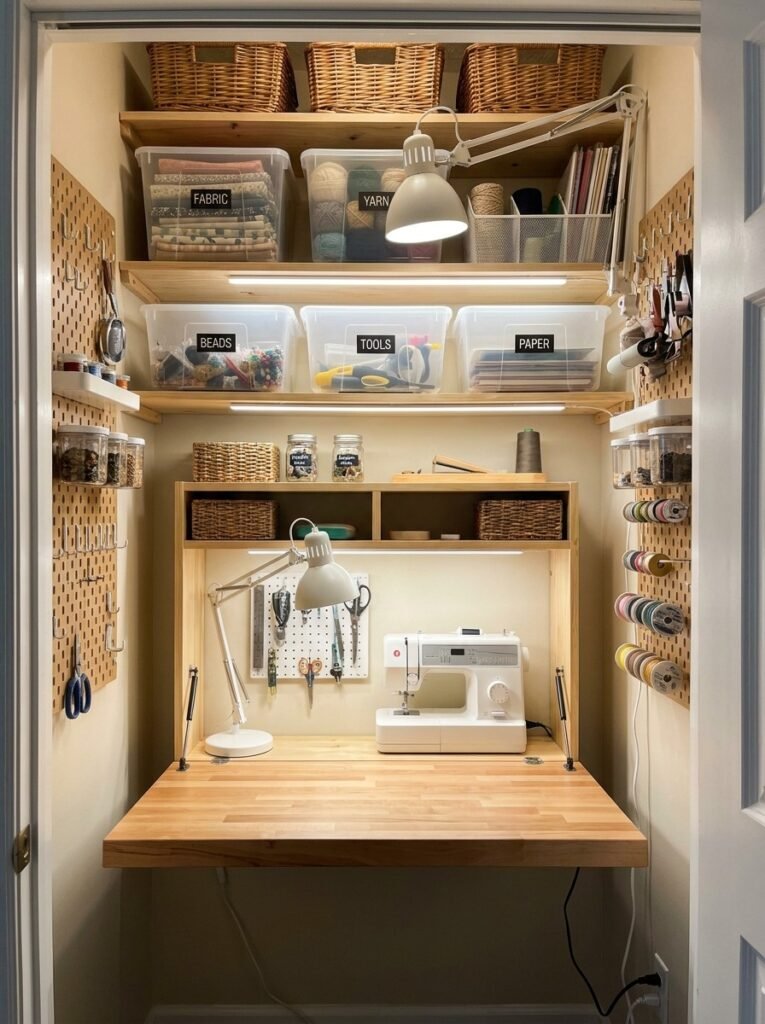
Converting an unused closet into a craft storage station is a smart solution for those without a dedicated room to spare. Adding shelving, labeled bins, and even a small fold-down table maximizes the vertical space, proving that a full room isn’t necessary to build a functional creative area.
Install bright task lighting since closets typically lack natural light of their own. Keep frequently used supplies at eye level and less common items higher up or lower down, making the most of every inch this compact space has to offer.
11. Color Coded Supply Storage
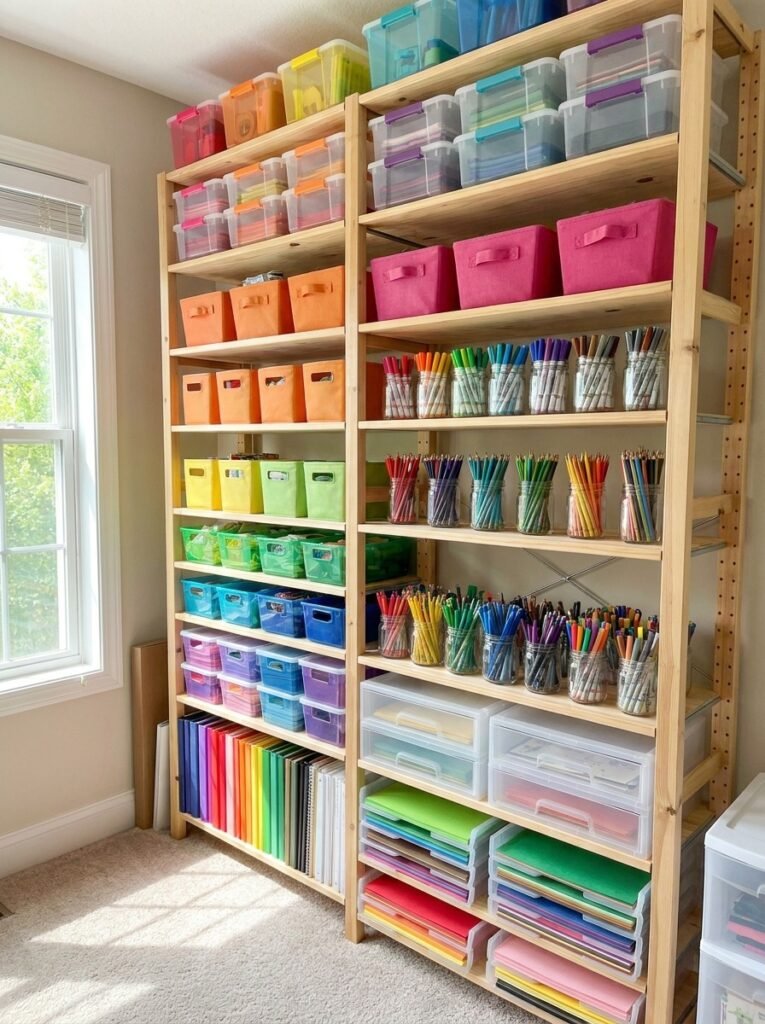
Organizing craft supplies by color rather than category creates a visually striking display that also happens to be highly functional. This system works especially well for markers, paper, ribbon, and paint, where color is often the primary factor you’re searching for when starting a new project.
Arrange bins or shelves in a rainbow gradient from one end of the room to the other for maximum visual impact. This colorful approach doubles as decor, turning your organizational system into one of the most eye-catching features of the entire room.
12. Cutting Station Setup
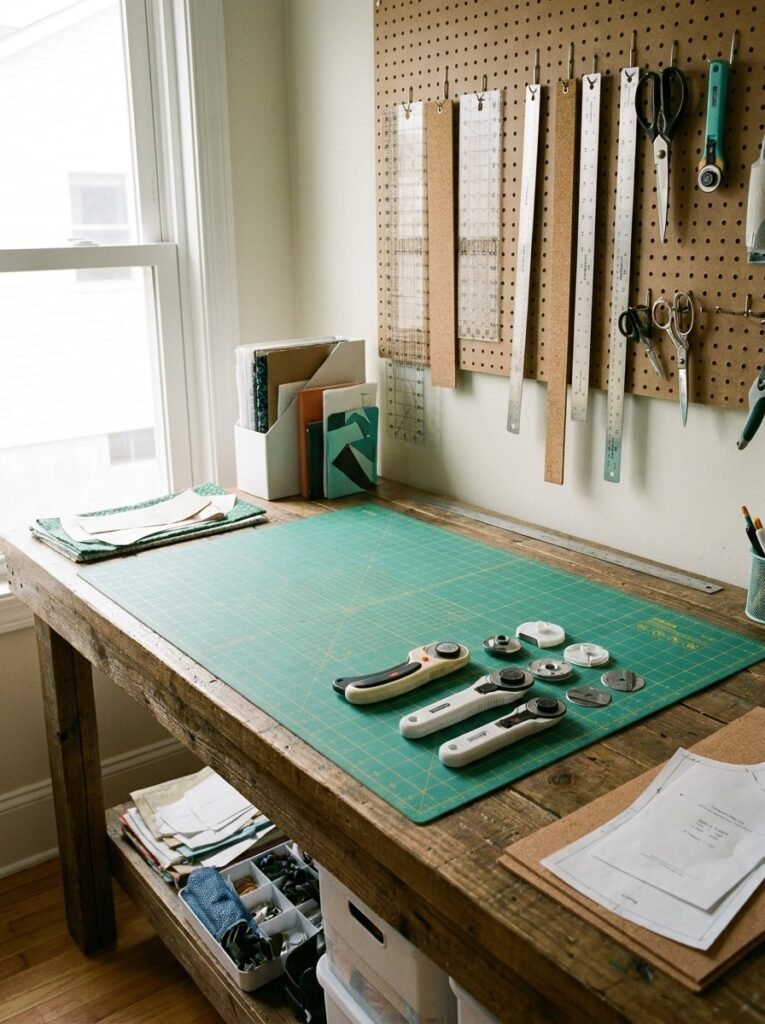
A dedicated cutting station keeps your most precise work organized and protected in one consistent spot. A large self-healing mat paired with nearby storage for rulers, rotary cutters, and scissors ensures you always have the right tools on hand without searching through drawers mid-project.
Position the cutting station near good lighting, since precision work benefits significantly from bright, shadow-free illumination. Wall-mounted storage for rulers and cutting tools keeps the table surface clear, ensuring the mat remains the only thing occupying your primary workspace.
13. Jar Storage for Small Supplies
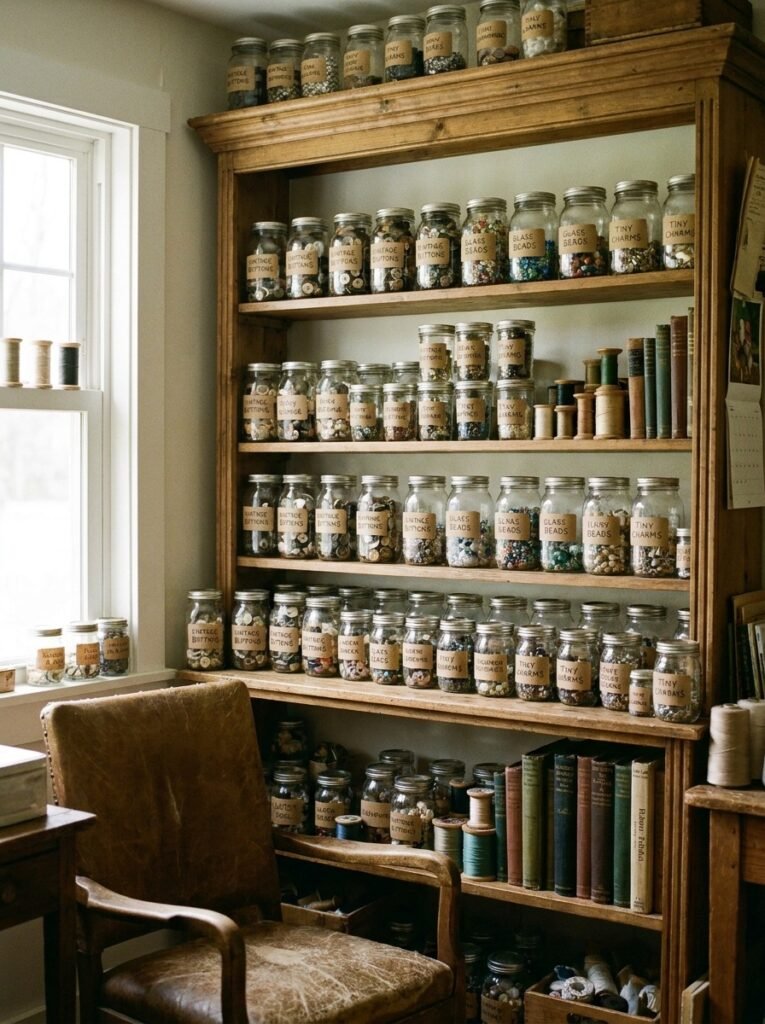
Glass jars are ideal for storing small craft supplies like buttons, beads, and embellishments that easily get lost in drawers. The clear glass allows you to see contents at a glance, while a uniform jar collection creates a tidy, charming display along open shelving throughout the room.
Label each jar clearly, especially for supplies that look similar from a distance, like different bead sizes or button colors. Arrange jars by size or supply type for the most organized appearance, and consider grouping complementary colors together for easy project planning.
14. Corner Craft Nook
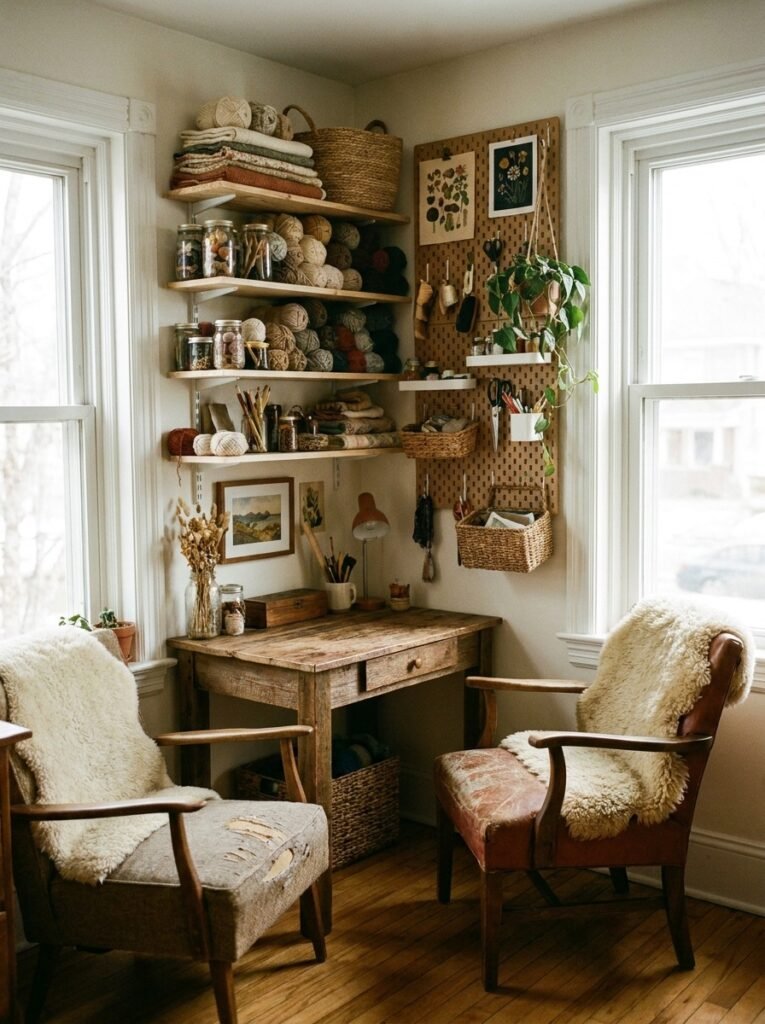
A corner craft nook proves that you don’t need an entire spare room to enjoy a dedicated creative space. Utilizing an underused corner with a small desk and wall-mounted shelving creates a functional area for projects without taking over shared living space in smaller homes or apartments.
Maximize vertical storage since floor space is limited in this setup, using shelves and pegboards rather than bulky furniture. A comfortable chair and good task lighting complete the nook, making it a genuinely enjoyable spot to return to for regular craft sessions.
15. Drawer Unit Organization
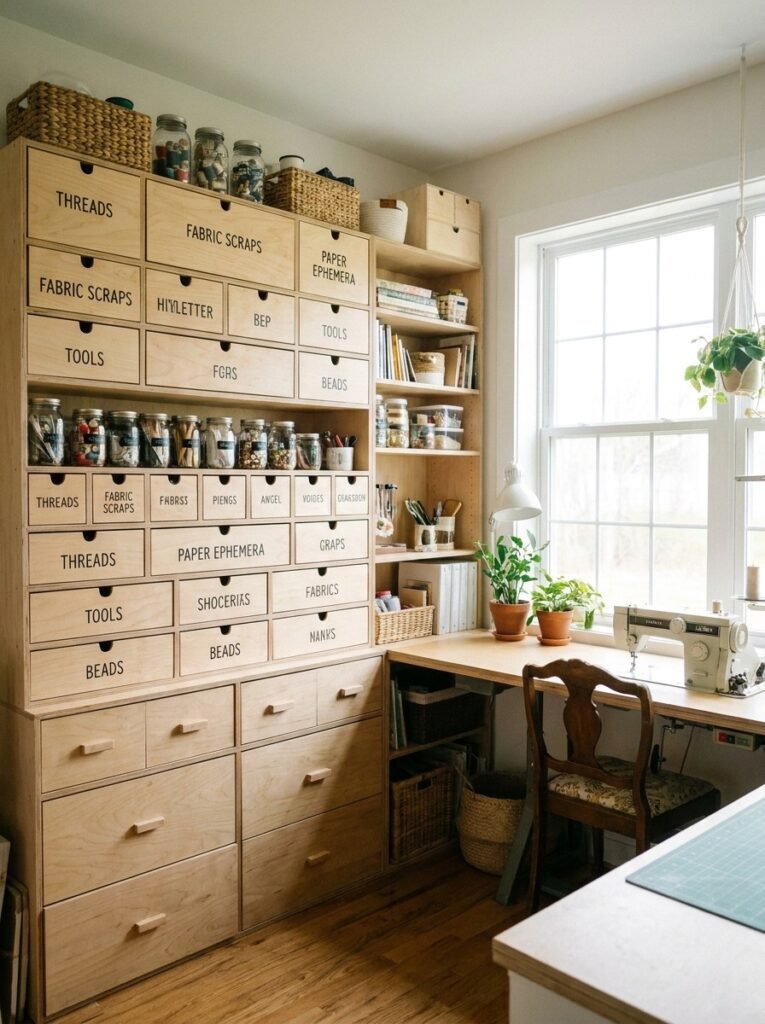
A multi-drawer storage unit is one of the most efficient ways to organize small and varied craft supplies out of sight. Unlike open shelving, drawers keep the room looking tidy even when supplies aren’t perfectly arranged inside, making this a practical choice for busy, frequently used craft spaces.
Label each drawer clearly with its contents to avoid opening multiple drawers while searching for a specific item. Group related supplies into the same or adjacent drawers, such as keeping all painting supplies together, to streamline your workflow during future projects.
16. Paper Storage Rack
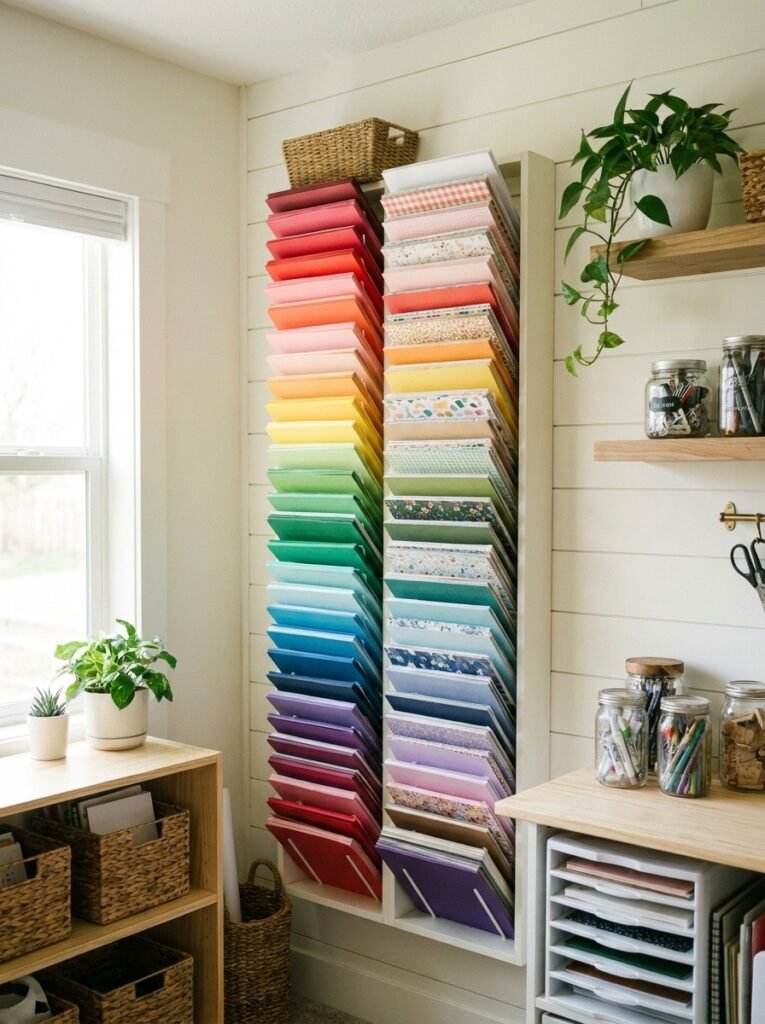
A vertical paper storage rack keeps cardstock, patterned paper, and stationery organized and easy to flip through, much like browsing a filing cabinet. This upright storage method prevents paper from bending or wrinkling, which commonly happens when sheets are stacked flat in a drawer or bin.
Organize paper by color or pattern type for quick visual browsing during project planning. A rack mounted on the wall also saves valuable table and shelf space, making it an especially smart solution for smaller craft rooms with limited storage options.
17. Craft Room Lighting Ideas
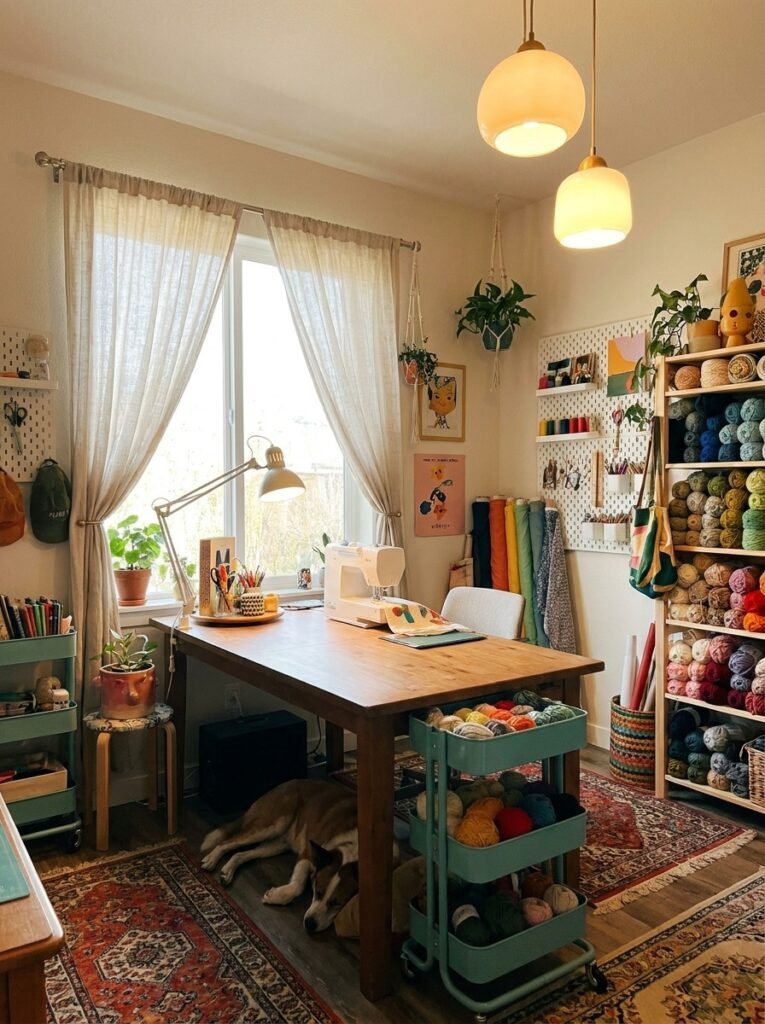
Good lighting is essential in a craft room, where precision work like sewing, painting, and cutting depends on clear visibility. Combining natural light from a window with a dedicated task lamp ensures you can see true colors and fine details accurately, regardless of the time of day.
Choose daylight-toned bulbs for task lighting, since warm yellow tones can distort how colors appear during projects. Position your primary work area near the room’s best natural light source, supplementing with a lamp for evening or overcast-day crafting sessions.
18. Chalkboard Label Wall
A chalkboard wall or panel offers a flexible, easily updated labeling system for craft room storage. Unlike printed labels, chalkboard writing can be changed instantly as your supply categories shift, making it a practical choice for creative spaces that evolve frequently based on current projects and hobbies.
Paint a section of wall or a large panel with chalkboard paint above your shelving for easy labeling. This feature also doubles as a spot for jotting quick project notes, measurements, or reminders while you work, adding function beyond simple organization.
19. Sewing and Craft Combo Room
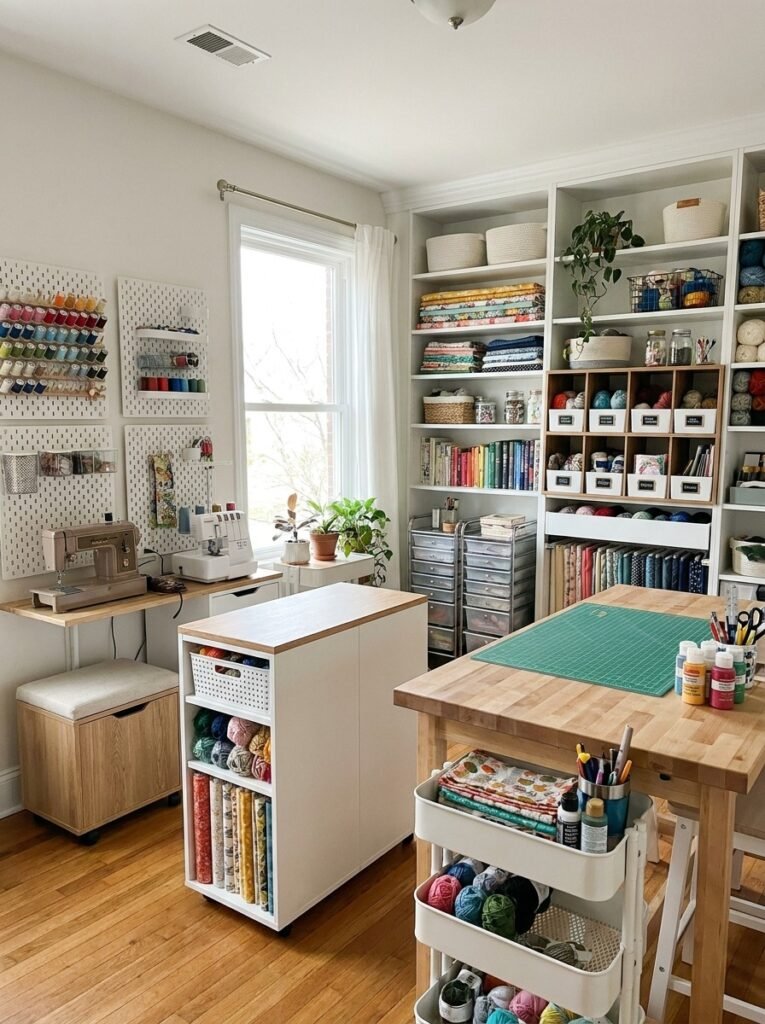
Combining sewing and general craft supplies into one shared room makes sense for those who enjoy multiple creative hobbies but only have one space to dedicate. Clearly zoning the room, with a sewing station on one side and a general craft table on the other, keeps each activity organized.
Use furniture and storage to visually separate the two zones, even within a single room. This layout allows you to move fluidly between projects, like sewing and scrapbooking, without needing to fully reset the space between each different type of creative activity.
20. Kids Craft Corner
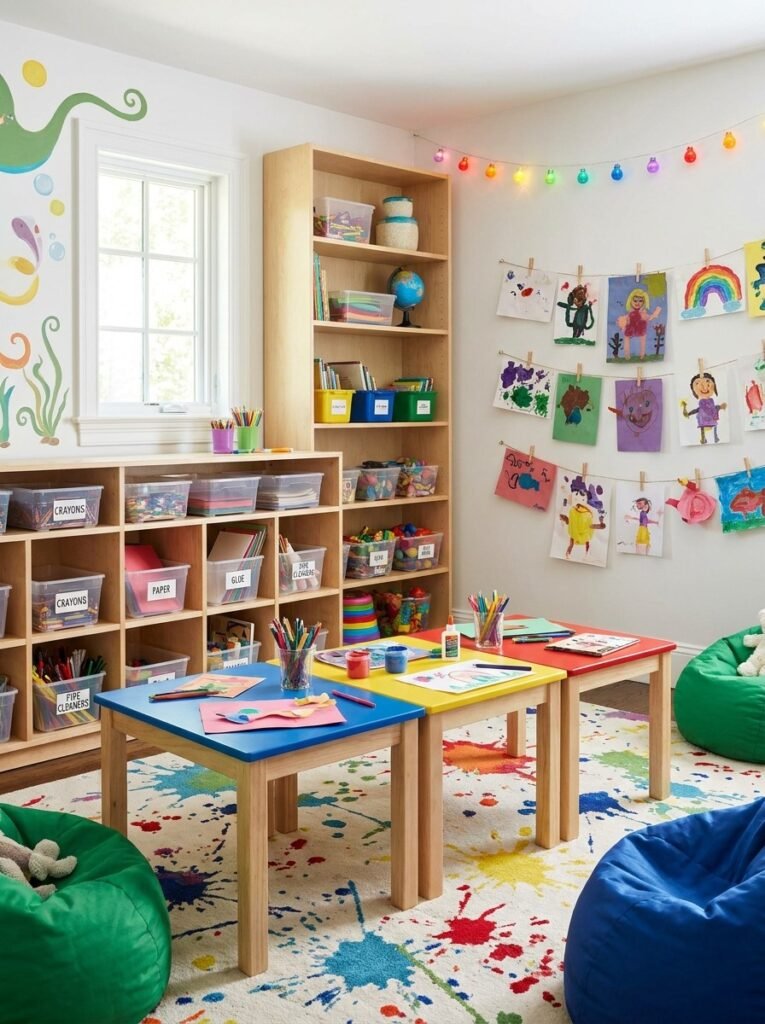
A dedicated kids’ craft corner encourages independent creativity while keeping supplies contained to one manageable area. Low tables and child-height storage bins make it easy for kids to access materials and clean up on their own, reducing mess throughout the rest of the home.
Display finished artwork on a nearby wall or clothesline to celebrate creativity and free up storage space. Choose washable surfaces and durable, easy-to-clean furniture for this corner, since kids’ craft areas tend to see far more spills and messes than adult workspaces.
21. Gift Wrapping Station
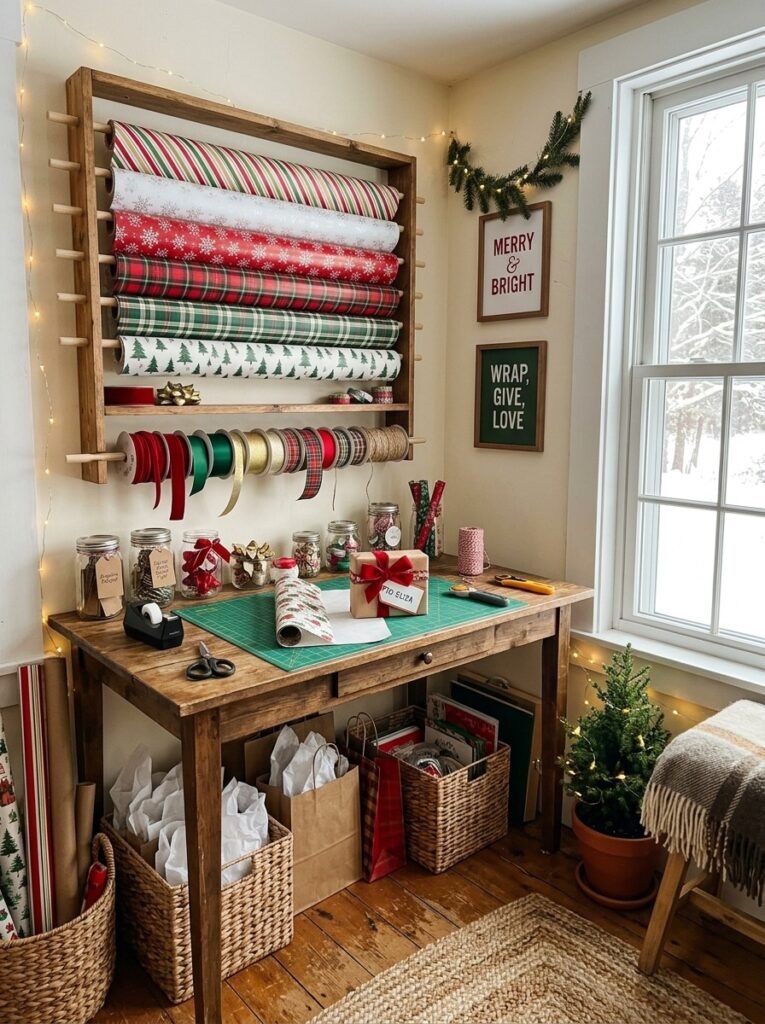
A dedicated gift wrapping station keeps rolls of paper, ribbon, and gift tags organized in one convenient spot, eliminating the annual scramble to find supplies during the holidays or birthday season. Vertical storage for paper rolls is especially helpful, preventing the wrinkled, crushed rolls that come from flat storage.
Include a small cutting surface and a designated spot for scissors and tape to keep the wrapping process efficient from start to finish. This station can be as simple as a repurposed closet shelf or as elaborate as a dedicated built-in cabinet.
An organized craft room isn’t just about tidiness — it’s about creating a space that actually inspires you to sit down and create. From pegboard walls to color-coded bins and cozy vintage corners, these 21 ideas prove that thoughtful organization and beautiful design can absolutely go hand in hand, no matter the size of your space.
The best system is one that fits how you actually work, so don’t be afraid to mix and match ideas from this list. Combining a rolling cart for mobile projects with fixed shelving for fabric or paper storage, for example, often creates the most functional and flexible setup for your specific creative habits.
Whatever your craft of choice, remember that a well-organized space saves time, reduces stress, and makes every project feel a little more enjoyable. Save your favorite ideas from this list, start with the changes that will make the biggest difference, and build a craft room you’ll love spending time in.