
22 Ways to Use the Backyard Rule of 3
The “rule of three” is a timeless design principle borrowed from art, photography, and interior styling, and it works just as beautifully in outdoor spaces. Grouping elements in threes creates natural balance, visual interest, and a sense of intentional design rather than a scattered, random look. Here are twenty-two creative ways to apply the rule of three to your backyard for a polished, professionally styled result.
1. Group Potted Plants in Threes
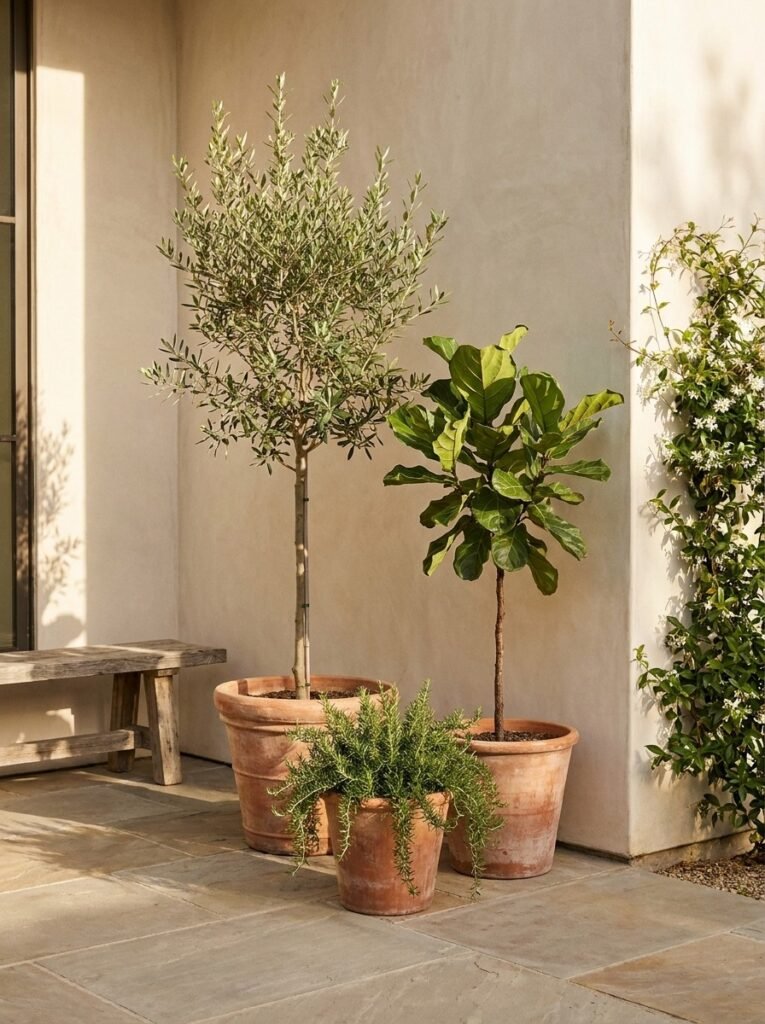
Grouping potted plants in sets of three is one of the easiest ways to apply this design principle instantly. Odd numbers naturally feel more dynamic and pleasing to the eye than even pairs, which can appear too symmetrical or static. A trio of pots creates movement and visual flow.
To make the grouping feel intentional, vary the heights, widths, or plant types slightly while keeping a unifying element, such as matching pot color or material. This subtle variation prevents the arrangement from feeling repetitive while still maintaining cohesion across the entire display.
Place these plant trios near entryways, along patio edges, or beside seating areas to add greenery without overwhelming the space. This simple styling trick works in nearly any backyard size, making it one of the most versatile applications of the rule of three outdoors.
2. Layer Three Plant Heights
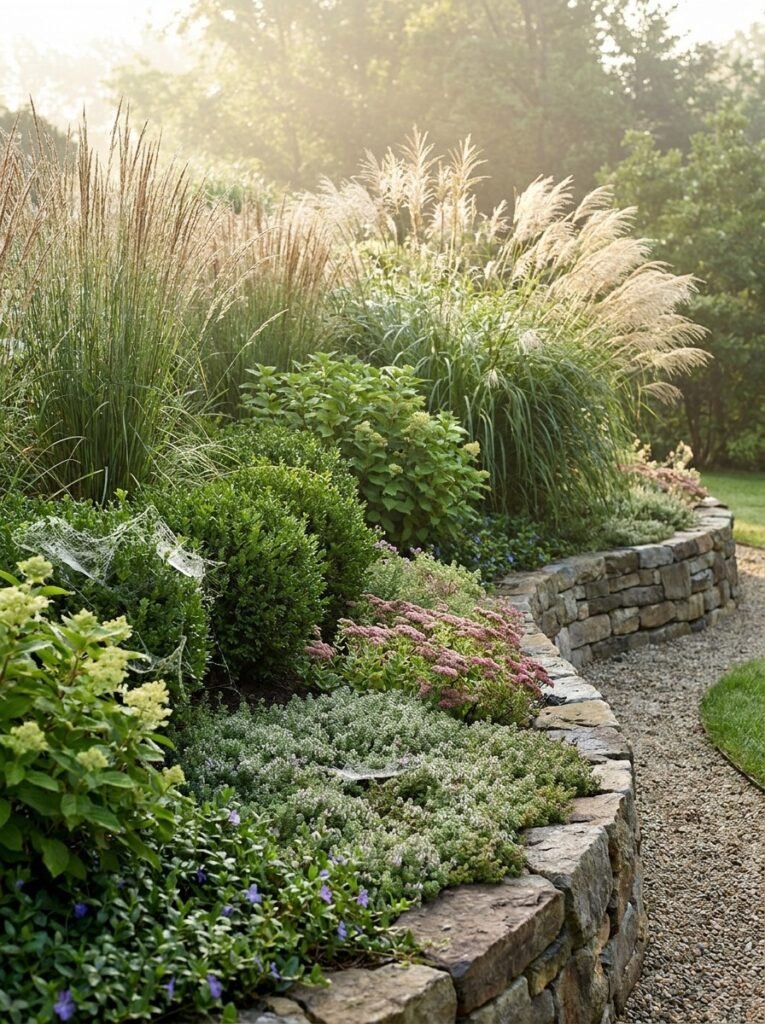
Layering plants at three distinct heights, tall, medium, and low, creates a landscape that feels full and professionally designed rather than flat or one-dimensional. This tiered approach mimics natural growth patterns found in forests and meadows, giving your backyard borders depth and visual richness.
Start with taller plants like ornamental grasses or shrubs at the back of a bed, followed by medium-height perennials in the middle, and finish with low groundcover or flowering plants at the front. This layering technique guides the eye smoothly through the entire planting area.
Beyond aesthetics, this three-tier layering also improves practical garden health by maximizing sunlight exposure for each plant type. Shorter plants receive adequate light while taller ones provide gentle shade and windbreak protection, creating a more resilient and self-supporting garden ecosystem overall.
3. Divide the Yard Into Three Zones
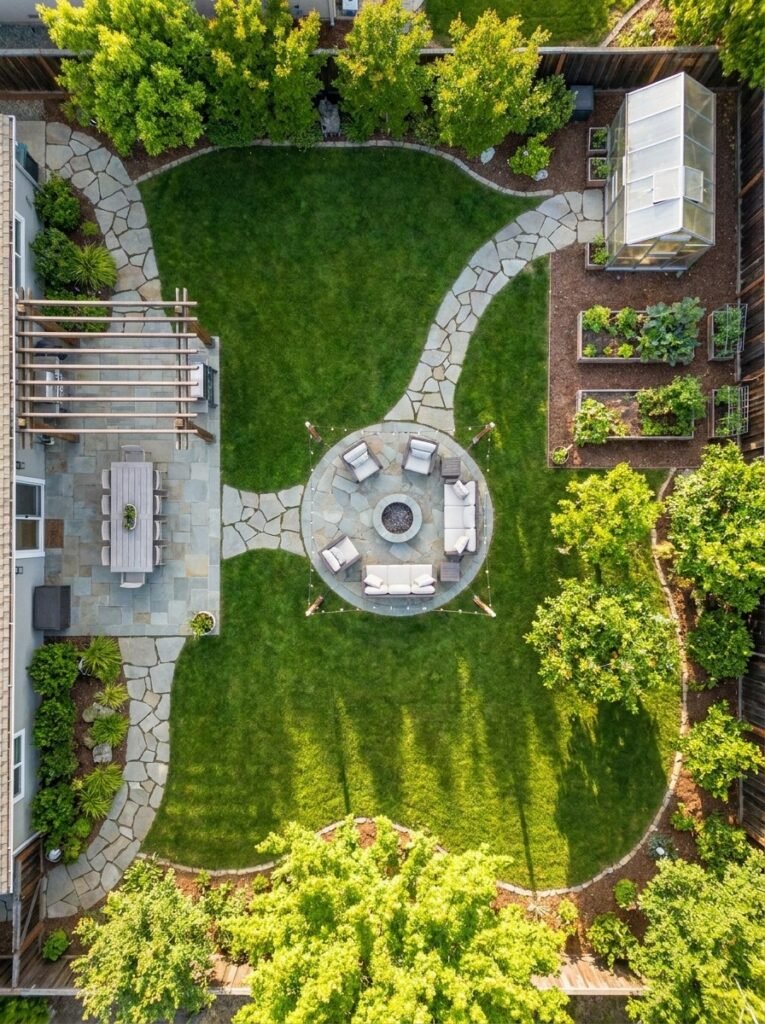
Dividing a larger backyard into three functional zones, such as dining, lounging, and gardening, creates a sense of purposeful organization that makes the entire space feel more usable and intentional. Each zone serves a distinct activity, preventing the yard from feeling like one undefined, sprawling area.
Defining these zones can be as simple as using different flooring materials, low garden walls, or strategic plant groupings to visually separate each section. This subtle zoning helps guests naturally understand where to gather for meals versus where to relax or admire the garden.
This three-zone approach works particularly well for medium to large backyards, allowing multiple activities to happen simultaneously without feeling crowded or chaotic. Connecting the zones with a clear pathway ties the entire design together into one cohesive, flowing outdoor experience.
4. Use Three Repeating Colors
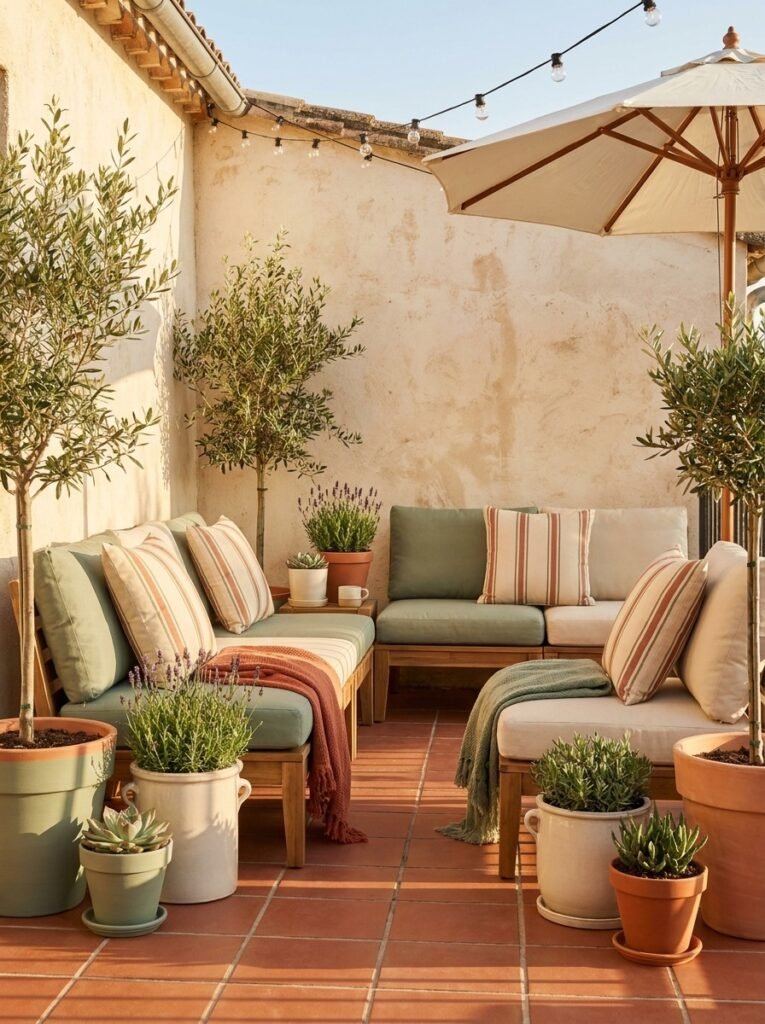
Choosing just three repeating colors throughout your backyard design creates a cohesive, curated look that feels far more polished than a random mix of every color available. This limited palette might include one neutral, one accent, and one deeper tone, repeated across furniture, pillows, and accessories.
Consistency is key when applying this rule. Repeat the chosen colors across multiple elements, such as cushions, planters, outdoor rugs, and even flowering plants, so the eye naturally connects different areas of the yard together rather than perceiving them as disconnected, mismatched sections.
This three-color approach also simplifies future decorating decisions, since any new addition can be evaluated against the existing palette. Whether your style leans bold and vibrant or soft and muted, sticking to three main colors keeps your backyard feeling intentional and beautifully unified.
5. Plant Trees in Groups of Three
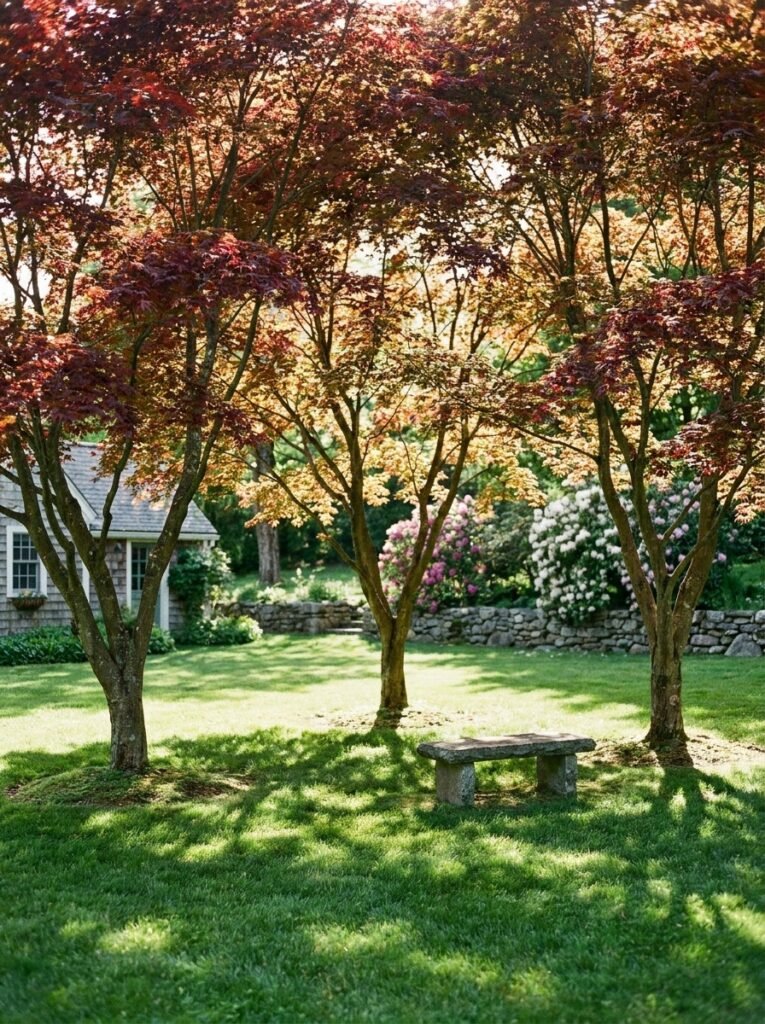
Planting trees in groups of three, rather than singly or in pairs, creates a more natural, grove-like effect that feels intentional and visually balanced. This grouping technique is commonly used by professional landscapers because odd-numbered clusters avoid the stiff, formal symmetry that pairs often create.
Arranging the three trees in a slight triangular or staggered formation, rather than a straight line, enhances the natural, organic feel even further. This subtle asymmetry mimics how trees grow in the wild, making the grouping look established and intentional rather than artificially placed.
Choosing the same tree species for all three plantings reinforces cohesion, though slight variations in size can add visual interest. Over time, this tree trio matures into a striking focal point, providing shade, privacy, and a strong sense of structure within your backyard landscape.
6. Choose Three Types of Lighting
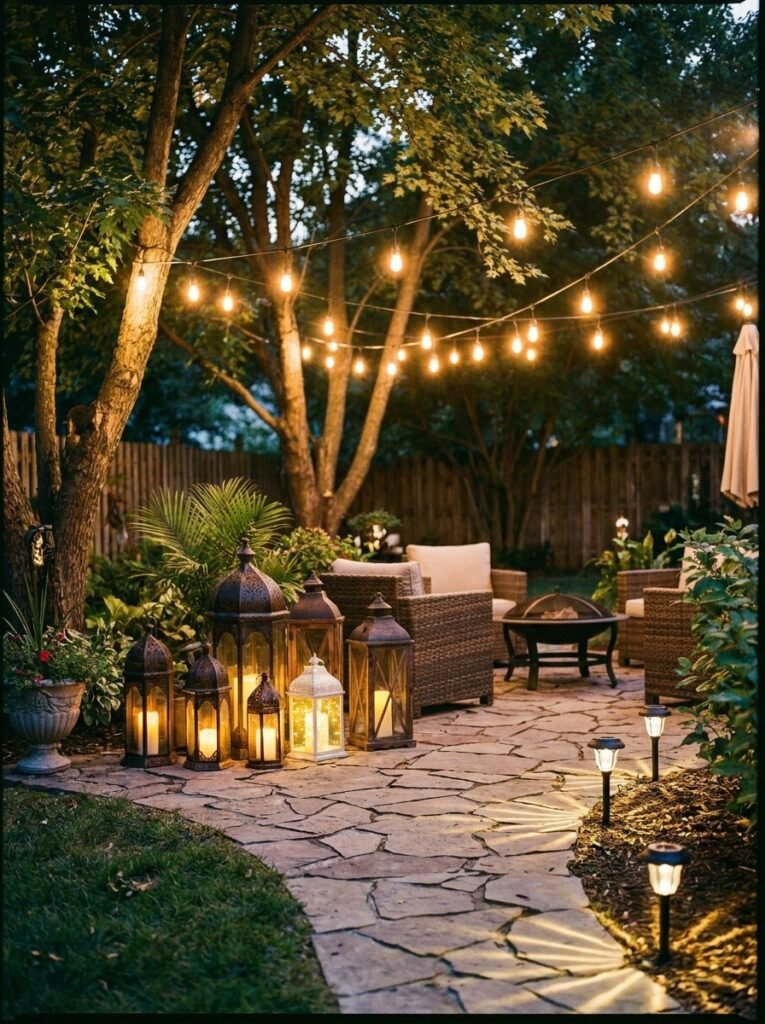
Incorporating three distinct types of outdoor lighting, such as overhead string lights, ground-level lanterns, and pathway lights, creates a layered lighting scheme that feels dynamic and thoughtfully designed. Relying on just one lighting source often results in a flat, uneven glow across the space.
Each lighting type serves a different purpose within this layered approach. String lights provide ambient overhead illumination, lanterns offer warm, low-level accent lighting near seating areas, and path lights ensure safe navigation along walkways after dark, together creating a cohesive nighttime atmosphere.
This three-tier lighting strategy also allows for flexibility depending on the occasion. You can dim or turn off certain layers for a more subdued mood, or activate all three for larger gatherings, giving your backyard adaptable lighting that transforms the space throughout the evening.
7. Mix Three Textures in Landscaping
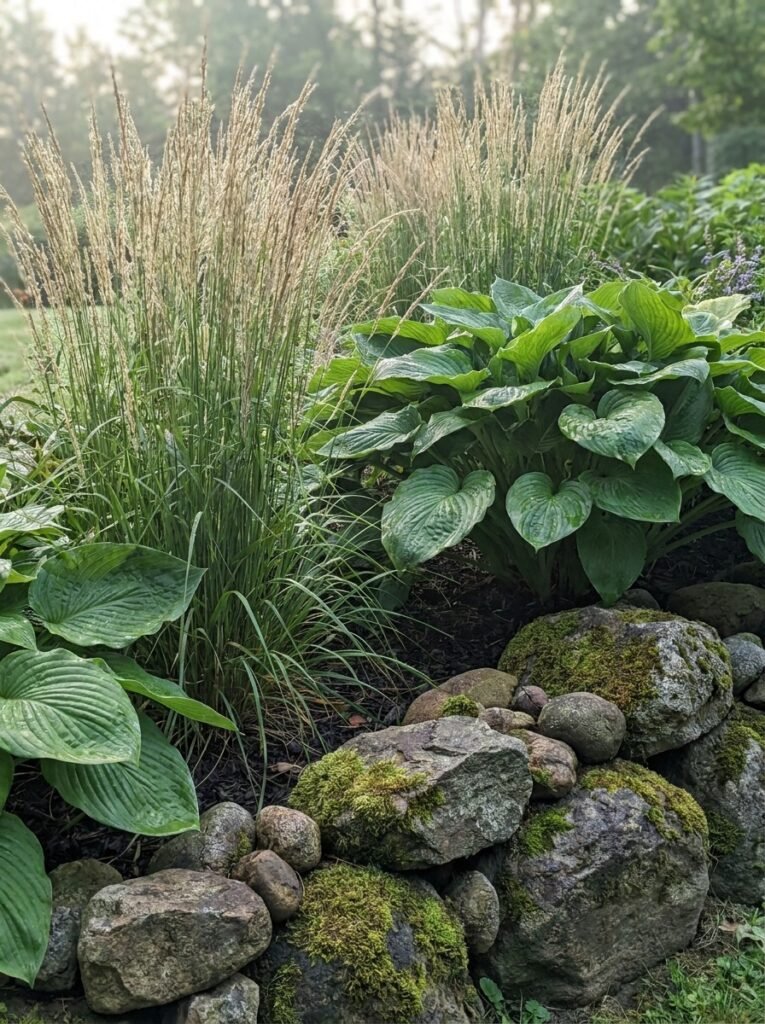
Mixing three different textures, fine, bold, and rough, within your landscaping creates depth and visual interest that flat, single-texture plantings simply can’t achieve. This technique is especially effective in shaded gardens where color options may be limited, relying instead on texture contrast for impact.
Fine-textured plants like ornamental grasses or ferns add softness and movement, while bold-leafed plants such as hostas or elephant ears provide dramatic contrast and structure. Rough textures, whether from tree bark, stone, or mulch, ground the composition and add tactile richness to the overall design.
This three-texture combination works beautifully even in small garden beds, proving that impactful design doesn’t require a huge plant collection. By thoughtfully balancing fine, bold, and rough elements, your backyard landscaping gains a sophisticated, professionally styled quality year-round.
8. Arrange Three-Piece Furniture Sets
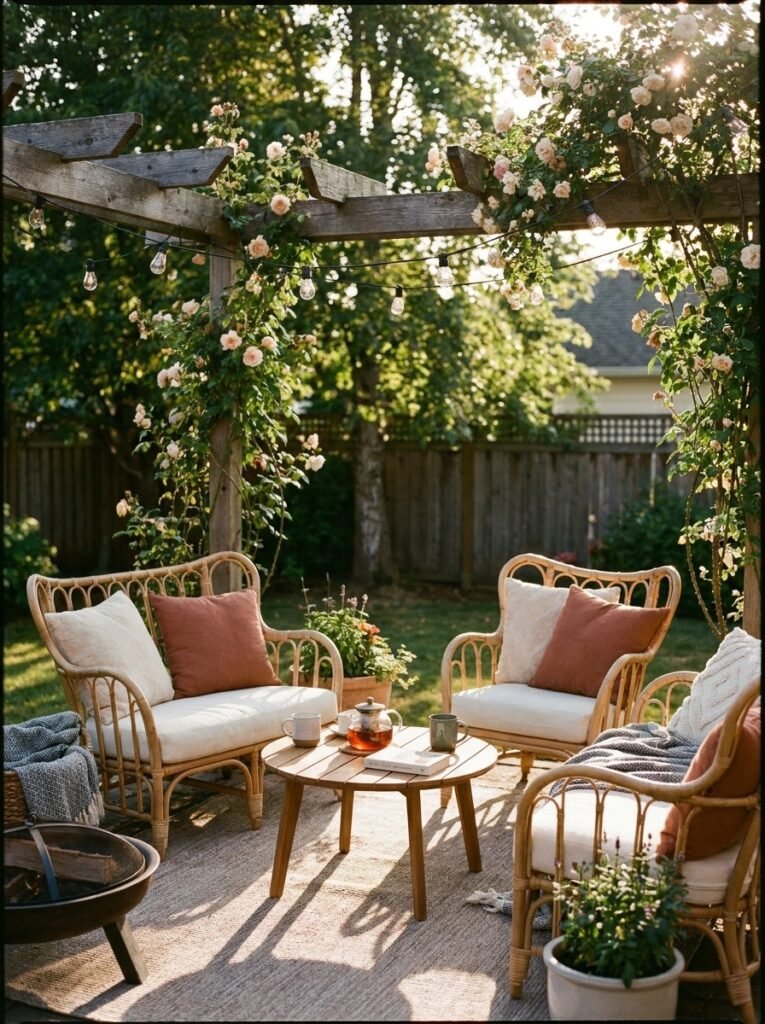
Arranging outdoor furniture in sets of three, such as two chairs and a side table, or a bench flanked by two planters, creates a balanced yet dynamic seating layout. Unlike matched pairs, three-piece arrangements introduce subtle asymmetry that feels more inviting and conversational.
Positioning the pieces in a loose triangular formation, rather than a straight line, encourages natural conversation flow between seated guests. This layout mimics how people naturally gather in groups, making the seating area feel more social and welcoming than a rigid, formal arrangement.
This three-piece principle scales easily across different backyard sizes, from small balcony setups to larger patio lounges. Whether using furniture, planters, or decorative accents, grouping in threes consistently produces a more relaxed, thoughtfully designed seating arrangement throughout your outdoor space.
9. Use Three Different Paving Materials
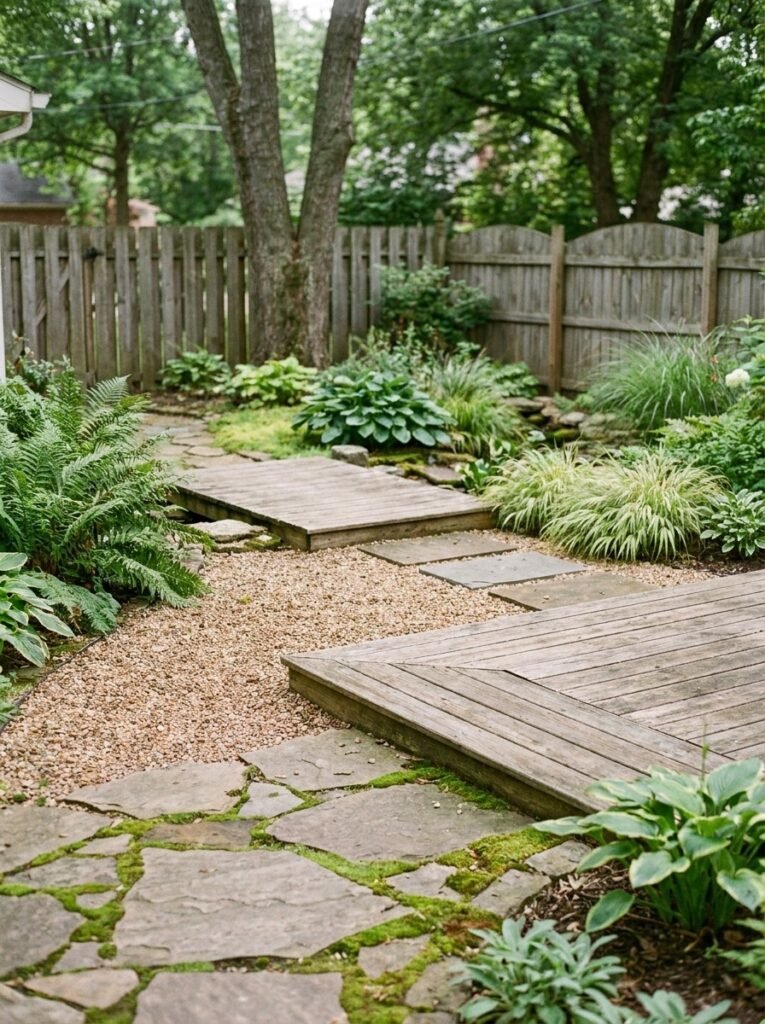
Combining three different paving materials, such as natural stone, wood decking, and gravel, adds textural variety and visual interest to backyard pathways or patio flooring. This technique prevents large paved areas from feeling monotonous, breaking up the surface with distinct zones and transitions throughout the yard.
Each material can be used to subtly signal a change in function or mood. Stone might lead to a formal seating area, wood decking could define a lounge zone, and gravel might mark a transitional garden path, guiding visitors intuitively through different sections of your backyard.
This three-material approach also offers practical benefits, since gravel improves drainage, wood adds warmth underfoot, and stone provides durability in high-traffic areas. Balancing aesthetics with function, this technique creates a backyard that looks intentional while performing well across various outdoor activities.
10. Create Three Focal Points
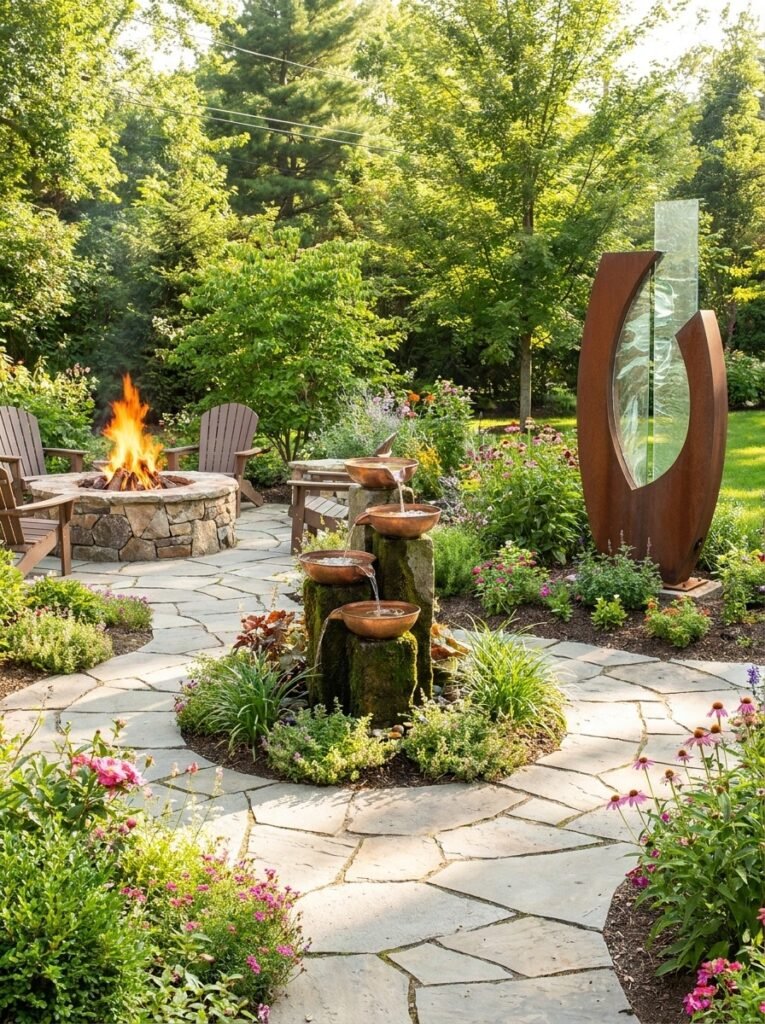
Designing a backyard around three focal points, rather than one single feature, creates a more engaging and layered outdoor experience. As visitors move through the space, each focal point offers a new visual destination, encouraging exploration rather than a single, static view from one vantage point.
These focal points might include a fire pit, a water feature, and a striking piece of garden sculpture or an especially beautiful tree. Spacing them throughout different zones of the yard ensures each one gets appropriate visual attention without competing directly with the others nearby.
Connecting these three focal points with clear pathways helps tie the overall design together, creating a natural flow throughout the yard. This approach works particularly well for larger properties, transforming a sprawling backyard into a series of connected, individually memorable outdoor moments.
11. Layer Three Garden Bed Levels
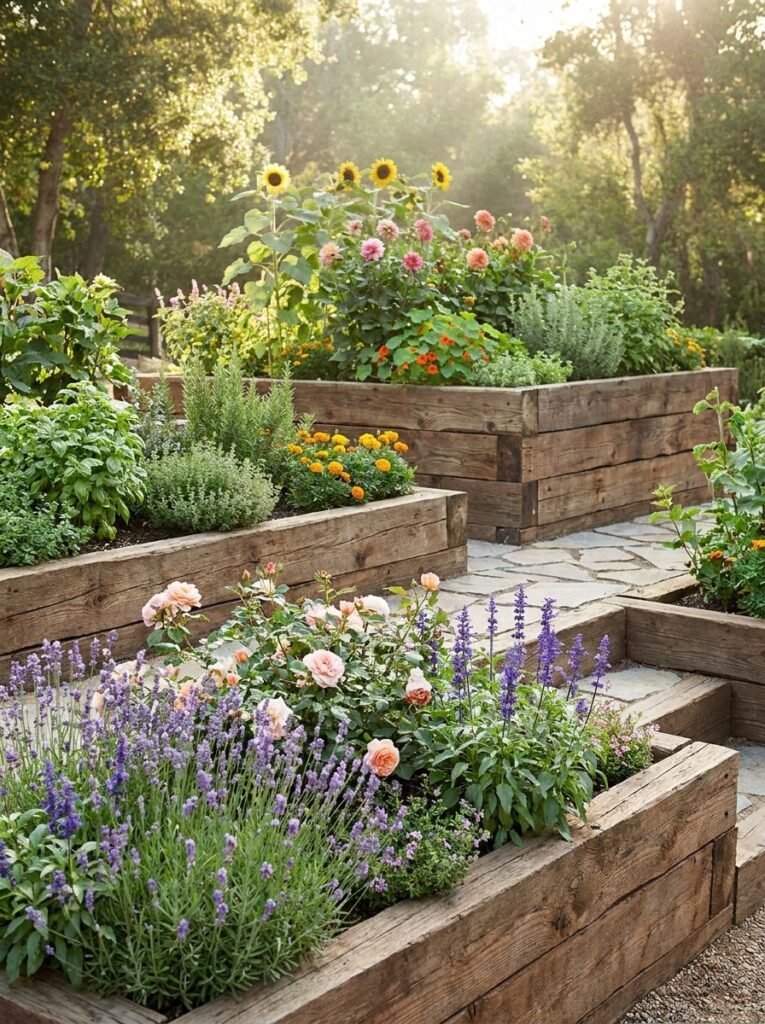
Building garden beds at three different elevation levels, low, medium, and raised, adds architectural interest to sloped or flat backyards alike. This tiered approach creates natural visual hierarchy, drawing the eye upward or downward depending on the viewing angle, rather than presenting one flat, uniform planting surface.
Raised beds at the highest tier work well for herbs or vegetables that benefit from improved drainage and easier access, while lower tiers can showcase flowering plants or groundcover. This functional layering combines practical gardening benefits with an elevated, professionally landscaped aesthetic throughout the space.
Retaining walls made from wood, stone, or concrete blocks define each tier clearly, adding structure and preventing soil erosion between levels. Over time, as plants fill in each tier, this three-level garden design becomes a lush, dimensional centerpiece within your broader backyard landscape.
12. Use Three Sizes of Planters
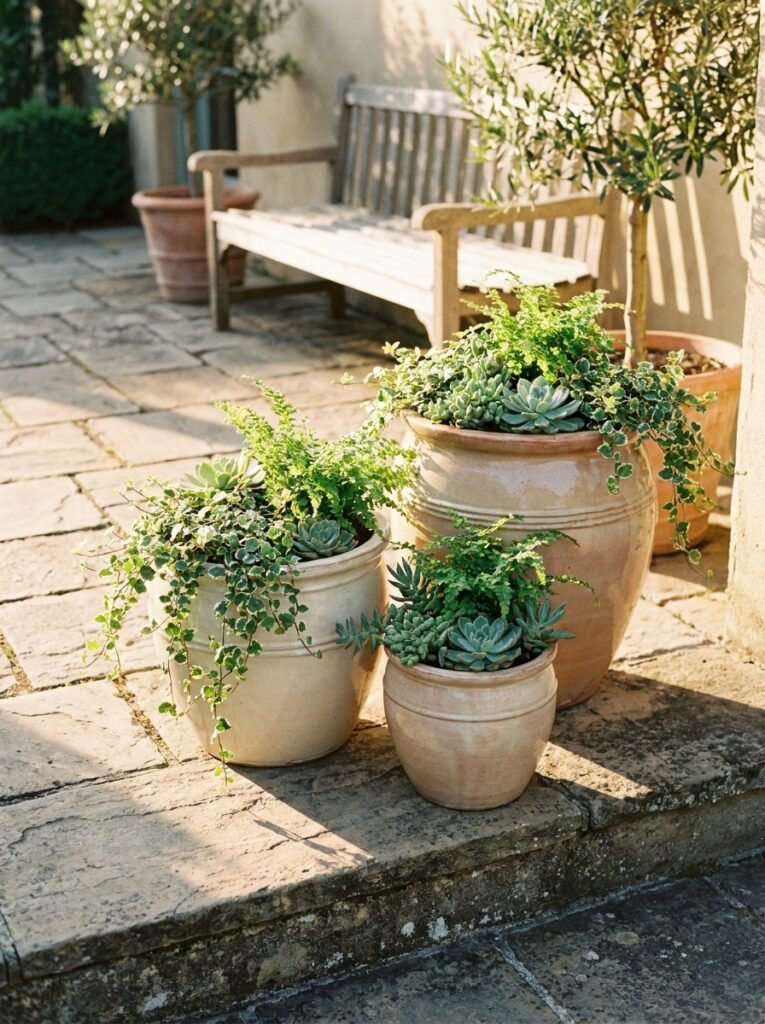
Arranging planters in three distinct sizes, small, medium, and large, creates a visually satisfying progression that feels curated rather than randomly assembled. This graduated sizing technique is commonly used in professional garden design because it naturally guides the eye across the entire grouping.
Positioning the largest planter toward the back or center, with medium and small pots stepping down in front or to the sides, creates depth and dimension even within a small footprint. This layered arrangement works well on patios, steps, or narrow side yards.
Using matching or complementary plant types across all three planters reinforces cohesion, while varying the pot material or color slightly can add subtle personality. This three-size planter technique is an easy, budget-friendly way to elevate container gardening throughout your backyard space.
13. Add Three Accent Cushion Colors
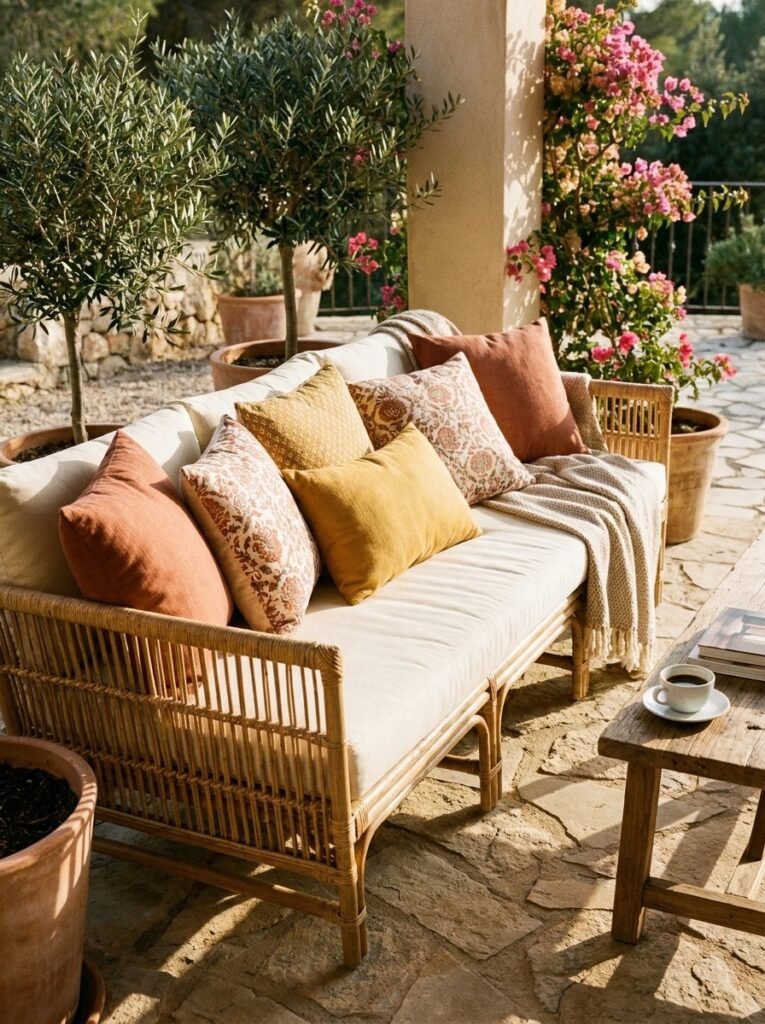
Styling outdoor seating with cushions in three accent colors creates a curated, magazine-worthy look without overcomplicating the design. This limited color approach ensures the seating area feels vibrant and intentional, rather than cluttered with too many competing patterns or shades fighting for attention.
Distribute the three colors unevenly across the cushions rather than in a strict repeating pattern, since asymmetrical placement tends to feel more relaxed and natural. For example, use two cushions in the dominant color, two in the secondary color, and one accent cushion in the boldest tone.
This three-color cushion strategy also makes seasonal refreshes easy, since swapping just one or two cushions can dramatically change the mood of your seating area. Whether aiming for a cozy autumn palette or a bright summer scheme, this technique keeps styling simple and effective.
14. Design a Three-Tier Water Fountain
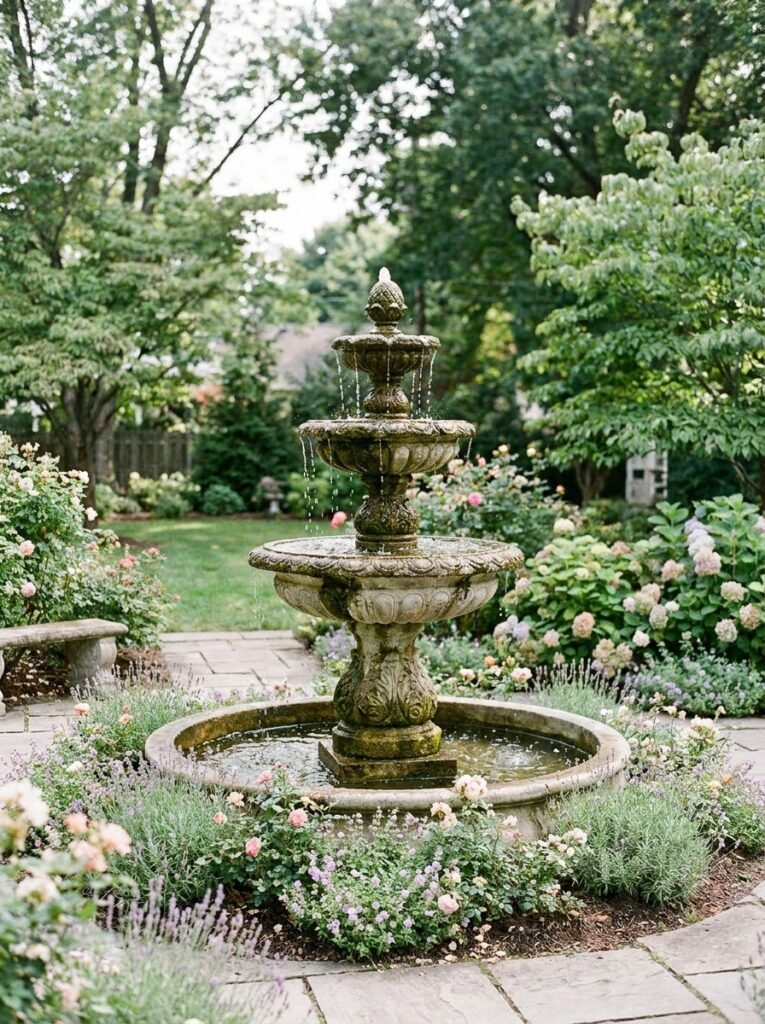
A three-tier water fountain serves as a timeless, elegant centerpiece for any backyard oasis. The cascading water flows visually and audibly from the top tier down through the middle and bottom levels, creating a soothing rhythm that instantly enhances the calming atmosphere of your outdoor space.
Beyond its visual appeal, the three-tier structure also improves the fountain’s acoustic quality, since water falling across multiple levels produces a richer, more layered sound compared to a single-tier design. This makes the fountain especially effective at masking street noise or neighboring yard sounds.
Positioning this fountain as a central focal point, surrounded by low plantings or seating, allows it to anchor the entire backyard design. Whether styled in classic stone or modern concrete, a three-tier fountain remains one of the most enduringly popular water features in garden design.
15. Group Three Matching Lanterns
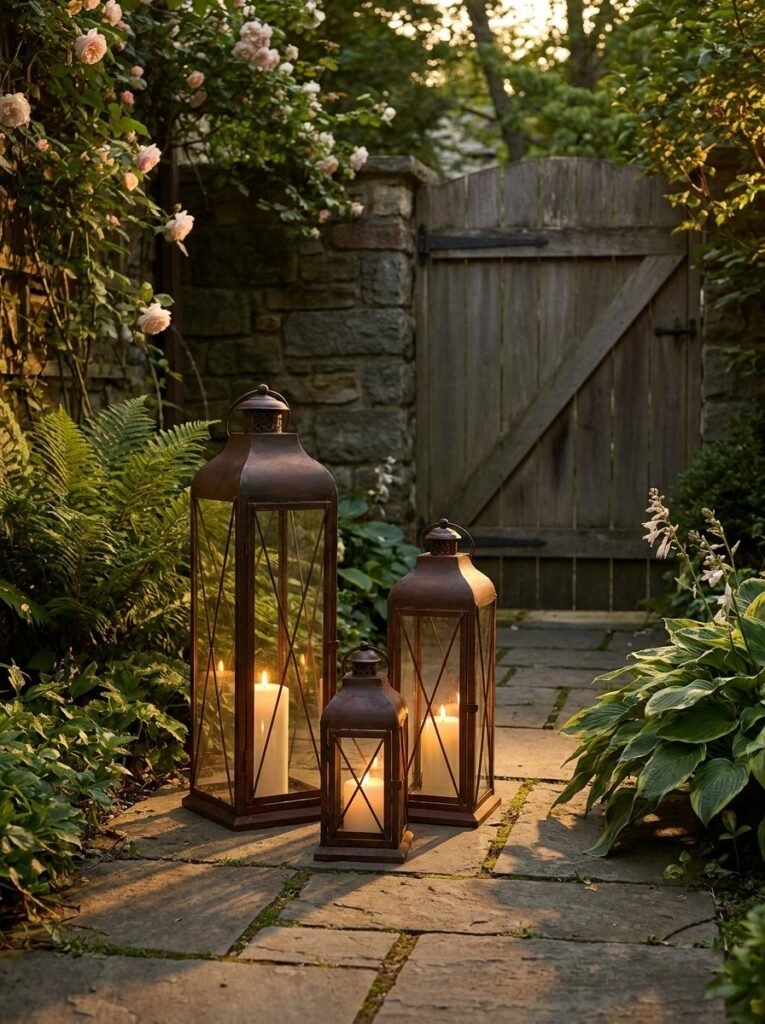
Grouping three matching lanterns together, whether hanging, standing, or tabletop style, creates a warm, inviting lighting cluster perfect for pathways, patio corners, or dining areas. This trio arrangement adds visual rhythm while providing enough combined light to illuminate a space effectively after dark.
Varying the height slightly between the three lanterns, even if they’re otherwise identical, adds subtle visual interest and prevents the grouping from feeling too uniform or stiff. This small adjustment makes the arrangement feel more organic and thoughtfully placed rather than mechanically lined up.
Battery-powered or solar lanterns make this grouping technique especially flexible, since they can be moved easily to different areas of the yard depending on the occasion. This adaptability makes the three-lantern grouping a versatile styling trick for both everyday ambiance and special outdoor gatherings.
16. Use Three Varieties of Foliage Shape
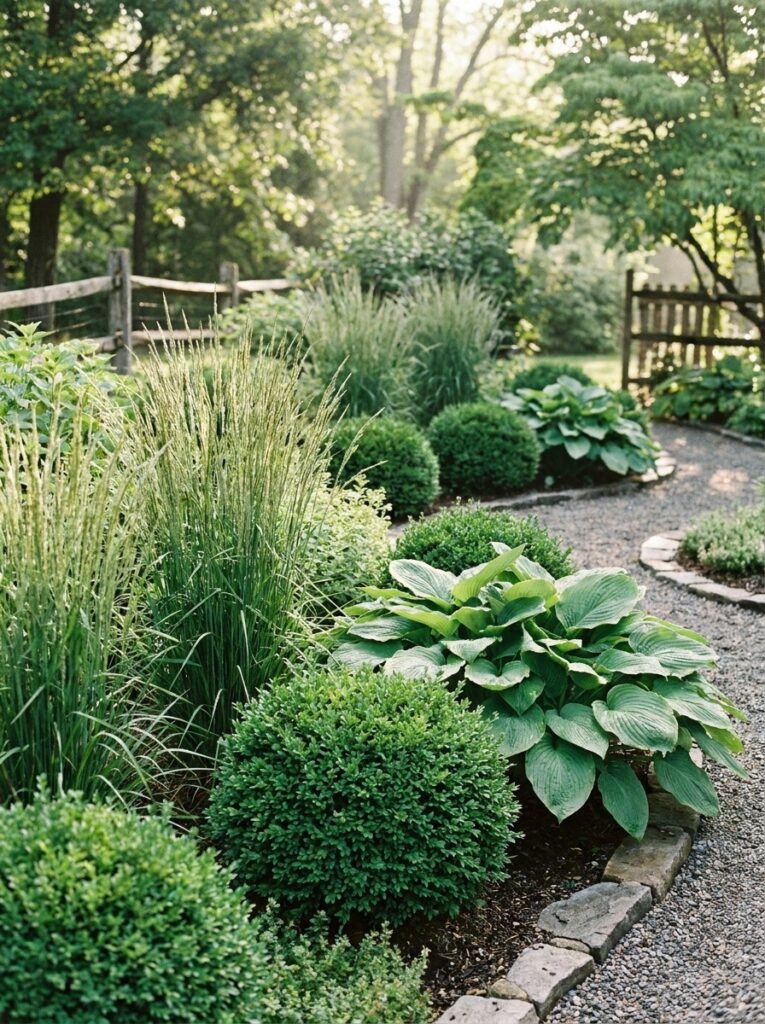
Combining three distinct foliage shapes, spiky, round, and broad-leafed, within a single garden bed creates a dynamic silhouette that remains visually interesting even without colorful blooms. This shape-based approach works particularly well in shaded gardens or during off-season months when flowering plants aren’t in bloom.
Spiky plants like ornamental grasses or yuccas add vertical drama, round shrubs such as boxwood provide structured mass, and broad-leafed plants like hostas or ferns contribute soft, sculptural contrast. Together, these three shapes create a balanced composition that feels intentional and professionally designed.
This technique also improves garden resilience throughout the seasons, since foliage-based interest doesn’t rely solely on flowering periods. By focusing on shape variety, your backyard maintains visual appeal year-round, even during months when color options are naturally more limited.
17. Create Three Pathway Stops
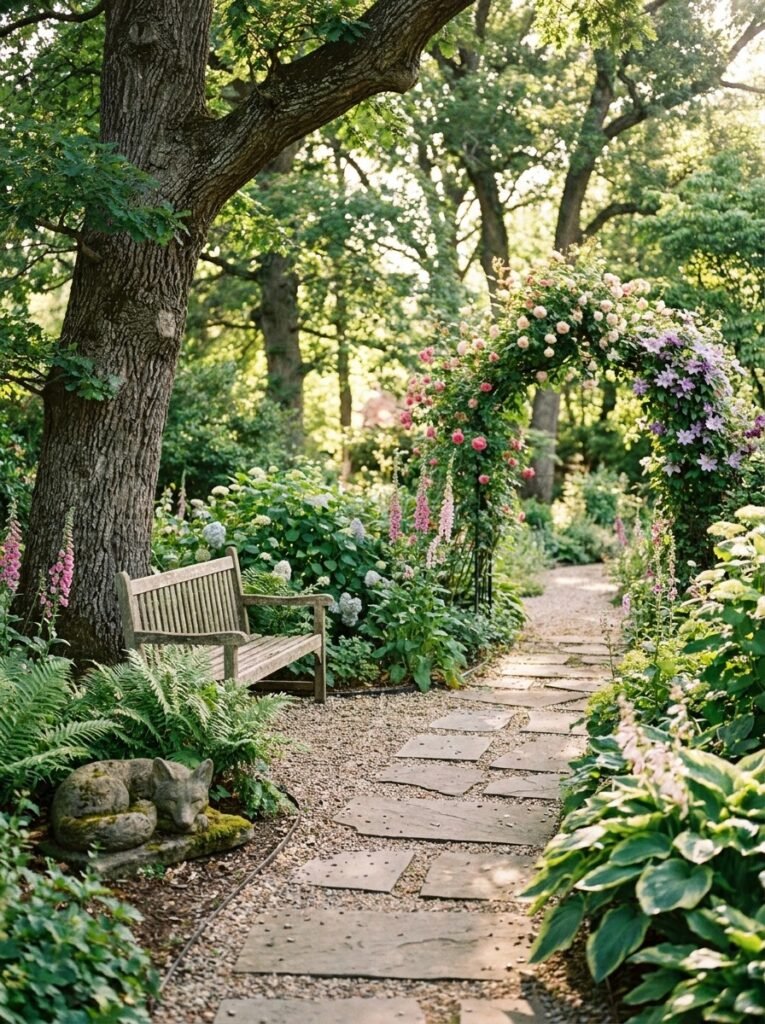
Designing a backyard pathway with three intentional stopping points transforms a simple walkway into an experiential journey through your garden. Each stop, whether a bench, statue, or flowering archway, gives visitors a reason to pause, look around, and appreciate different vantage points throughout the space.
Spacing these three stops at varying intervals along the path prevents the walk from feeling rushed or purely functional. Instead, the journey becomes part of the backyard’s charm, encouraging slower, more mindful movement through the garden rather than a quick walk from point A to point B.
This technique works especially well in larger yards or formal gardens, where the pathway itself becomes a design feature rather than an afterthought. By curating three meaningful stops, you transform routine movement through your backyard into a genuinely enjoyable, immersive garden experience.
18. Arrange Three Seating Areas
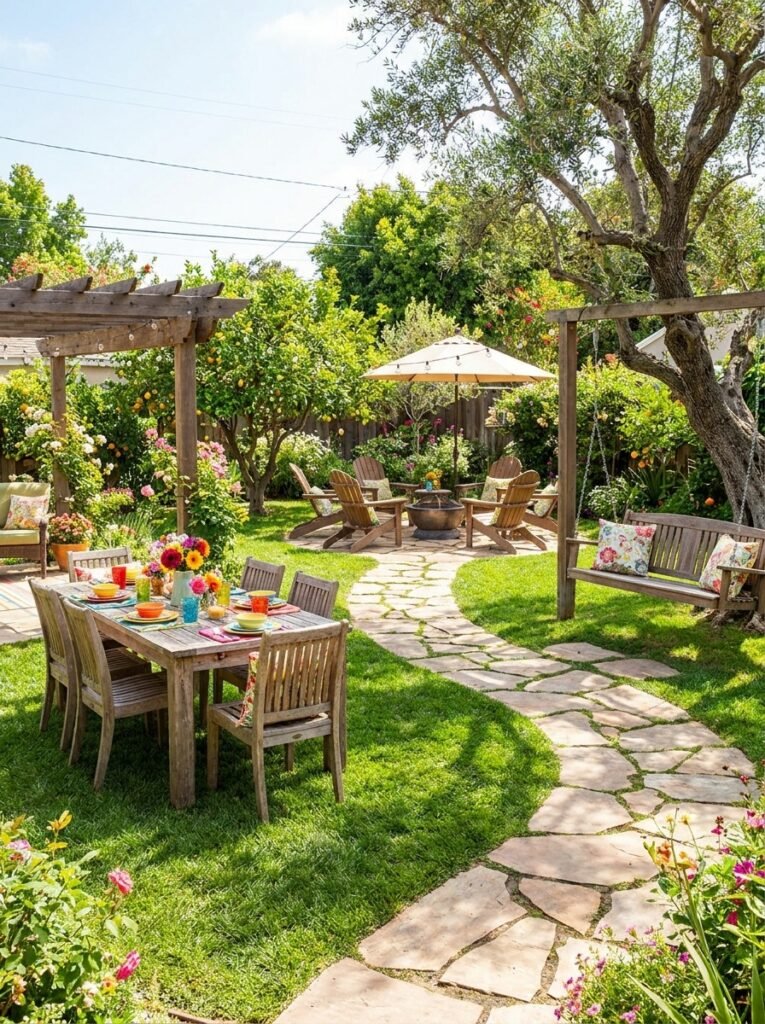
Creating three distinct seating areas throughout a backyard allows for varied activities and moods within the same outdoor space. A dining area might host meals and gatherings, a lounge cluster offers relaxed conversation, while a swing or hammock area provides a quiet, solitary retreat.
Spacing these three seating zones apart, rather than clustering all furniture in one central area, makes the backyard feel larger and more thoughtfully utilized. Each zone can be styled slightly differently while still connecting to the overall design through consistent materials, colors, or plantings.
This three-zone seating approach is particularly valuable for households with varying needs, whether entertaining guests, relaxing solo, or spending family time outdoors. By offering three distinct options, your backyard accommodates different activities and moods without requiring guests to compete for the same space.
19. Use Three Types of Natural Stone
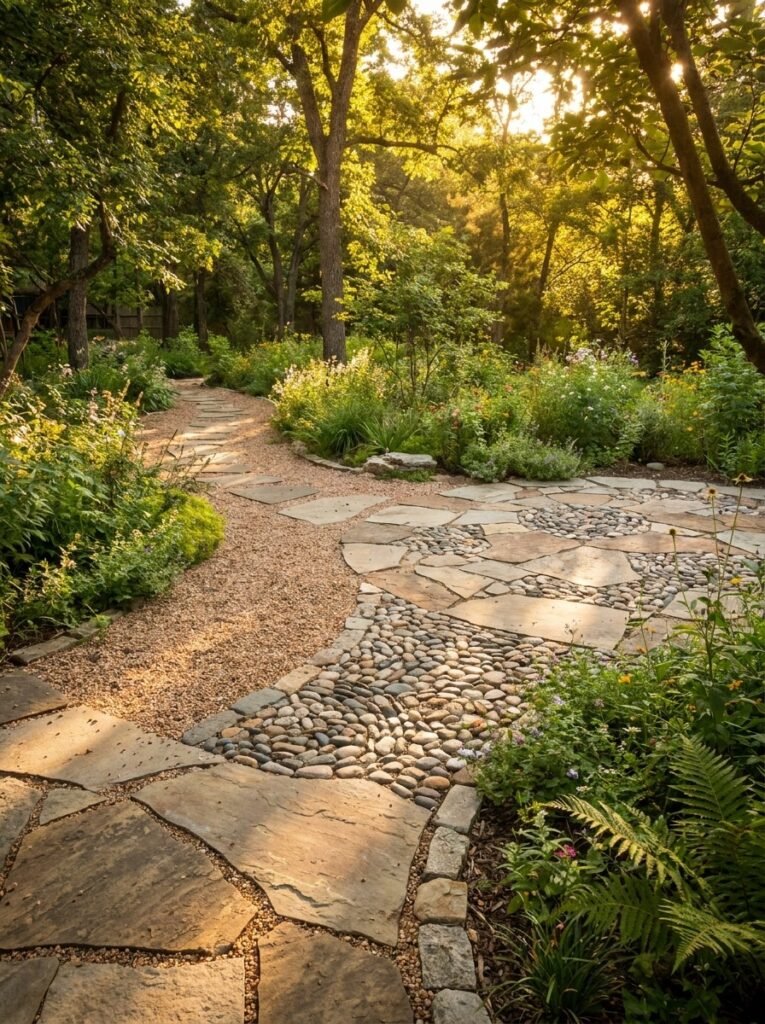
Combining three types of natural stone, such as flagstone, gravel, and river rock, throughout your hardscaping creates textural variety while maintaining a cohesive, earthy palette. This technique avoids the monotony of using a single stone type across an entire backyard, which can feel flat despite being durable and practical.
Flagstone works well for primary walkways or patio surfaces due to its flat, stable structure, while gravel fills transitional areas or drainage zones effectively. River rock, with its smooth, rounded texture, adds a decorative accent around garden beds, water features, or as a border between other materials.
This three-stone combination also offers practical benefits, since varying stone types can address different functional needs, from improved drainage to defined walking paths. Balancing beauty and function, this approach creates a backyard hardscape that feels both natural and intentionally designed.
20. Plant Three Flower Colors Together
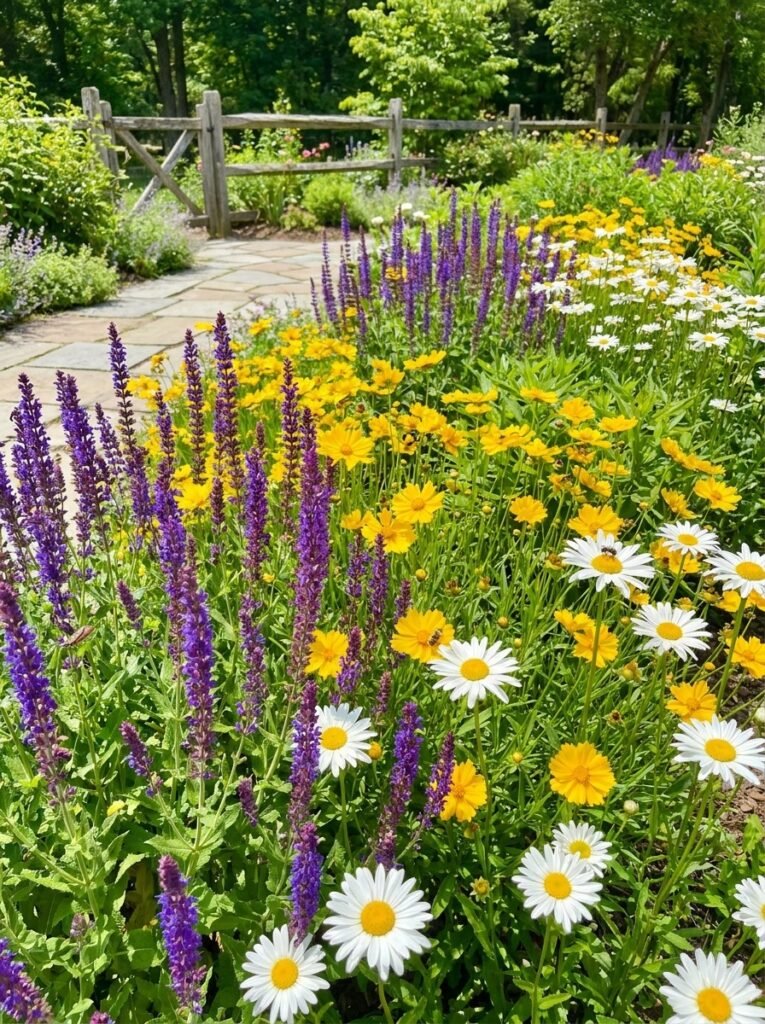
Planting flowers in just three coordinated colors creates a vibrant yet cohesive garden display, avoiding the chaotic look that can result from mixing too many competing hues. This limited color palette allows each flower type to stand out while still feeling connected to its neighboring blooms.
Choosing colors from the same section of the color wheel, such as purple, yellow, and white, or selecting complementary tones creates natural harmony throughout the bed. Repeating these three colors in different flower varieties and bloom times ensures continuous visual interest across the growing season.
This three-color flower strategy also simplifies garden planning, since any new plant addition can be evaluated against the existing palette before purchase. Whether designing a small border or a large flower bed, sticking to three main colors keeps the overall display feeling curated and beautiful.
21. Add Three Decorative Garden Accents
Adding three decorative accents, such as a birdbath, garden stake, or small sculpture, throughout your backyard introduces personality and charm without overwhelming the natural landscaping. This limited quantity approach ensures each accent piece receives proper visual attention rather than getting lost among too many competing decorations.
Spacing these three accents throughout different areas of the yard, rather than clustering them together, creates delightful discovery moments as visitors explore the space. Each piece becomes a small surprise, adding character to otherwise simple garden beds or transitional areas between larger features.
Choosing accents that share a common material, finish, or theme, such as weathered metal or matching ceramic glazes, helps tie the three pieces together conceptually even when placed in different locations. This subtle cohesion ensures your backyard feels curated rather than randomly decorated.
22. Use Three Layers of Outdoor Lighting
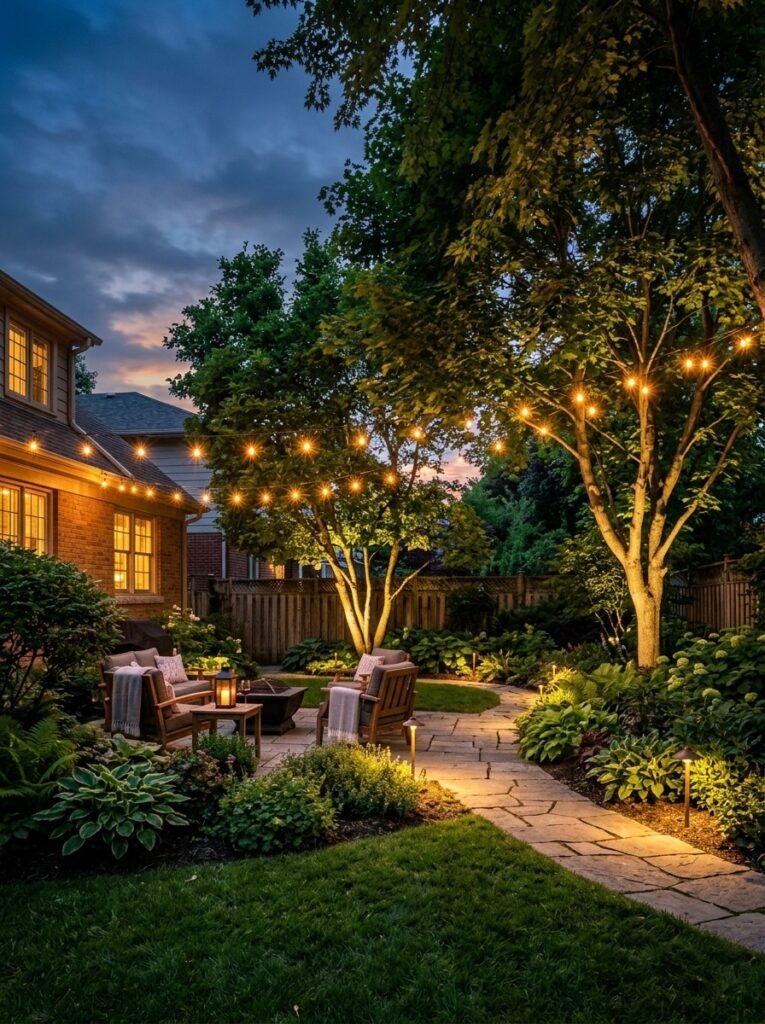
Layering outdoor lighting across three distinct levels, tree uplighting, overhead string lights, and low pathway lighting, creates a rich, dimensional glow throughout your backyard after dark. This three-layer approach mimics professional landscape lighting design, where depth and contrast matter as much as brightness.
Uplighting placed at the base of trees or shrubs creates dramatic shadows and highlights architectural plant structure from below. Overhead string lights add warm ambient glow at eye level, while pathway lights guide safe movement at ground level, together forming a cohesive, multi-dimensional lighting scheme.
This layered lighting strategy transforms your backyard into a functional and beautiful space long after sunset, extending usability well into the evening hours. By thoughtfully combining these three lighting layers, your outdoor space gains the same polished, intentional quality found in professionally designed landscapes.