
21 Kitchen Rule of 3 Ideas for a Small Kitchen
Small kitchens don’t need to feel cramped or chaotic. Designers often lean on the “rule of three” — grouping objects, shelves, lights, or colors in sets of three — because it creates visual balance without clutter. Whether you’re renovating or just rearranging what you already own, these 21 rule-of-three ideas will help your compact kitchen feel curated, functional, and Pinterest-worthy.
1. The Kitchen Work Triangle (Sink–Stove–Fridge)
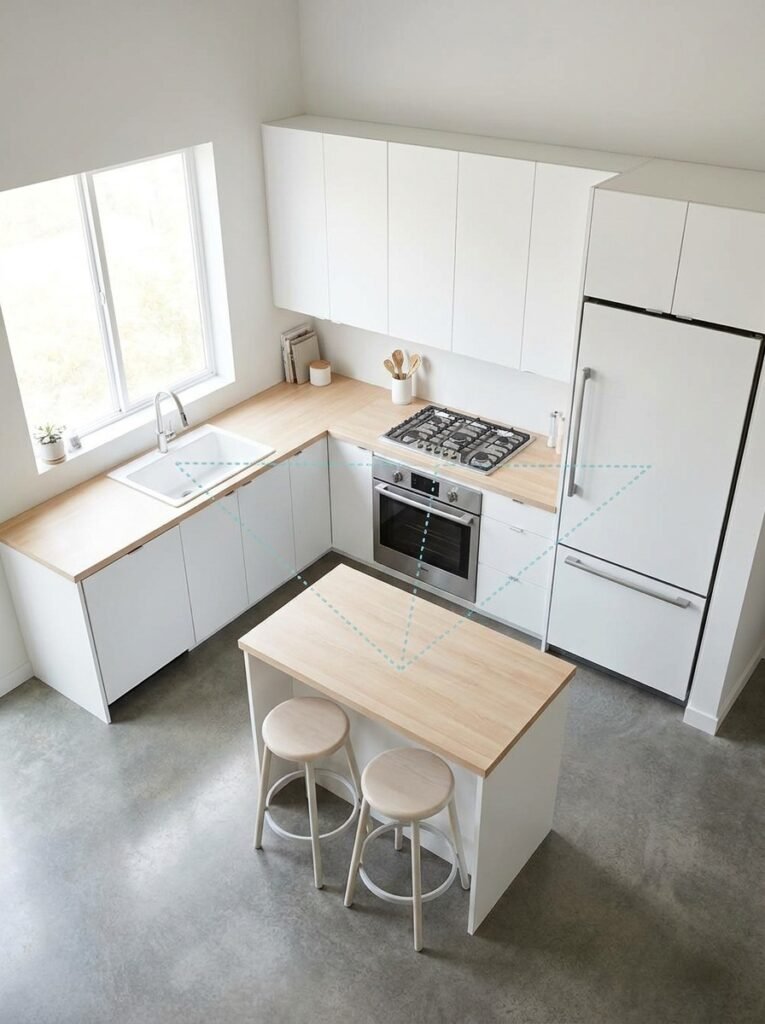
The classic kitchen work triangle connects your sink, stove, and refrigerator into an efficient path for cooking. In small kitchens, this triangle becomes even more important because every extra step wastes precious square footage. Positioning these three anchors within a few feet of each other keeps prep, cooking, and cleanup smooth without constant backtracking across a tight floor plan.
To apply this rule, sketch your kitchen layout and measure the distance between each point of the triangle. Ideally, no single leg should exceed six to eight feet, and the total perimeter should stay under twenty-six feet. This keeps movement compact and prevents the space from feeling like an obstacle course during busy cooking sessions.
If your appliances are already fixed, use the triangle concept to guide where you place tools instead. Keep utensils near the stove, cutting boards near the sink, and cold-storage items near the fridge. This mini version of the triangle rule still saves steps and makes a small kitchen feel far more organized and intentional.
2. Three-Tier Floating Shelves
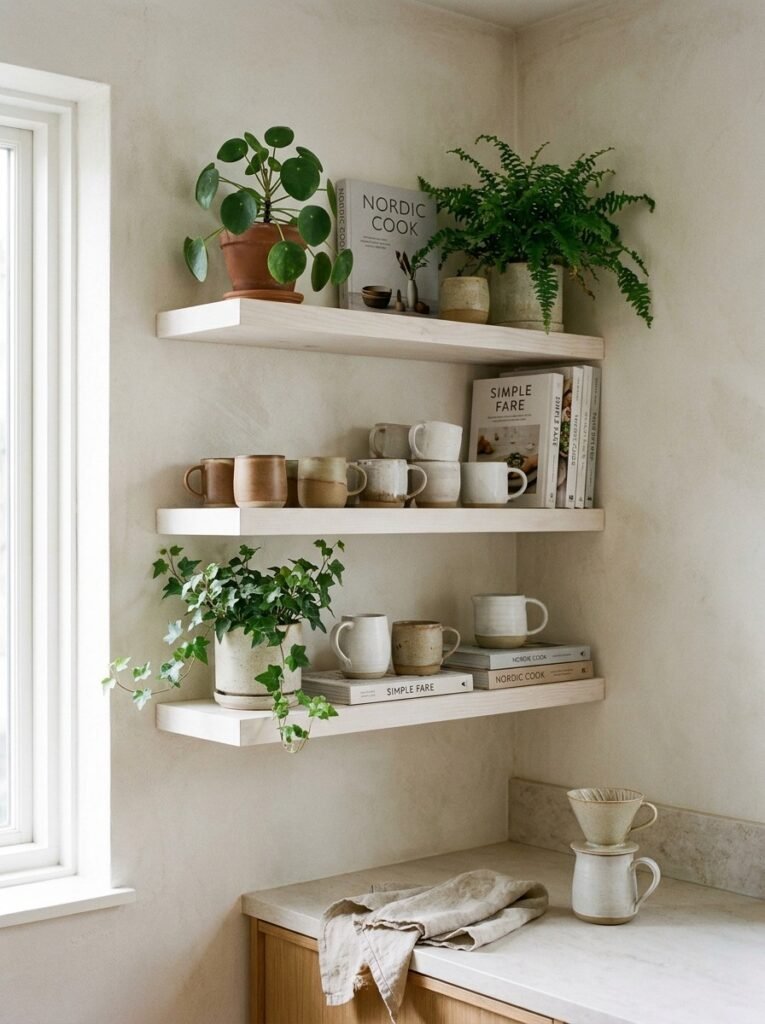
Floating shelves installed in a set of three instantly add storage without eating into floor space. Because they’re open, they visually lighten a small kitchen compared to bulky upper cabinets. Stack them vertically with a few inches of breathing room between each tier so the eye can travel upward, making low ceilings feel taller and the whole room feel airier.
Style each shelf with a slightly different purpose: the top for décor like a small plant or artwork, the middle for everyday mugs or glasses, and the bottom for cookbooks or jars you reach for often. This layered approach keeps things functional while still looking curated, which is exactly the balance small-kitchen decorating calls for.
Choose one consistent material or finish across all three shelves — like matching light wood or the same matte black brackets — so the grouping reads as intentional rather than mismatched. This small styling trick ties the whole wall together and makes three simple shelves feel like a deliberate design statement.
3. Three Pendant Lights Over the Counter
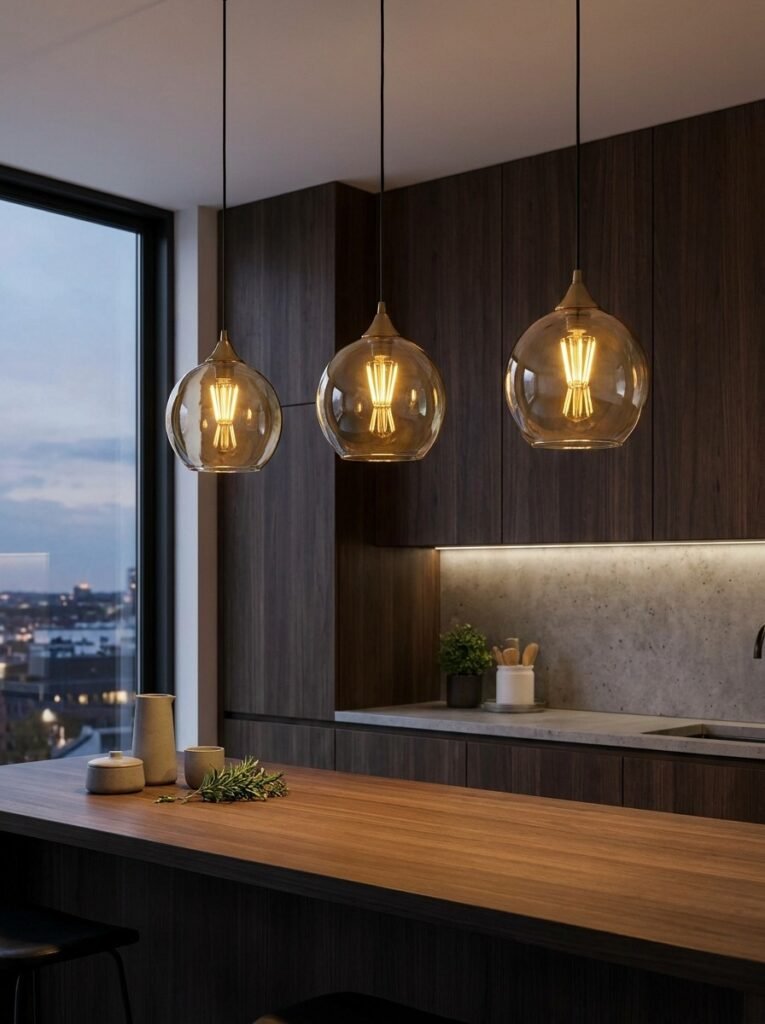
A row of three pendant lights adds instant style to a small kitchen counter or peninsula. Unlike a single overhead fixture, three smaller pendants create rhythm and draw the eye across the workspace, making a narrow kitchen feel longer and more considered. They also provide better, more even task lighting for chopping, mixing, and plating.
Space the pendants evenly, typically ten to twelve inches apart, and hang them so the bottom sits about thirty inches above the counter. This height keeps the light functional without blocking sightlines across a small room, which matters when every inch of visual openness counts toward making the kitchen feel bigger than it is.
Keep the fixtures identical in shape and finish for a cohesive look, whether that’s brass, matte black, or clear glass. Three matching pendants read as an intentional design choice rather than a random cluster, and they add a boutique-café feel that photographs beautifully for anyone documenting a small-space kitchen makeover.
4. Three-Drawer Spice Organizer
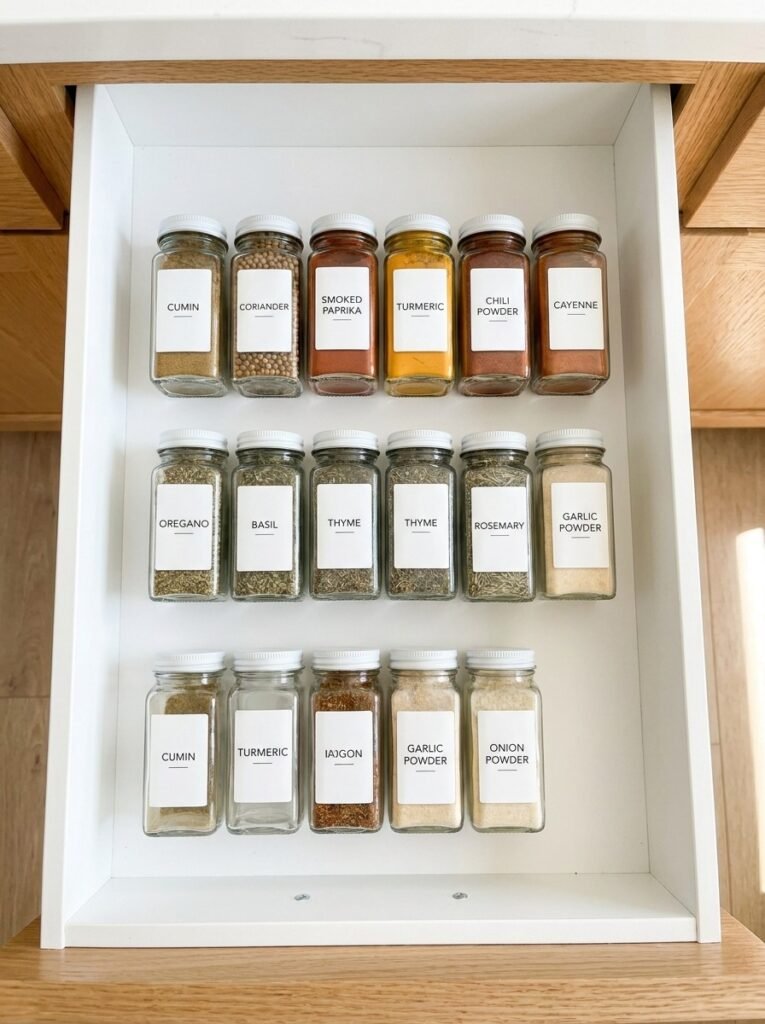
Spices multiply fast, and in a small kitchen they can quickly overrun a cramped cabinet shelf. Splitting them into three drawer sections — baking spices, savory cooking spices, and specialty or rare blends — keeps everything visible at a glance. Drawer storage also uses vertical depth efficiently, which cabinets and lazy susans often waste in tight kitchens.
Use uniform jars across all three sections so the drawer looks tidy even when you’re rushing through dinner prep. Angled inserts let you read labels from above without picking up every jar, which saves time and keeps the drawer from turning into a jumbled mess after a few weeks of daily cooking.
Label each of the three sections clearly, either on the drawer front or divider, so everyone in the household returns items to the right spot. This simple three-part system turns a chaotic spice situation into a fast, muscle-memory routine, which matters most when counter space is too limited for guesswork.
5. Three-Basket Pantry Storage
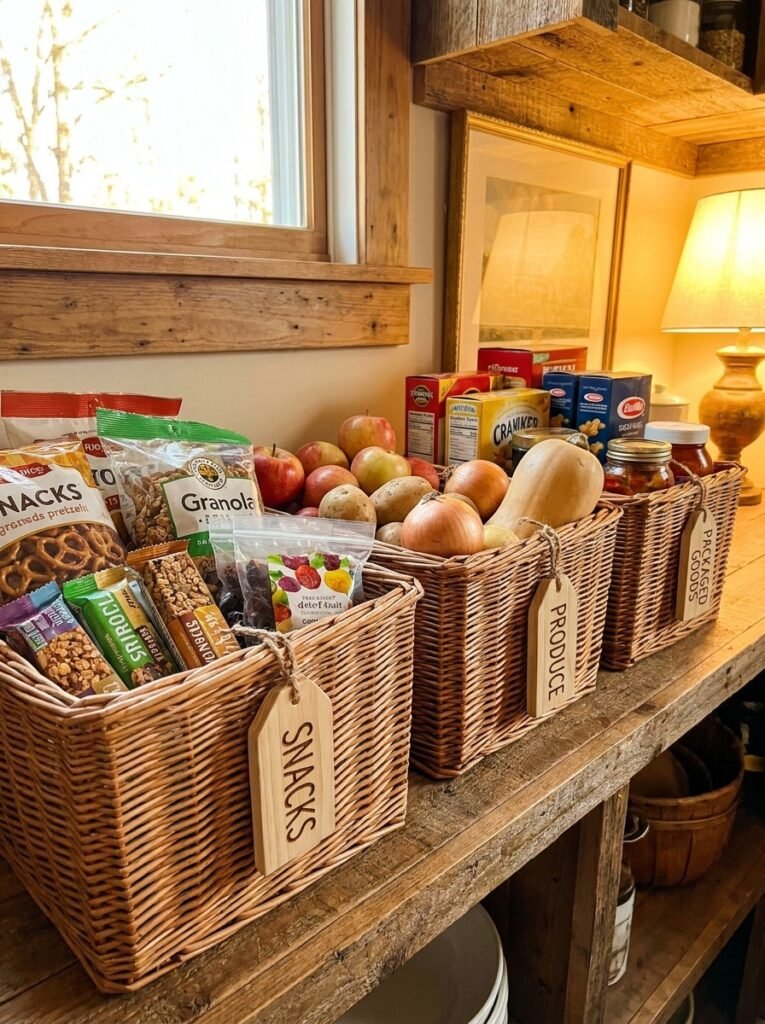
When pantry shelves are shallow or narrow, three matching baskets can transform chaos into calm. Assign one basket to snacks, one to baking staples, and one to loose produce like onions or potatoes. Grouping items this way means you’re pulling out one basket instead of digging through stacked boxes, which is especially helpful in kitchens with only one or two pantry shelves total.
Woven or fabric baskets with handles make it easy to slide them in and out of tight shelving without knocking neighboring items over. Because they’re uniform in size and material, three baskets side by side also look tidy from the outside, even if what’s inside each one is a little more casual or lived-in.
Label each basket with a simple tag so the system holds up over time, especially in shared households. This rule-of-three method turns a small, awkward pantry space into a mini command center, and it’s flexible enough to adjust categories seasonally, like swapping “produce” for “holiday baking” during busy cooking months.
6. Three-Tier Rolling Cart
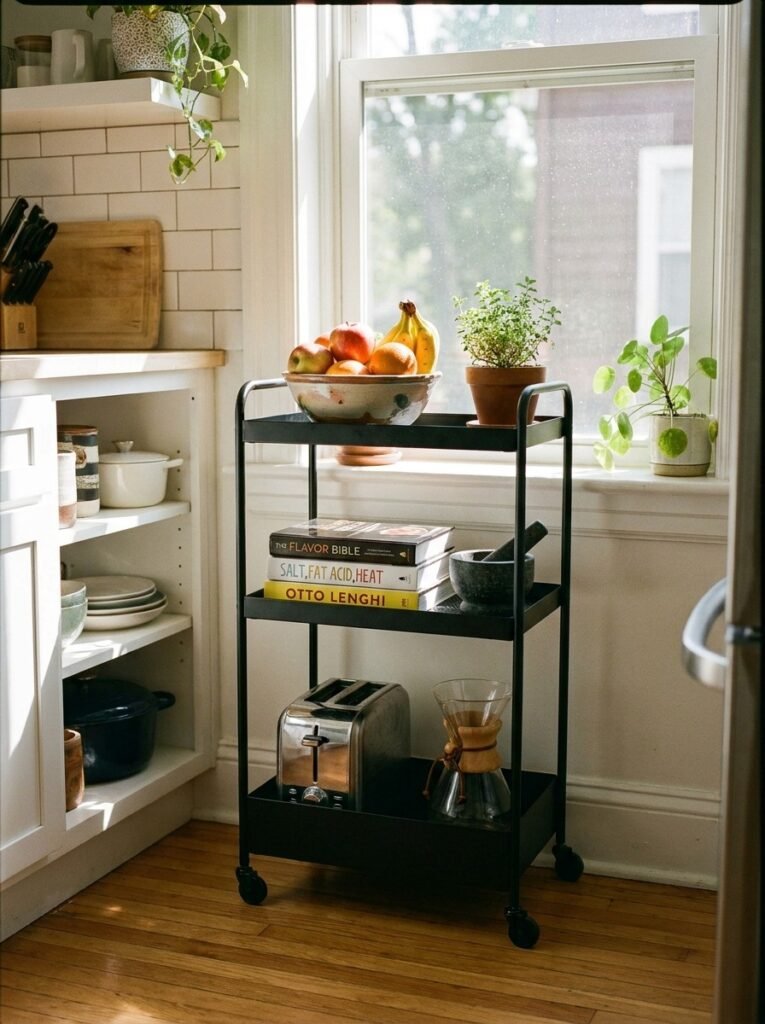
A three-tier rolling cart is one of the most flexible tools for a small kitchen because it adds counter-like surface area without being permanently installed. Tuck it into an awkward corner, beside the fridge, or under a stretch of unused wall, and you instantly gain three layers of storage that can move wherever you need extra space that day.
Assign each tier a job: the top for frequently used items like fruit or a coffee station, the middle for cookbooks or cutting boards, and the bottom for bulkier things like small appliances or a stack of dish towels. This keeps the cart functional rather than becoming a dumping ground for random kitchen clutter.
Because the cart rolls, it also works as a mobile prep station during cooking or as extra buffet space when entertaining. For renters or anyone hesitant to drill into walls, this three-tier solution offers real storage impact with zero commitment, making it a favorite among small-space kitchen renovators on a budget.
7. Three Open Shelves for Everyday Dishes
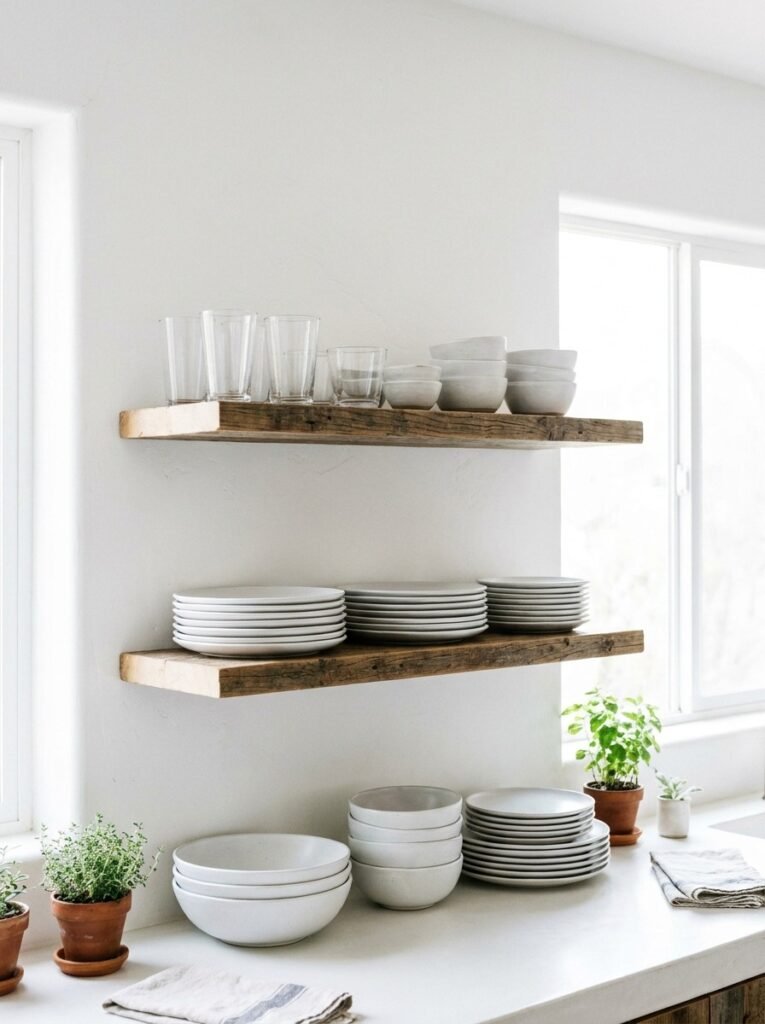
Swapping upper cabinet doors for three open shelves is a popular small-kitchen trick because it removes the visual bulk of cabinet fronts. Stacked plates, bowls, and glasses become part of the décor instead of hidden clutter, and because everything is visible, you naturally keep only what you use, which curbs overbuying dishware that never fits.
Organize the three shelves by frequency of use: everyday plates on the shelf closest to reach, bowls just above or below, and glassware on the least accessible tier since it’s typically lighter and easier to grab occasionally. This logical grouping keeps daily kitchen tasks efficient even without cabinet doors to hide behind.
To keep open shelving from looking messy, stick to a limited color palette across your dishware, ideally two or three tones max. White, cream, and one accent color works well. This restraint is what makes open shelves look like a styled feature rather than exposed storage, especially important in small kitchens with limited visual room to spare.
8. Three-Zone Under-Sink Organizer
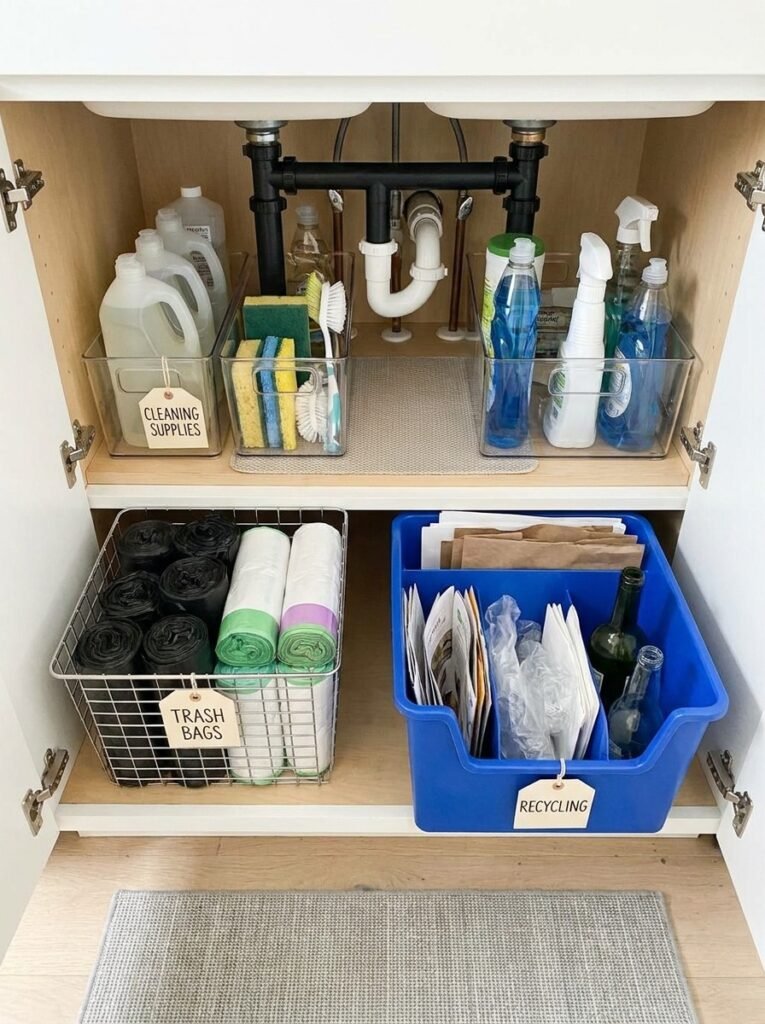
The area under the kitchen sink is often one of the most wasted spaces in a small kitchen, thanks to pipes and awkward angles. Splitting it into three zones — cleaning supplies, trash and recycling bags, and occasional-use items like extra sponges — makes this tricky cabinet finally functional instead of a black hole you dread opening.
Use stackable bins or a tiered riser to work around the plumbing, since under-sink cabinets rarely have flat, uninterrupted floor space. Assigning each of the three zones its own bin means you’re not shifting cleaning spray to find garbage bags, which matters in small kitchens where you can’t afford wasted motion or wasted storage.
Add a small tension rod for spray bottles as a bonus fourth layer if height allows, but keep the core system built around three clear categories. This approach turns one of the most dreaded cabinets in a small kitchen into one of the most organized, and it takes under twenty minutes to set up.
9. Three Hanging Copper Pots
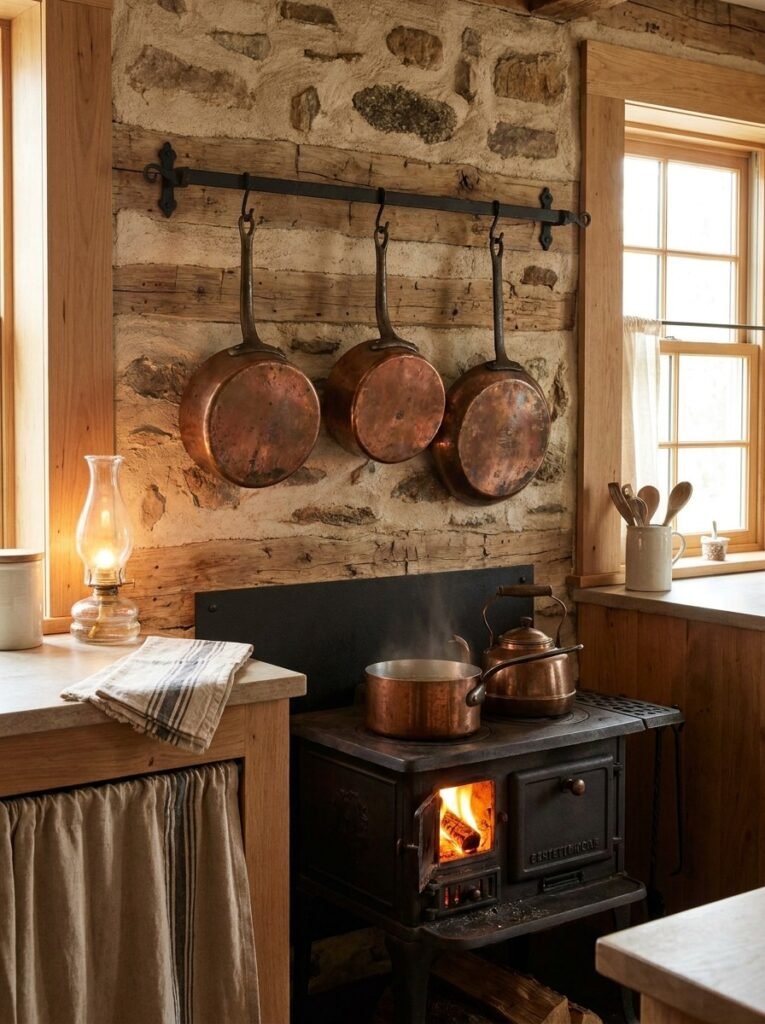
Hanging pots free up cabinet space while adding warmth and texture to a small kitchen wall. Choosing three pots in graduated sizes — small, medium, and large — creates a natural visual rhythm that looks intentional rather than random. Copper especially catches light beautifully, turning functional cookware into a decorative focal point above the stove.
Mount a simple rail or a row of hooks at a height where the largest pot clears the countertop comfortably, usually with the bottom sitting around chest height. This keeps pots accessible during cooking without requiring you to stretch a step stool or dig through a lower cabinet mid-recipe, which matters most in tight, high-traffic kitchen corners.
Beyond saving cabinet space, hanging cookware also encourages you to use and enjoy pieces you might otherwise store away and forget. Three well-chosen pots become part of the kitchen’s personality, especially in farmhouse or industrial-style small kitchens where exposed, well-used cookware is part of the intended aesthetic.
10. Three-Jar Countertop Canister Set
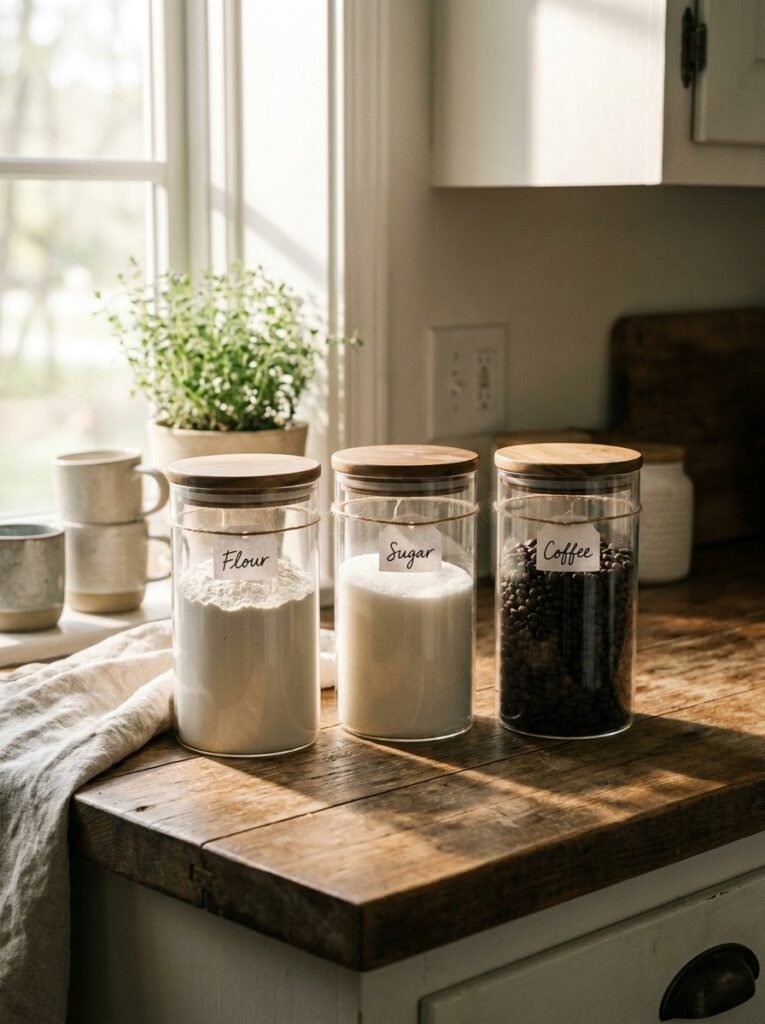
A trio of matching canisters for flour, sugar, and coffee (or your own most-used staples) keeps countertop clutter to a minimum while still giving quick access to daily essentials. Because there are only three, they never overwhelm a small counter, and their uniform look adds a clean, boutique-bakery feel to even the tiniest kitchen setup.
Clear glass canisters let you see when supplies are running low, which is especially useful in small kitchens where you might not have a large pantry backup. Choose canisters with airtight seals to keep ingredients fresh longer, and pick a consistent shape across all three so they read as a set rather than mismatched containers.
Placement matters just as much as the canisters themselves. Line them up near your primary prep zone, ideally within arm’s reach of where you bake or make coffee. This turns a simple three-jar system into a mini efficient station, cutting down on cabinet trips and keeping your small kitchen counter both functional and photogenic.
11. Three Corner Floating Shelves
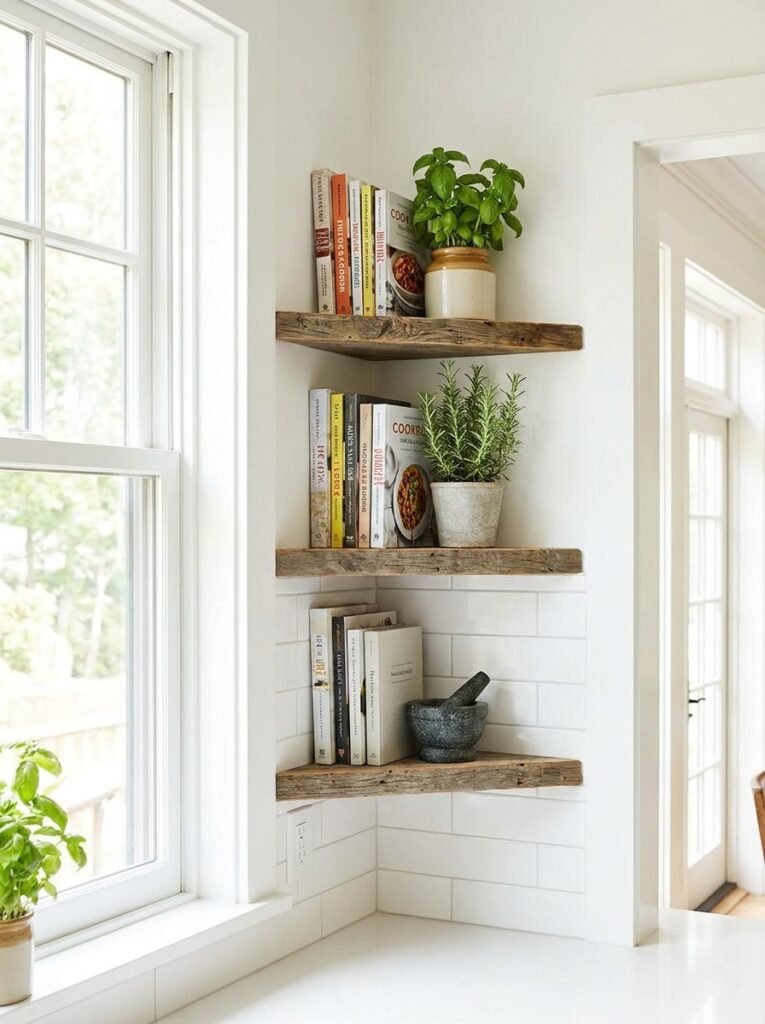
Corners are notoriously wasted space in small kitchens, but three stacked corner shelves can turn that dead zone into genuinely useful storage. Because the shelves follow the natural angle of the walls, they don’t intrude on walkways or counter space, making them one of the few storage solutions that add capacity without making the room feel any smaller.
Use the bottom shelf for heavier items like cookbooks, the middle for everyday small jars or a spice caddy, and the top for something light and decorative, like a small potted herb or a piece of art. This graduated weight distribution also makes the shelves feel balanced and safer for daily use.
Because corner shelves are often overlooked, they tend to feel like a bonus rather than clutter, even in a fully maxed-out small kitchen. Painting them the same color as the wall helps them blend in and disappear visually when not in use, letting the items displayed on them take center stage instead.
12. Three-Tiered Fruit Bowl Stand
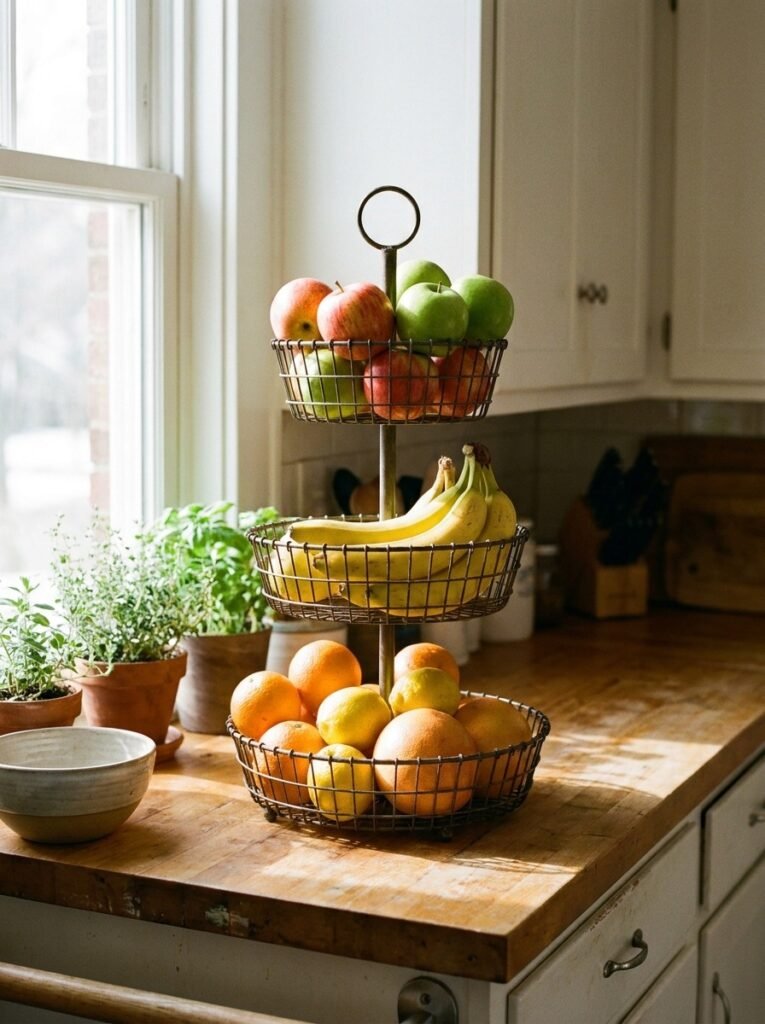
A tiered fruit stand solves a very specific small-kitchen problem: fresh produce that takes up flat counter space you don’t have. By stacking three tiers vertically instead of spreading fruit across the counter, you reclaim valuable prep room while keeping produce visible and easy to grab, which also means you’re more likely to actually eat it before it spoils.
Arrange fruit by weight and size across the three tiers — heavier items like citrus or apples on the bottom for stability, lighter fruit like bananas on the middle tier, and delicate items on top where they won’t get crushed. This keeps the stand both functional and safe on a counter that’s likely already tight on room.
Beyond function, a tiered stand adds a charming, market-style visual element to a small kitchen. Choose a finish like matte black or brushed brass to match your existing hardware, and place it somewhere it can double as a centerpiece, like near a window, so it becomes both storage and casual kitchen décor.
13. Three Bar Stools at the Island
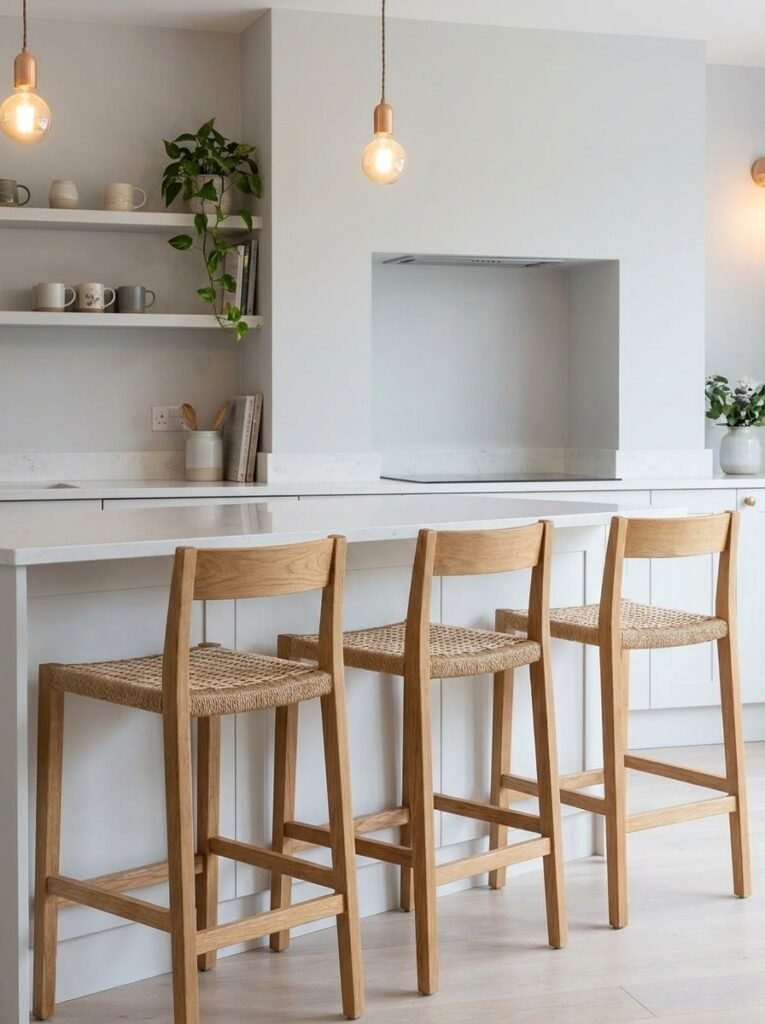
For small kitchens with an island or peninsula, three bar stools hit the sweet spot between usable seating and walkway space. Two stools can feel sparse for entertaining, while four often crowd a compact island. Three strikes a practical balance, offering enough seating for casual meals or guests without blocking the flow of foot traffic through the kitchen.
Choose stools with a slim profile and consider ones that tuck fully under the counter overhang when not in use. This detail matters enormously in small kitchens, where every stool left sticking out becomes another obstacle to navigate during cooking or cleanup. Backless or low-back designs also help the space feel more open visually.
Keep all three stools identical in height, material, and finish for a clean, cohesive look. If your island has mixed seating heights or stool styles, it tends to read as cluttered no matter how small the group is. A matched trio, on the other hand, feels like an intentional design decision rather than mismatched leftovers.
14. Three-Section Cutting Board Set
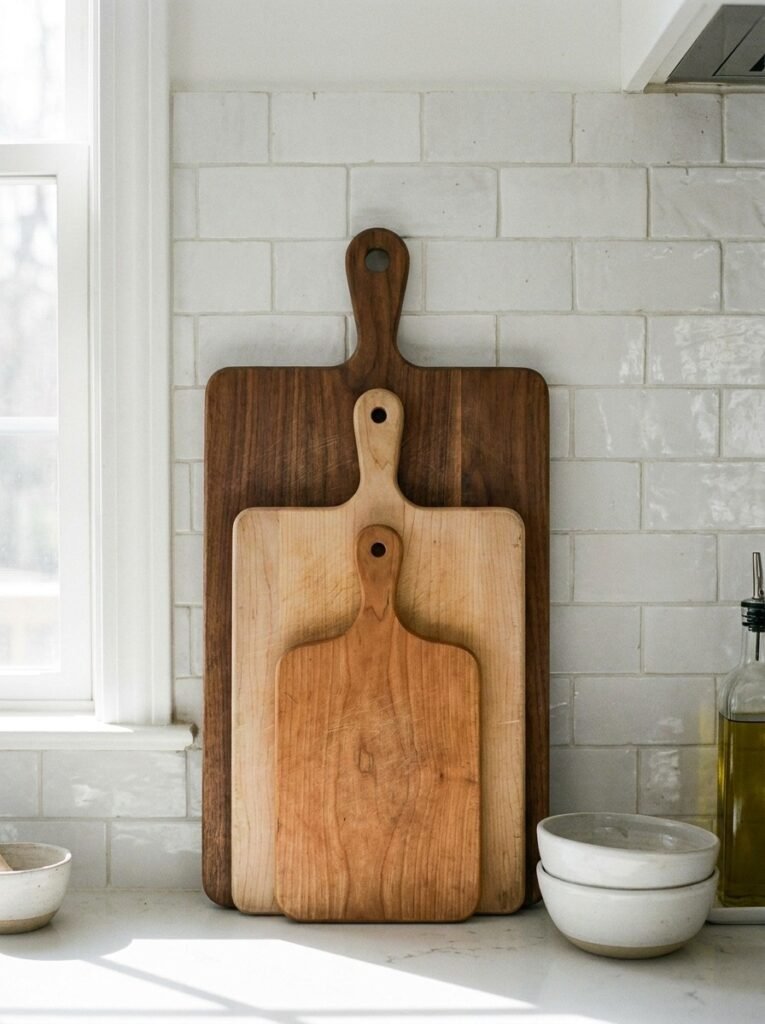
A set of three cutting boards in graduated sizes covers nearly every prep task without cluttering limited counter or drawer space. Use the smallest for quick jobs like slicing garlic or citrus, the medium board for everyday chopping, and the largest for bigger tasks like carving meat or prepping a full meal’s worth of vegetables at once.
Storing them vertically in a slim slot, plate rack, or even leaning against a backsplash saves far more room than stacking them flat in a drawer. This vertical approach also keeps boards easy to grab one-handed mid-recipe, which matters in small kitchens where you often don’t have a free hand or extra counter space to spare.
Choose one consistent wood tone or material across all three boards so they look like a cohesive set even when displayed openly. Because they’re used constantly, cutting boards double as visible kitchen tools rather than hidden equipment, and a matched trio adds a subtle, styled touch to an otherwise purely functional item.
15. Three Magnetic Knife Strips
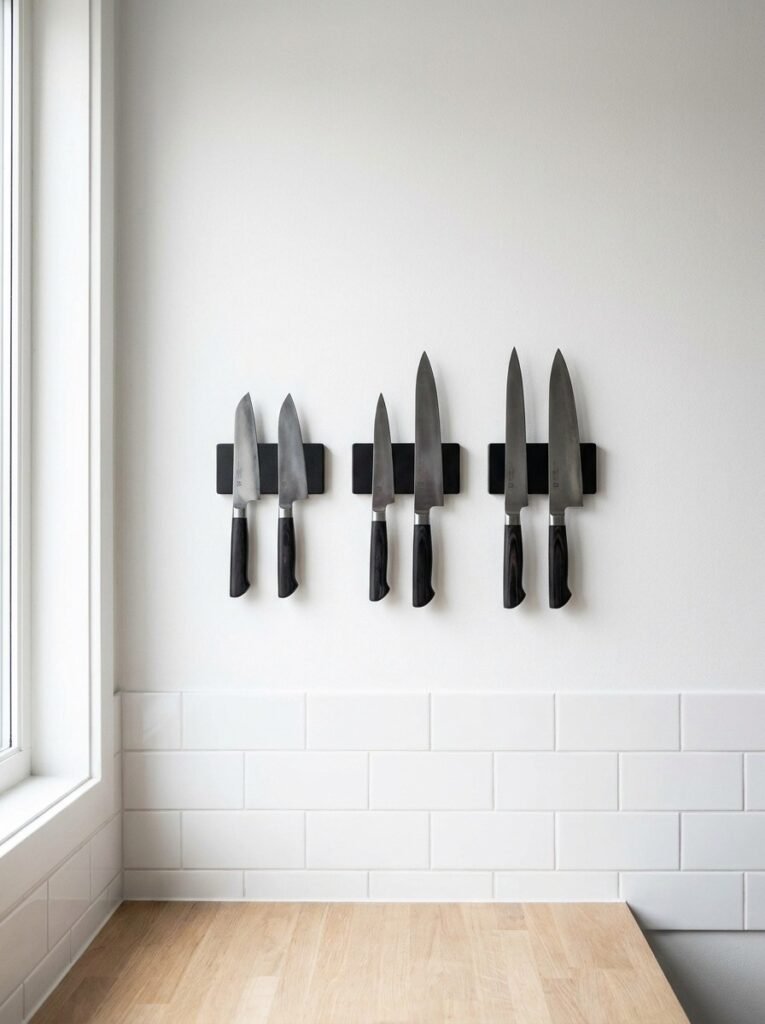
Knife blocks eat up valuable counter space that small kitchens simply can’t spare. Mounting three shorter magnetic strips vertically, instead of one long horizontal strip, is a clever workaround for narrow wall sections often found beside a stove or between cabinets. Each strip can hold two or three knives, keeping blades organized, visible, and completely off the counter.
Group the knives by type across the three strips: one for chef’s and paring knives, one for bread and serrated blades, and one for specialty tools like a boning or fillet knife. This categorization means you’re never fumbling through a drawer mid-recipe, and the open display actually encourages safer handling than tools tossed loosely in a drawer.
Install the strips at a height that’s easy to reach but out of the way of elbows during cooking, typically just above the backsplash. Because magnetic strips take up almost no depth, this three-strip system is one of the most space-efficient upgrades available for a small kitchen wall.
16. Three Nesting Mixing Bowls
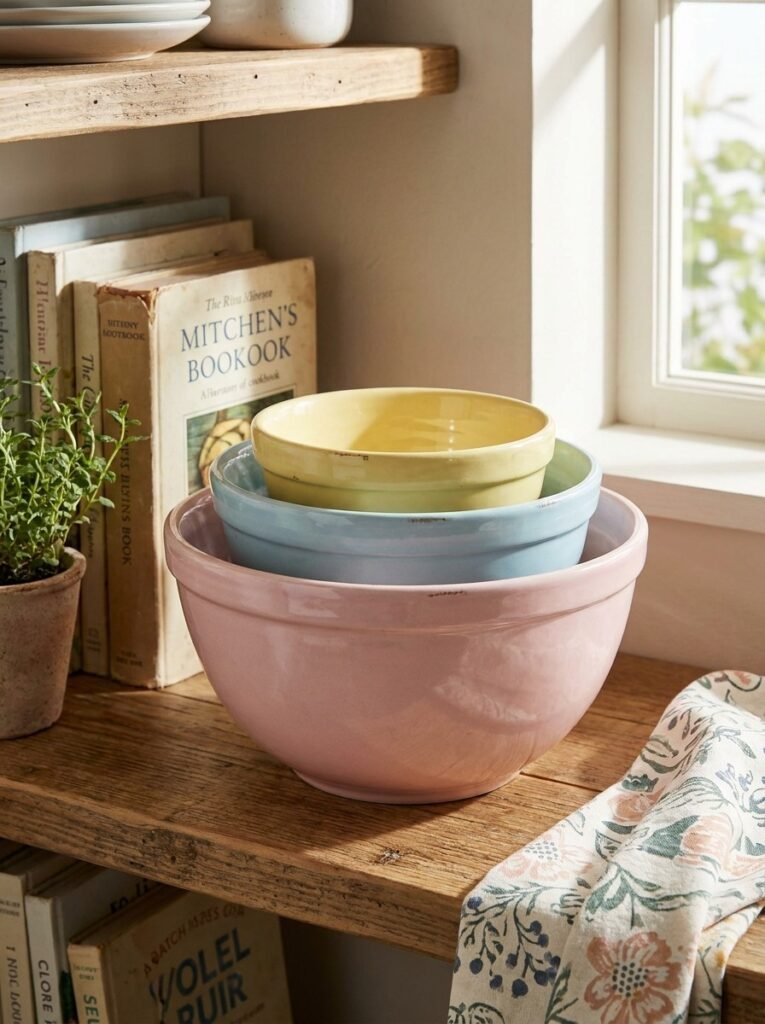
A set of three nesting mixing bowls, small, medium, and large, covers almost every baking or cooking task while taking up the storage footprint of just one bowl. This is one of the simplest rule-of-three swaps for anyone downsizing a kitchen, since it eliminates the need for five or six mismatched bowls competing for the same shelf.
Nesting bowls stack cleanly inside a cabinet or on an open shelf, and because they share a consistent design, they also look intentional if displayed openly as part of your kitchen’s décor. Ceramic or ceramic-look bowls in a soft color palette can double as serving pieces, stretching their usefulness well beyond just mixing batter or tossing salad.
When shopping for a three-bowl set, prioritize ones with wide, stable bases and pour spouts, since these small details make a bigger difference in cramped kitchens where counter space for steadying a bowl is limited. A well-chosen trio becomes a workhorse tool that handles prep, mixing, and even quick storage of leftovers in a pinch.
17. Three Stackable Storage Bins
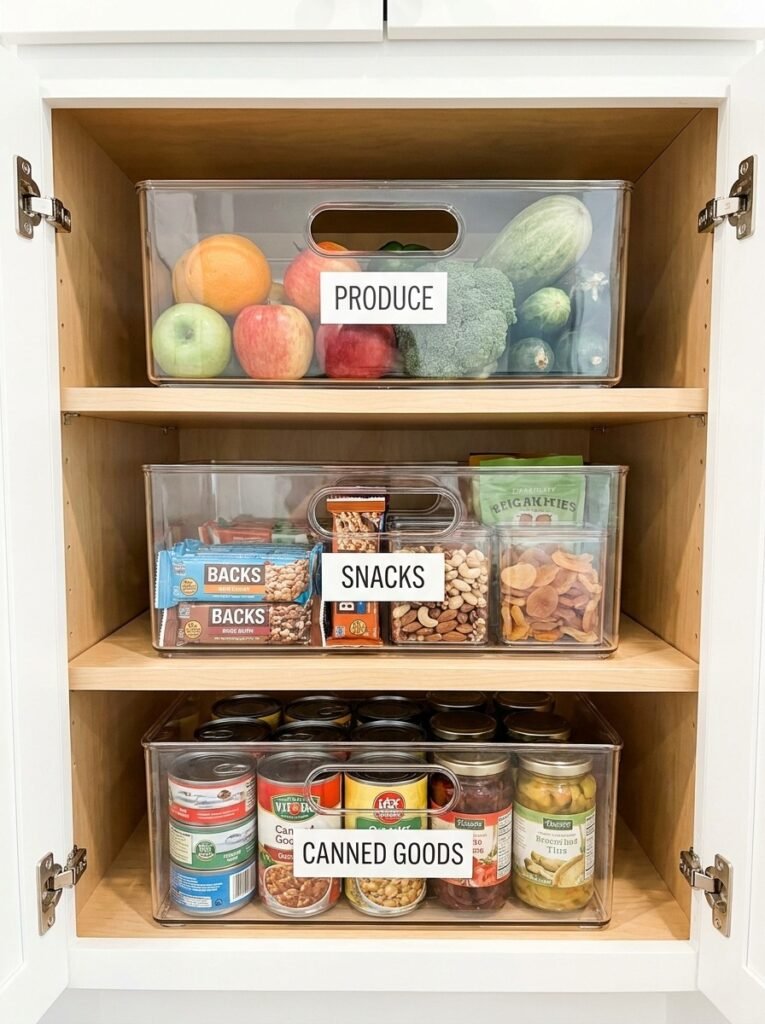
Deep, narrow cabinets are a common frustration in small kitchens because items get lost or buried at the back. Three stackable bins solve this by letting you pull out an entire category at once instead of digging blindly. Assign one bin to snacks, one to canned goods, and one to baking supplies, then stack or line them side by side depending on shelf height.
Clear bins are ideal because they let you see contents at a glance without opening each one, which saves time during meal prep and grocery restocking. Look for bins with cutout handles specifically designed for easy pulling in tight cabinet spaces, since standard boxes can be awkward to grip once wedged between shelves and side walls.
This three-bin method essentially creates “drawers” inside a cabinet that has none, making the most of vertical space that would otherwise go unused. It’s an especially good fit for small kitchens with only one or two deep cabinets, turning an underused storage liability into one of the most efficient spots in the room.
18. Three Wall-Mounted Utensil Racks
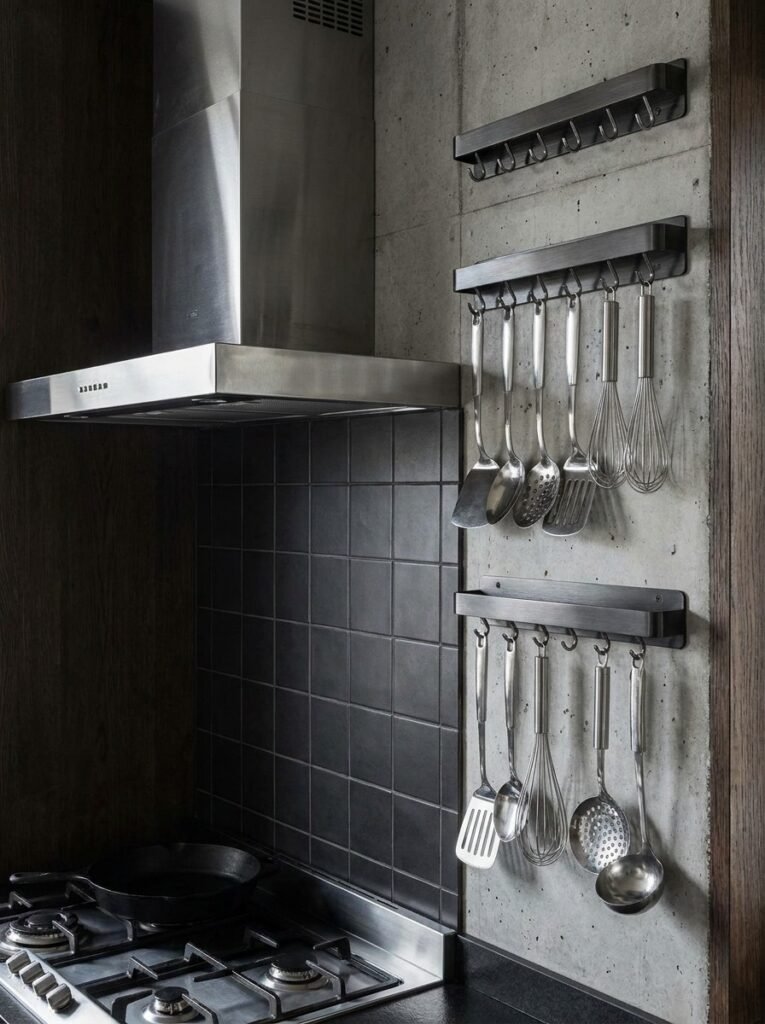
Countertop utensil crocks look charming but eat into workspace that small kitchens can’t spare. Splitting utensils across three wall-mounted rails or hooks near the stove keeps tools accessible without a bulky container taking up prep room. Group them logically: one rail for stirring and flipping tools, one for measuring items, and one for less-frequently used specialty gadgets.
Mount the rails at slightly different heights if wall space allows, creating a small visual tier system similar to shelving. This not only looks intentional but also makes it easier to grab specific tools quickly, since your eye and hand learn where each category lives after just a few uses, cutting down search time during busy cooking moments.
Because the utensils are hanging rather than crammed into a jar, they also dry faster and stay more visibly clean, which matters in small kitchens where mildew and clutter can build up fast in tight spaces. Three rails, thoughtfully placed, turn a cluttered counter habit into an organized, wall-based system instead.
19. Three Mason Jar Herb Garden
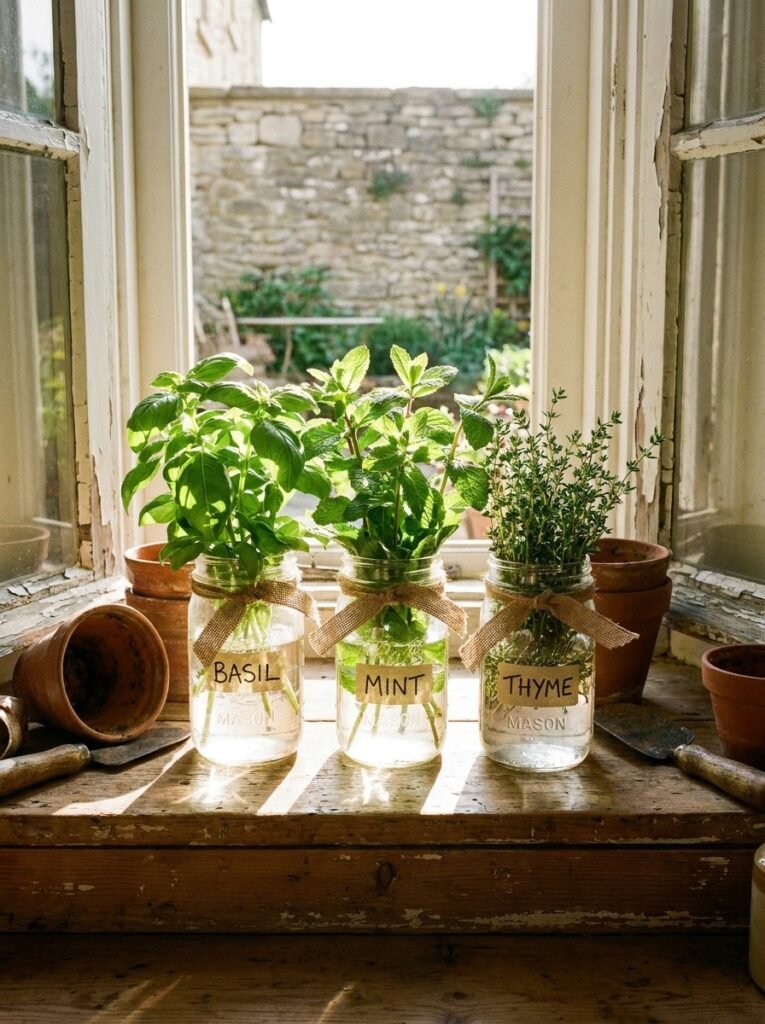
A trio of mason jars holding fresh herbs on a windowsill brings life, color, and functionality to a small kitchen without needing an outdoor garden or bulky planters. Choose three herbs you cook with most, commonly basil, mint, and thyme, and let them thrive in a sunny spot where they’re within easy reach while you’re cooking.
Mason jars are ideal for this setup because they’re compact, inexpensive, and easy to line up in a neat row, unlike mismatched pots that can look cluttered on a small sill. Add a layer of small pebbles at the bottom of each jar for drainage, and rotate the jars occasionally so each herb gets even sunlight exposure throughout the week.
Beyond the practical benefit of fresh herbs at arm’s reach, this three-jar setup adds a pop of green that softens the hard surfaces common in small kitchens. It’s a low-cost, low-commitment way to bring warmth and personality into a compact space while also cutting down on wasted grocery-store herb packets.
20. Three-Tone Color Palette
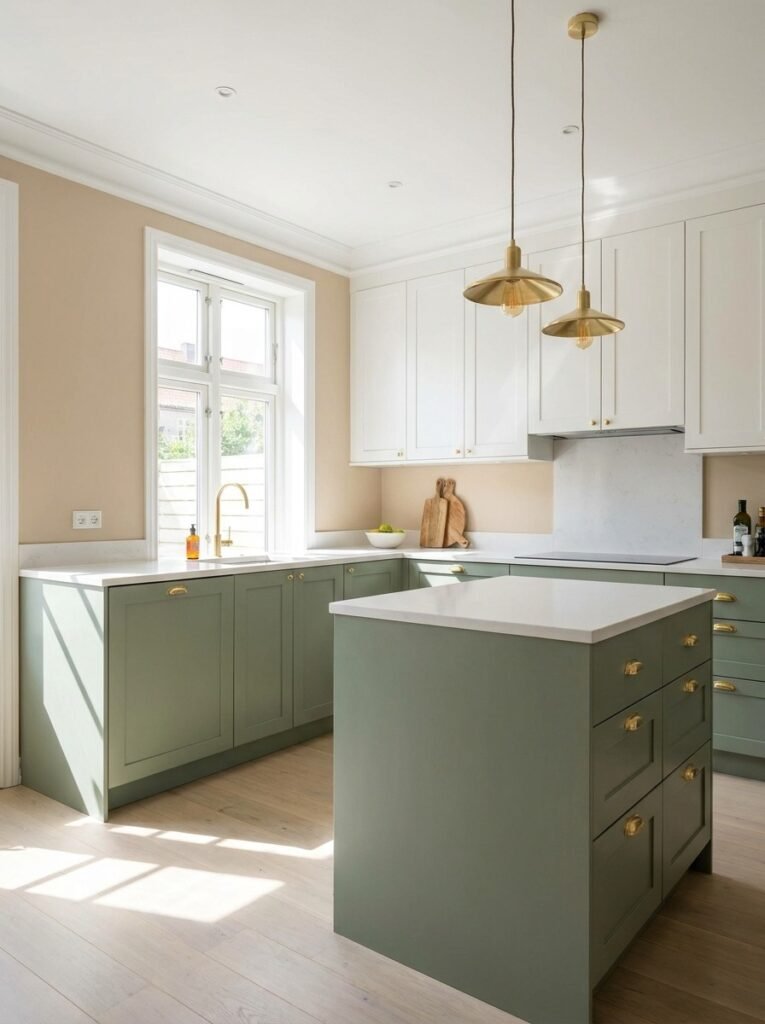
Sticking to just three main colors, one dominant, one secondary, and one accent, keeps a small kitchen from feeling visually busy or chaotic. A common formula is a light dominant tone like white or cream for cabinets and walls, a secondary tone like sage green or navy for an island or lower cabinets, and a metallic accent like brass or matte black for hardware and fixtures.
This restrained palette works especially well in small kitchens because too many competing colors can make a tight space feel even smaller and more cluttered. Limiting yourself to three tones forces every color choice, from dish towels to small appliances, to support the overall scheme rather than compete with it for attention.
When shopping for new items, hold each potential purchase up against your three established tones before buying. If it doesn’t fit one of the three, it likely doesn’t belong in the space. This simple filter keeps a small kitchen’s look cohesive over time, even as individual items like mugs or towels naturally get swapped out.
21. Three-Step Ladder Shelf for Cabinets
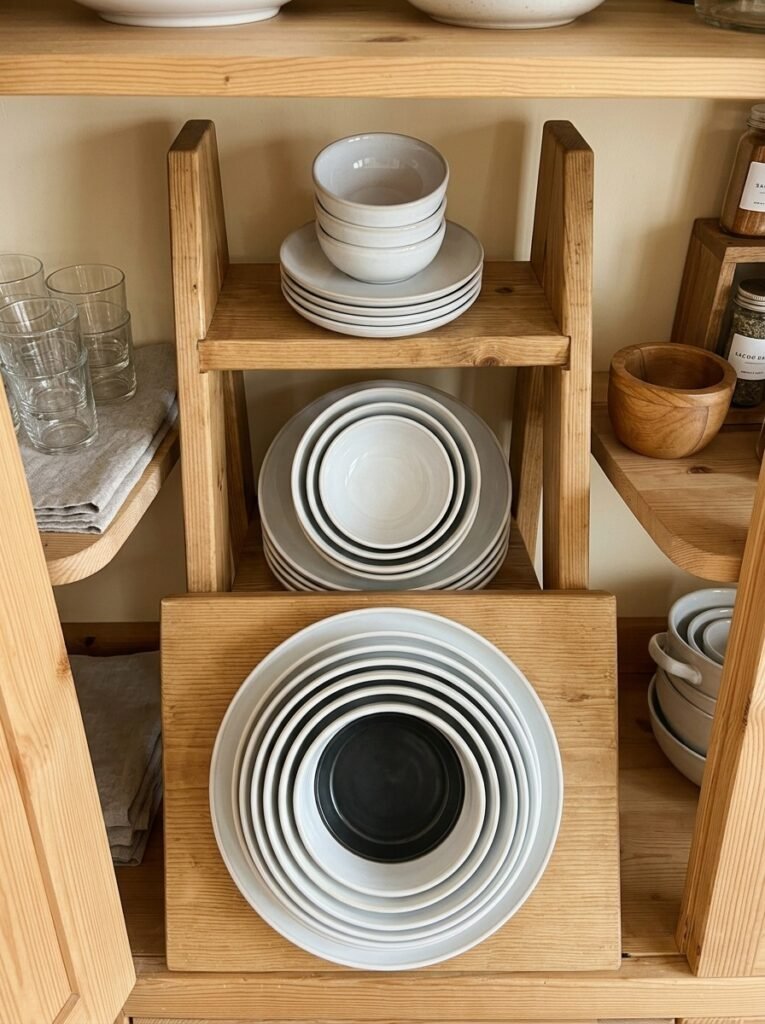
Tall, deep cabinets often waste vertical space because stacking plates or bowls directly on top of each other makes it hard to grab just one without disturbing the whole pile. A three-step ladder shelf insert solves this by creating three graduated levels inside a single cabinet shelf, letting you access each tier independently instead of digging through one flat stack.
This tool works particularly well for plates, bowls, or even canned goods, since each of the three steps holds its own row without blocking the ones behind or above it. In a small kitchen where you might only have one or two cabinets for dishware, this simple insert can effectively double or triple usable storage without any renovation or added footprint.
Look for a ladder shelf with a sturdy, non-slip base so it doesn’t shift every time you pull a plate from the back row. Because it fits inside your existing cabinet, this three-tier trick is one of the easiest and cheapest upgrades on this list, ideal for renters or anyone hesitant to make permanent changes.
The rule of three isn’t just a design trick, it’s a practical framework for making small kitchens feel organized, balanced, and intentional. From triangle work zones to trio color palettes, these 21 ideas prove that limited square footage doesn’t have to mean limited style or function. Pick a few that fit your space and start small, three shelves, three jars, or three stools at a time.