
22 Small Bedroom Decorating Ideas That Work
A small bedroom doesn’t have to feel cramped or compromised. With the right furniture choices, smart storage solutions, and a few clever visual tricks, even the tiniest room can feel spacious, functional, and genuinely stylish. These 22 small bedroom decorating ideas will help you make the most of limited square footage without sacrificing comfort or personality.
1. Multi-Functional Storage Bed
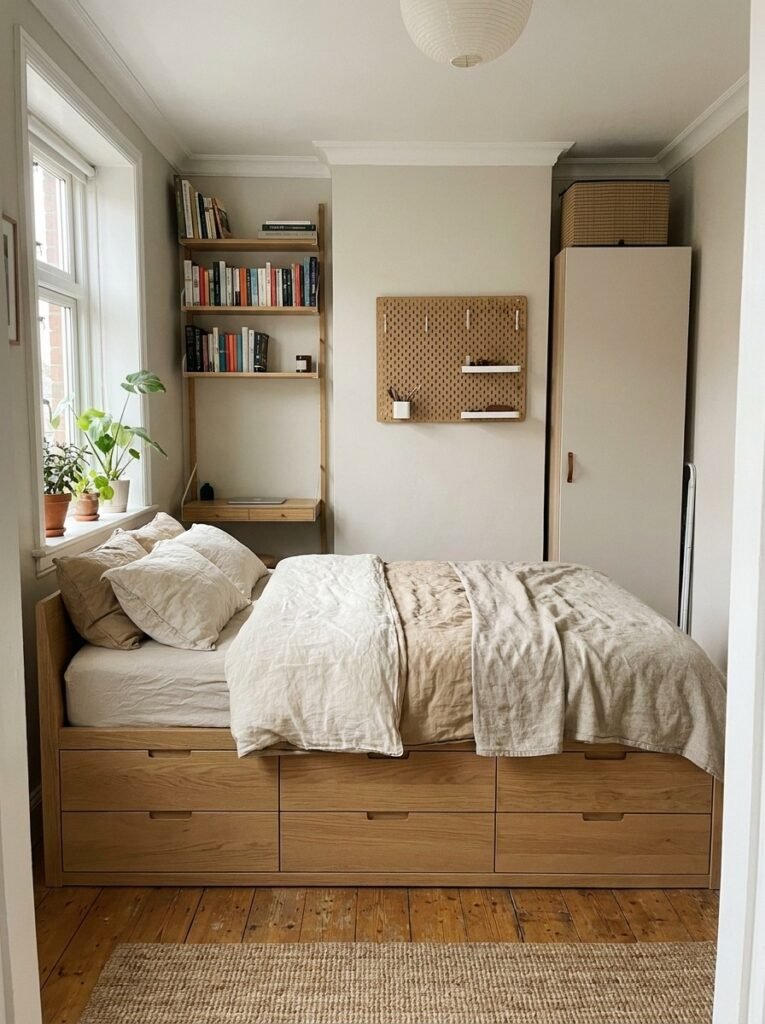
A multi-functional storage bed maximizes the value of the room’s largest furniture piece, incorporating drawers or lift-up storage directly beneath the mattress. This design eliminates the need for a separate dresser in some cases, freeing up valuable floor space that a small bedroom simply cannot spare.
Choose a bed with smooth-gliding drawers for easy daily access, storing off-season clothing, extra linens, or shoes that don’t need to be reached frequently. This hidden storage keeps the room looking tidy while still providing genuine, functional capacity beyond what open shelving alone could offer.
This furniture choice works particularly well in studio apartments or shared bedrooms where every available inch of storage matters significantly. It’s one of the most effective space-saving investments a small bedroom can make.
2. Wall-Mounted Nightstands
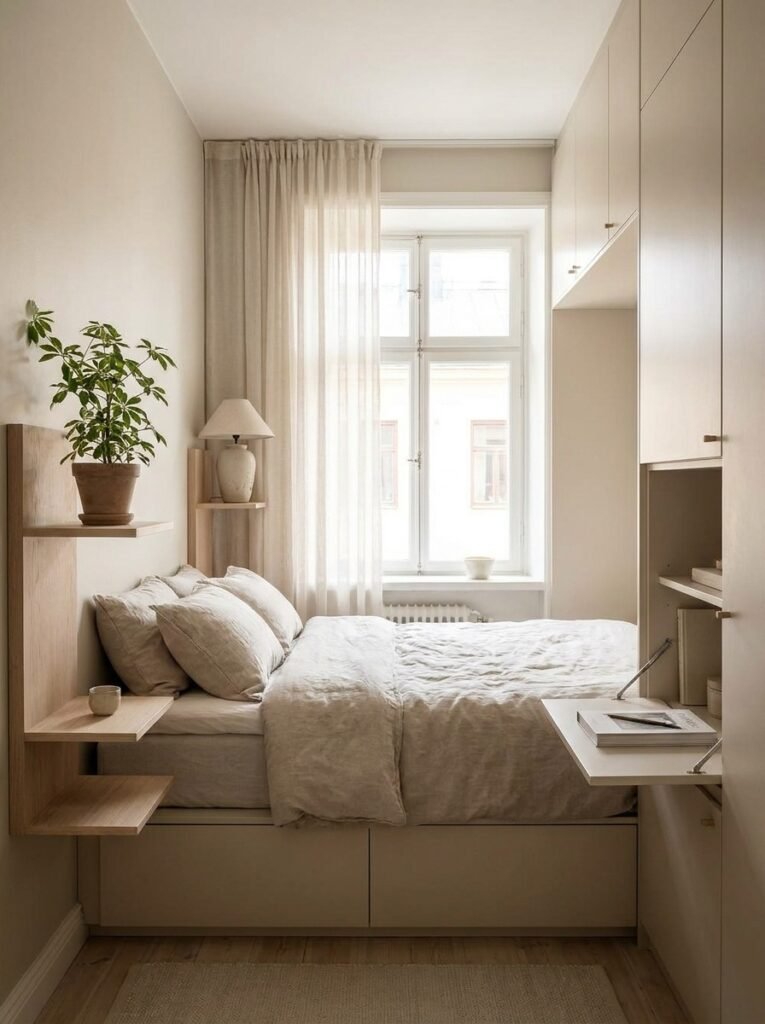
Wall-mounted nightstands eliminate the floor footprint of traditional bedside tables, creating the illusion of more open space in a small bedroom. These floating shelves still provide a surface for a lamp, phone, and a few essentials without requiring legs that take up valuable floor real estate.
This solution works particularly well in bedrooms where floor space is at an absolute premium, allowing for easier cleaning underneath and a visually lighter overall look. Choose a shelf depth that comfortably fits your essentials without appearing to overwhelm the wall space beside the bed.
This small furniture swap makes a surprisingly significant difference in how spacious a small bedroom feels, since even a few inches of reclaimed floor space can meaningfully improve the room’s overall sense of openness.
3. Vertical Storage Solutions
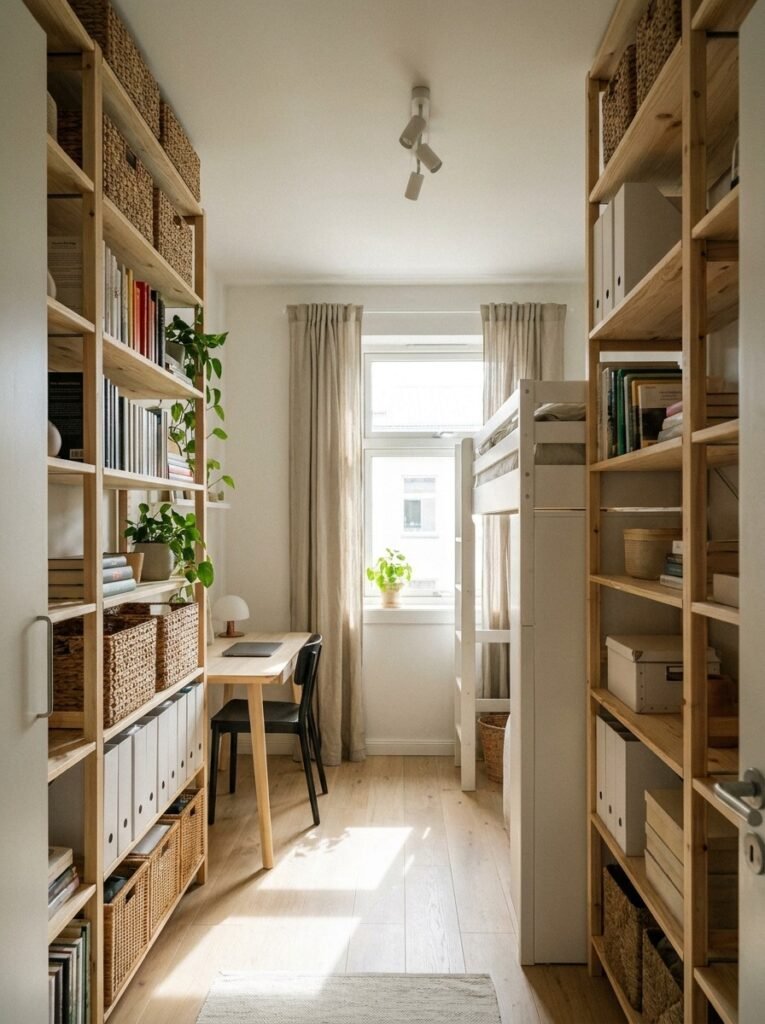
Vertical storage solutions take advantage of unused wall height, an especially valuable resource in small bedrooms where floor space runs out quickly. Tall, narrow shelving units or wardrobes make efficient use of the room’s full height rather than spreading storage across a wider horizontal footprint.
Choose furniture pieces specifically designed with a slim profile and taller height to maximize storage capacity without significantly impacting the room’s overall floor space. This vertical approach keeps items organized and accessible while leaving more room to move comfortably throughout the space.
This strategy proves particularly effective for small bedrooms with high ceilings, where the vertical space above eye level often goes completely unused. Maximizing this dimension can significantly increase a small room’s overall storage capacity.
4. Light Color Palette
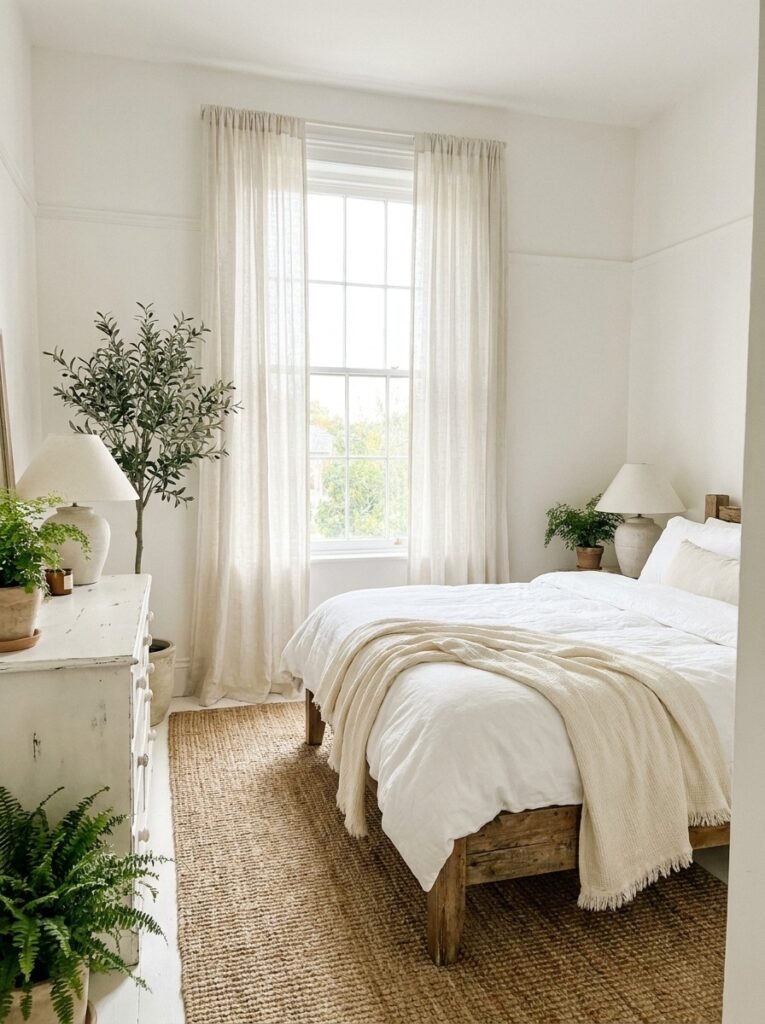
A light color palette throughout walls, bedding, and furniture helps a small bedroom feel more open and airy than its actual square footage might suggest. White, cream, and soft pastel tones reflect natural and artificial light more effectively than darker colors, brightening the entire room significantly.
This approach doesn’t mean the room needs to feel sterile or boring, since texture and subtle pattern can still add visual interest within a predominantly light color scheme. Layering different shades of white or cream through bedding and curtains adds depth without introducing visual heaviness.
This trick works particularly well in bedrooms with limited natural light, where dark colors can make an already small space feel even more enclosed. A light palette remains one of the most reliable techniques for visually expanding a compact room.
5. Mirror to Expand Space
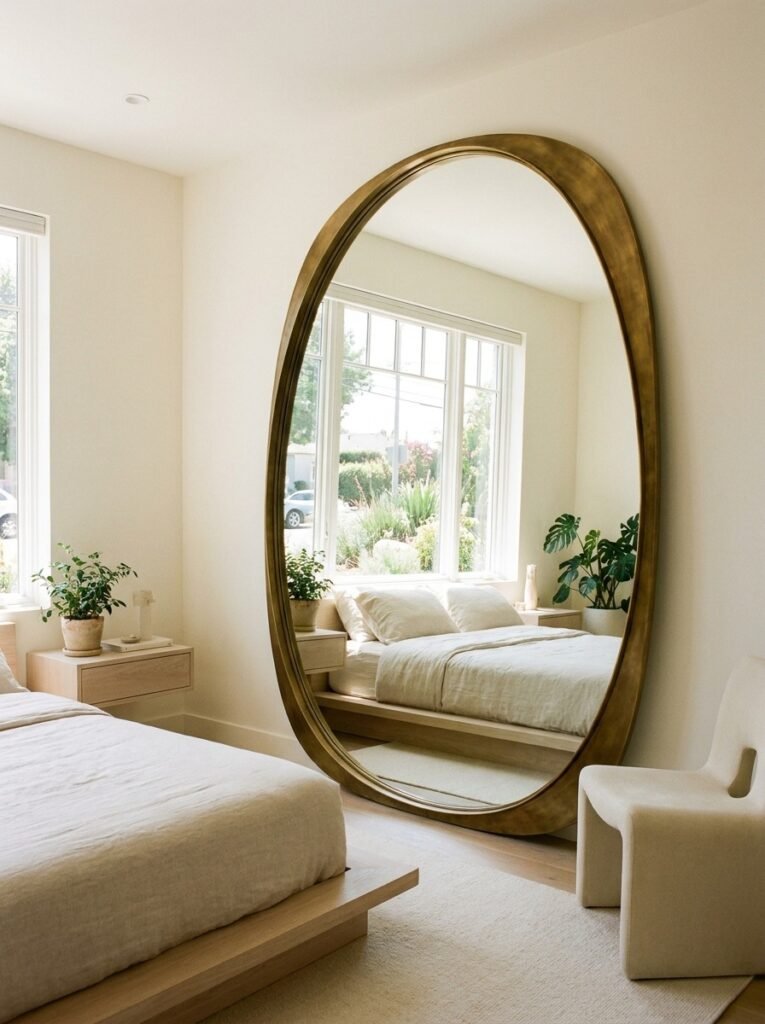
A large mirror positioned strategically in a small bedroom can dramatically increase the perceived size of the room, reflecting both natural light and the existing space back into itself. This simple decor addition creates genuine visual depth without requiring any structural changes to the room.
Position the mirror to reflect a window or a light source elsewhere in the room for maximum brightening effect throughout the day. An oversized mirror tends to make a stronger visual impact than several smaller ones, so consider sizing up for the strongest space-expanding result.
This technique works particularly well opposite the bed or on a wall perpendicular to the main window, doubling the room’s apparent depth and brightness. It’s one of the most effective and affordable small bedroom tricks available.
6. Under-Bed Storage Bins
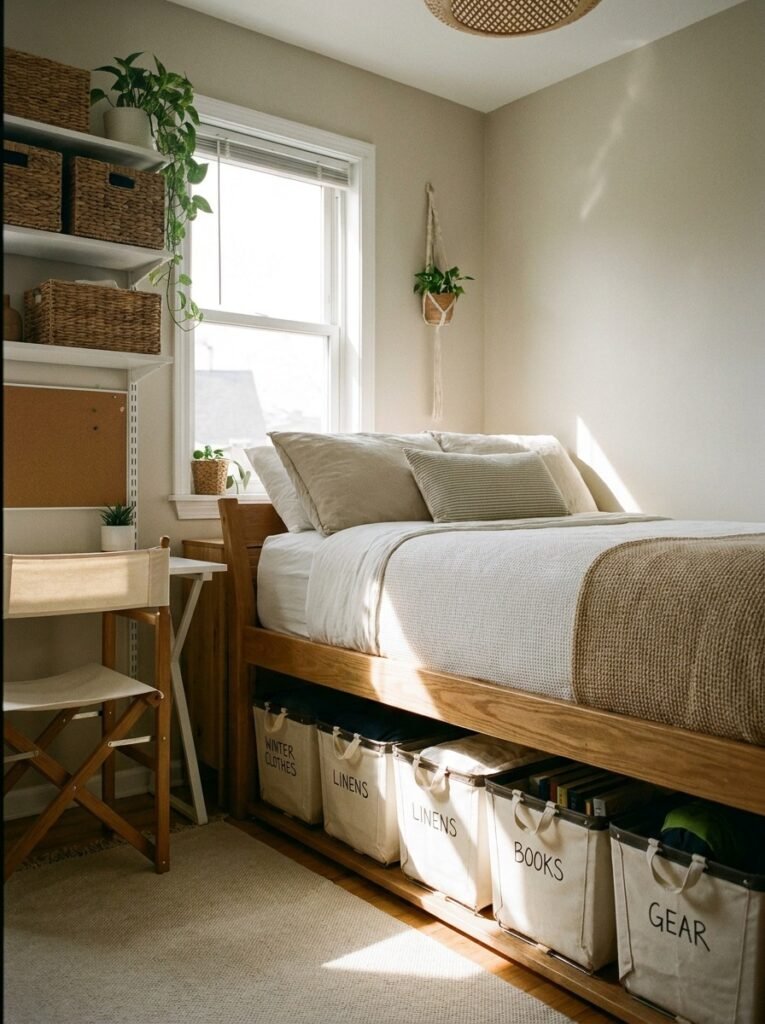
Under-bed storage bins make use of one of the most commonly overlooked spaces in any bedroom, tucking away seasonal clothing, extra bedding, or shoes without requiring additional furniture. This solution works with nearly any bed frame height, offering flexible storage regardless of your specific furniture setup.
Choose clear or labeled bins for easy identification without needing to pull each one out to check contents. Wheeled bins make access even more convenient, especially useful for items you need to retrieve more frequently throughout different seasons.
This nearly free storage solution proves especially valuable in small bedrooms lacking a large closet or dresser, effectively adding an entire hidden storage layer beneath the room’s largest furniture piece without consuming any additional floor space.
7. Floating Shelves Instead of Furniture
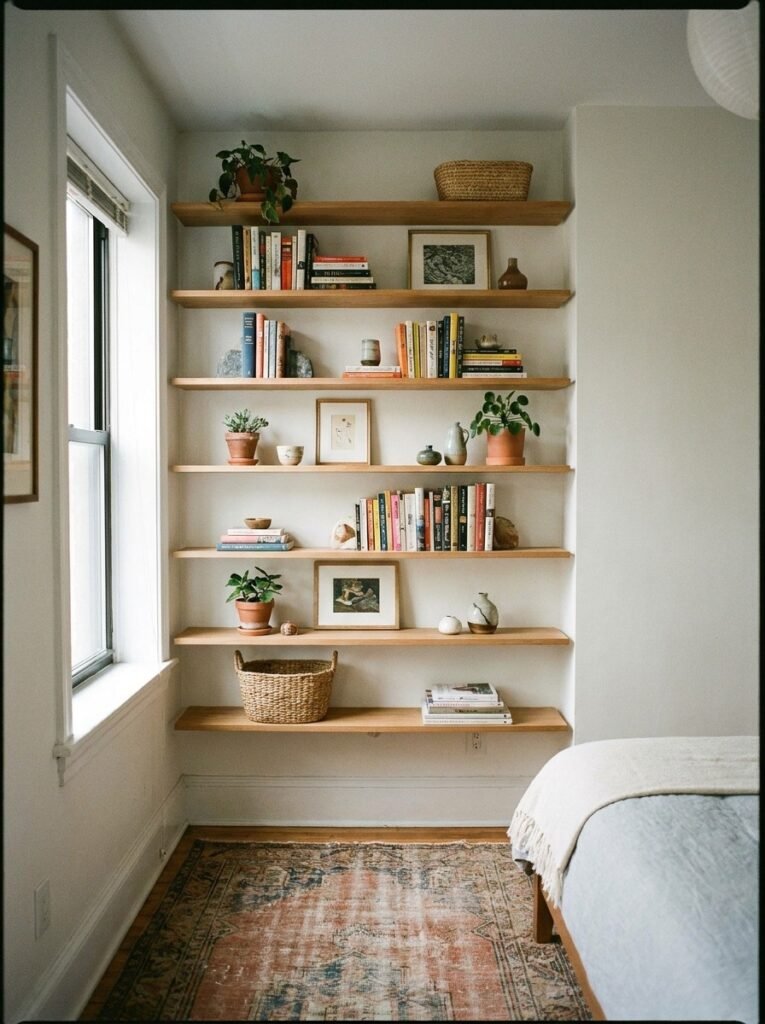
Replacing a traditional dresser with floating shelves can significantly reduce a small bedroom’s furniture footprint while still providing storage and display space. This approach works particularly well for those with minimal clothing storage needs or access to a closet elsewhere in the room.
Style the shelves with a mix of folded clothing baskets, books, and decorative objects to combine function with genuine visual appeal. This vertical storage solution keeps the floor space open, making the room feel significantly larger than a dresser-filled layout would allow.
This idea suits minimalist lifestyles particularly well, where reduced clothing volume makes open shelving a genuinely practical alternative to bulkier furniture. It’s an effective way to reclaim floor space in even the tightest bedroom layouts.
8. Corner Desk Nook
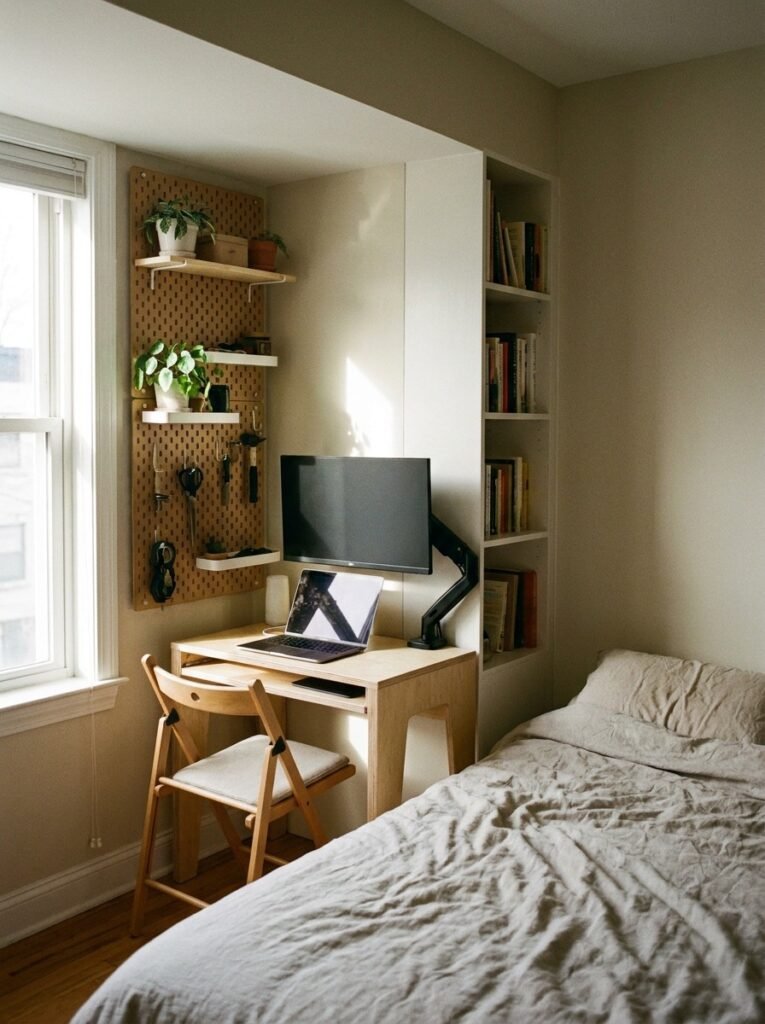
A corner desk nook makes efficient use of an often-underutilized part of a small bedroom, tucking a functional workspace into a space that might otherwise remain empty. This layout maximizes square footage without disrupting the room’s overall flow or requiring a dedicated home office elsewhere.
Choose a desk specifically designed for corner placement, with an angled or L-shaped surface that fits neatly into the room’s natural geometry. This shape often provides more usable surface area than a straight desk of the same overall footprint would offer.
This idea proves particularly valuable for those needing occasional workspace without a spare room to dedicate to the purpose. It’s a practical solution that adds genuine function to a small bedroom’s typically underused corner.
9. Fold-Down Furniture
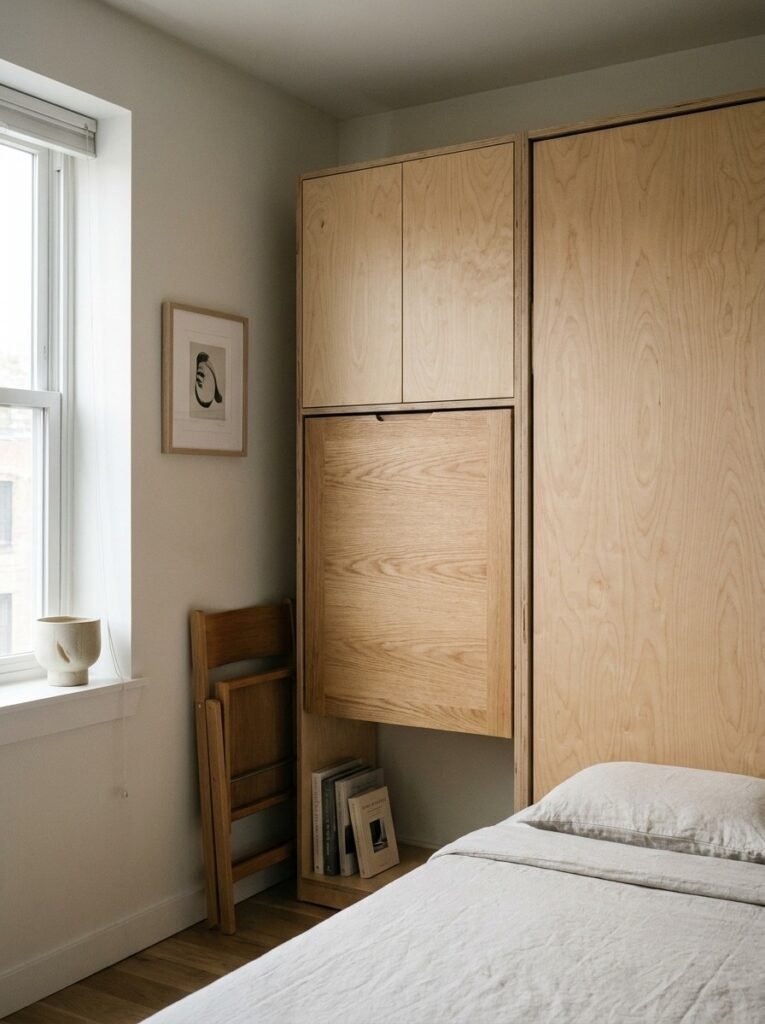
Fold-down furniture, like a wall-mounted desk or table, offers maximum flexibility for small bedrooms, disappearing almost entirely into the wall when not actively in use. This design essentially eliminates the furniture’s footprint during non-working hours, reclaiming valuable floor space for other activities.
Choose a model with a sturdy folding mechanism and adequate weight capacity for your typical use, whether that’s a laptop for occasional work or a vanity mirror for getting ready. Some designs include built-in shelving that remains visible even when the main surface folds flat.
This solution proves particularly valuable for genuinely tiny bedrooms, like those in studio apartments or shared living situations, where a permanent furniture footprint simply isn’t practical for the room’s daily needs.
10. Curtains Instead of Closet Doors
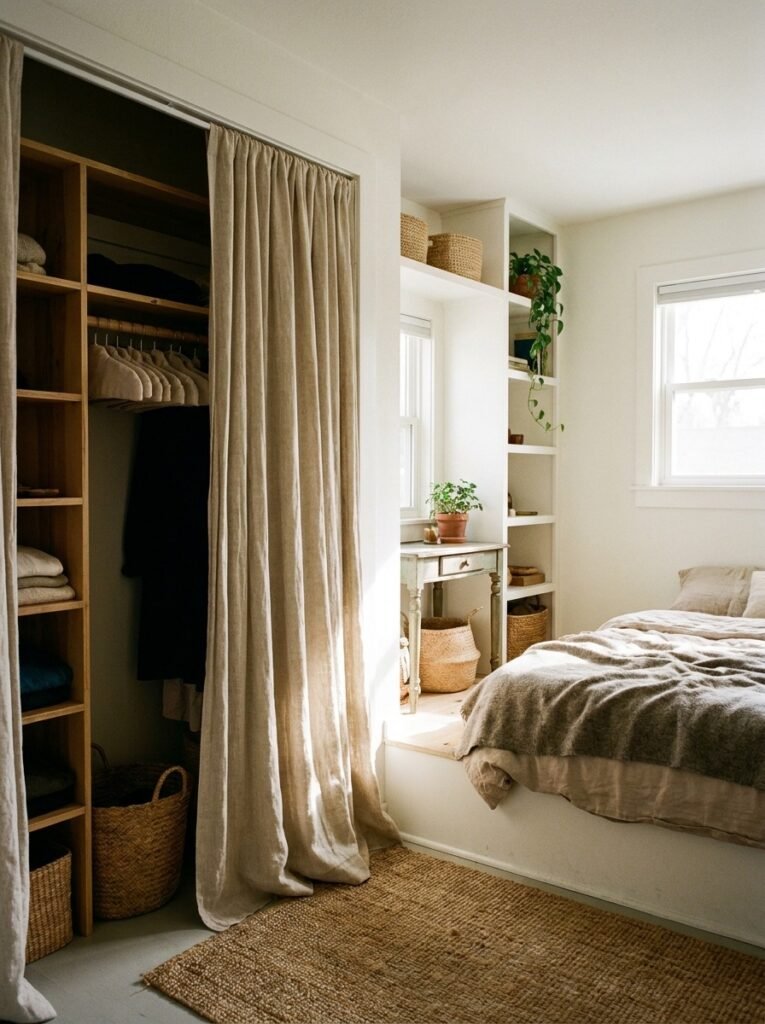
Replacing swinging closet doors with a curtain saves the floor space typically needed for a door to open and close freely. This simple swap works particularly well in small bedrooms where every inch of clearance matters, especially in rooms with limited space around the closet area.
Choose a fabric that complements your existing bedroom decor, whether that’s a simple linen curtain for a minimalist look or a patterned fabric for added visual interest. This solution also tends to be more affordable than replacing bifold or sliding closet doors entirely.
This trick proves especially useful in older homes with awkward closet door placement that might otherwise obstruct furniture or walkways. It’s a low-cost, easily reversible update that meaningfully improves a small bedroom’s functional layout.
11. Multi-Purpose Bench Storage
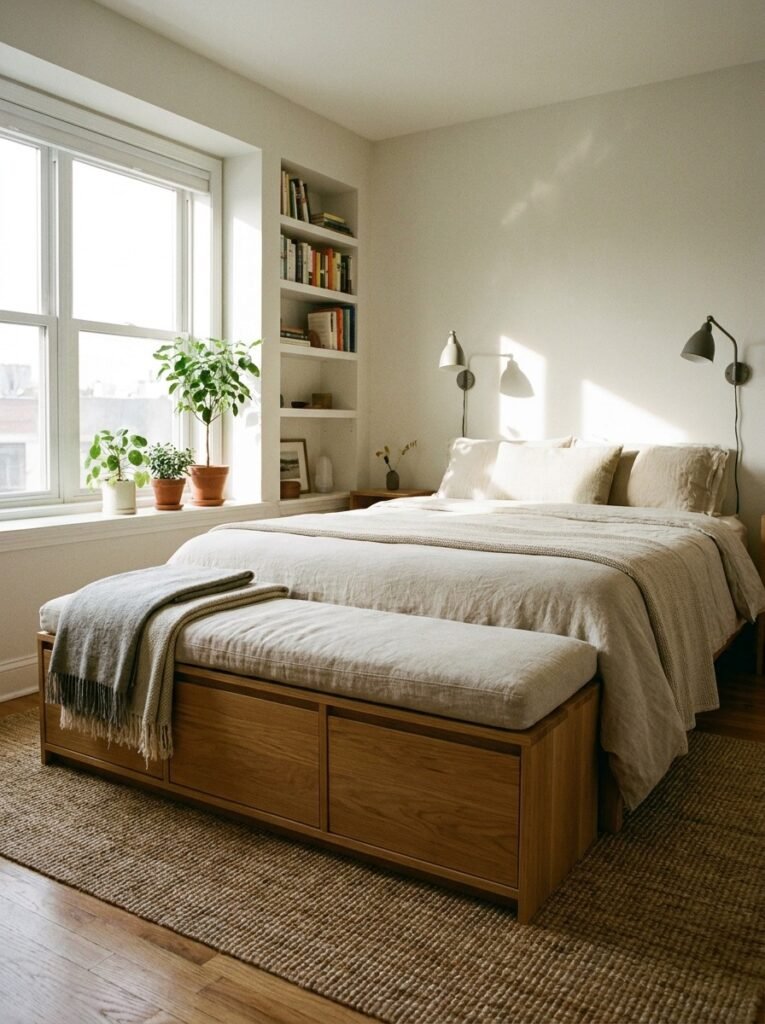
A multi-purpose storage bench at the foot of the bed combines seating with hidden storage, offering practical function without requiring a separate piece of furniture for each purpose. This addition provides a spot to sit while dressing and a place to store extra linens or out-of-season clothing.
Choose a bench sized appropriately for the room’s available space, ensuring it doesn’t obstruct the natural walking path around the bed. A slim profile design keeps the addition from feeling bulky within an already compact room.
This dual-purpose furniture piece exemplifies smart small-space decorating, where every item ideally serves more than one function. It adds genuine value without contributing significantly to the room’s overall furniture footprint.
12. Hanging Wall Organizers
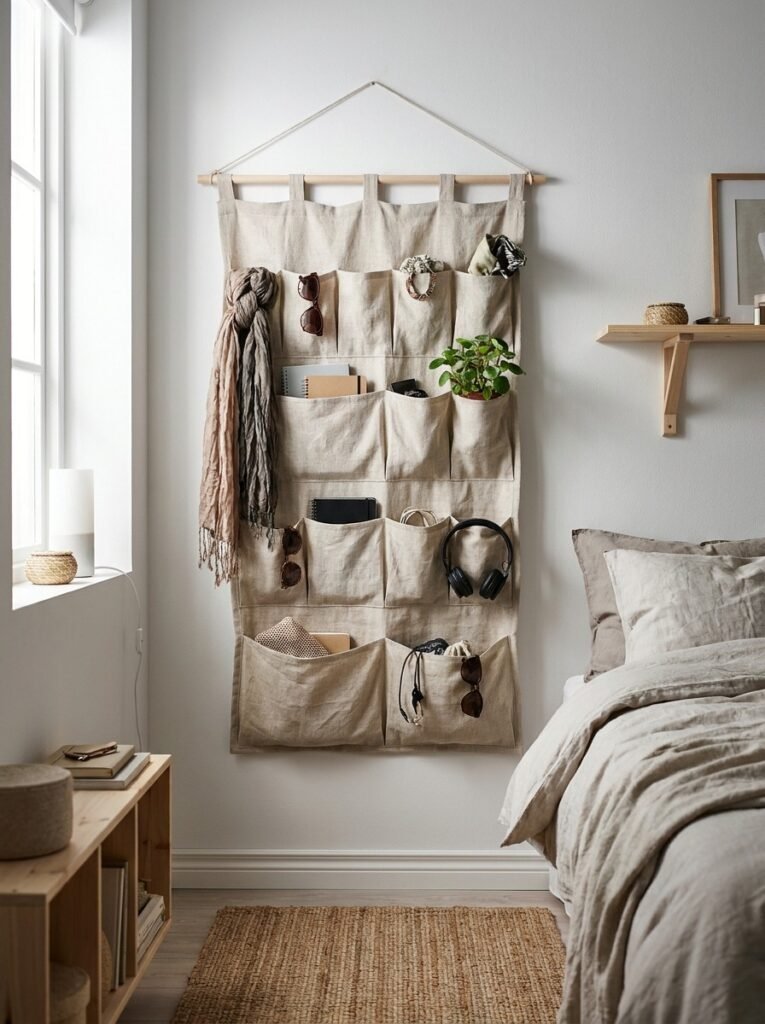
Hanging wall organizers, with multiple pockets for accessories, jewelry, or small items, make use of vertical wall space that would otherwise remain empty. This solution keeps frequently used items visible and accessible without requiring additional dresser or drawer space within the small bedroom.
Choose an organizer style that complements your room’s overall decor, whether that’s a simple canvas design or a more decorative woven option. Position it near the closet or dressing area for the most practical, frequently accessed placement within the room.
This inexpensive addition offers genuine organizational value in bedrooms where every drawer and shelf inch counts. It’s an easy way to add functional storage without consuming any of the room’s already limited floor space.
13. Low Profile Furniture
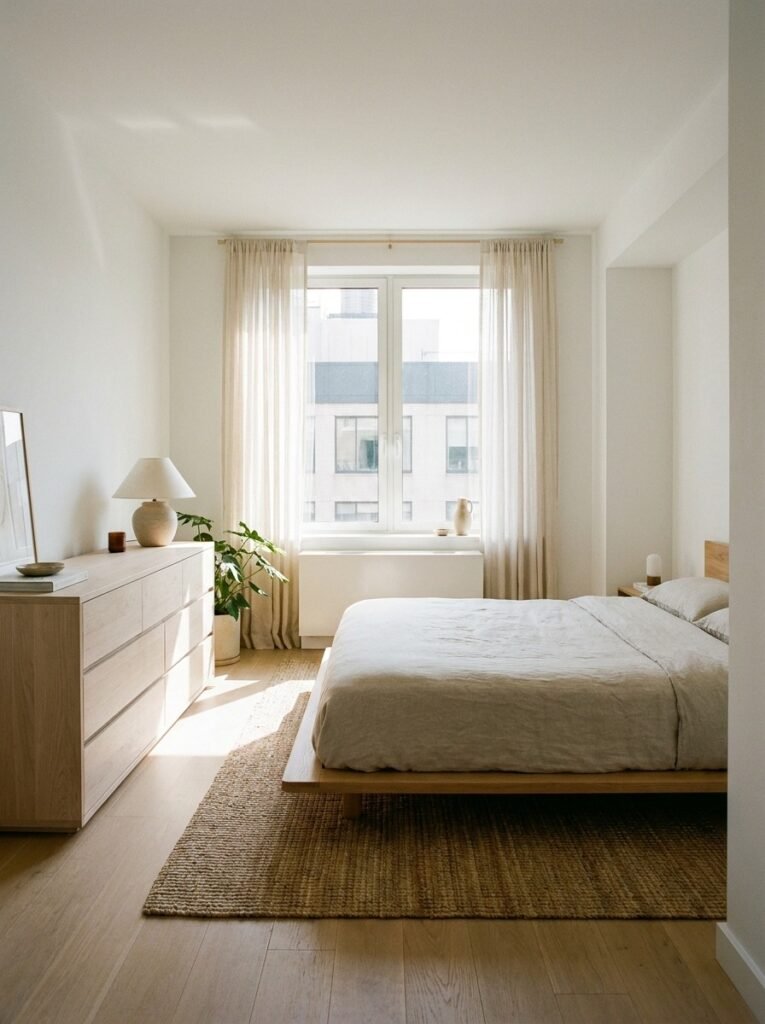
Low profile furniture, including platform beds and low dressers, helps a small bedroom feel more open by keeping sightlines clear across the room. Taller furniture pieces tend to visually chop up the space, while lower silhouettes allow the eye to travel more freely from wall to wall.
This furniture style also tends to feel less visually heavy, even when the actual footprint is similar to taller alternatives. Choosing pieces with exposed legs rather than solid bases further enhances this airy effect, since visible floor beneath furniture makes the room feel more open overall.
This approach works particularly well in bedrooms with lower ceilings, where taller furniture can make the room feel cramped from floor to ceiling. Low profile pieces help maintain a sense of proportion and openness throughout the space.
14. Loft Bed with Space Below
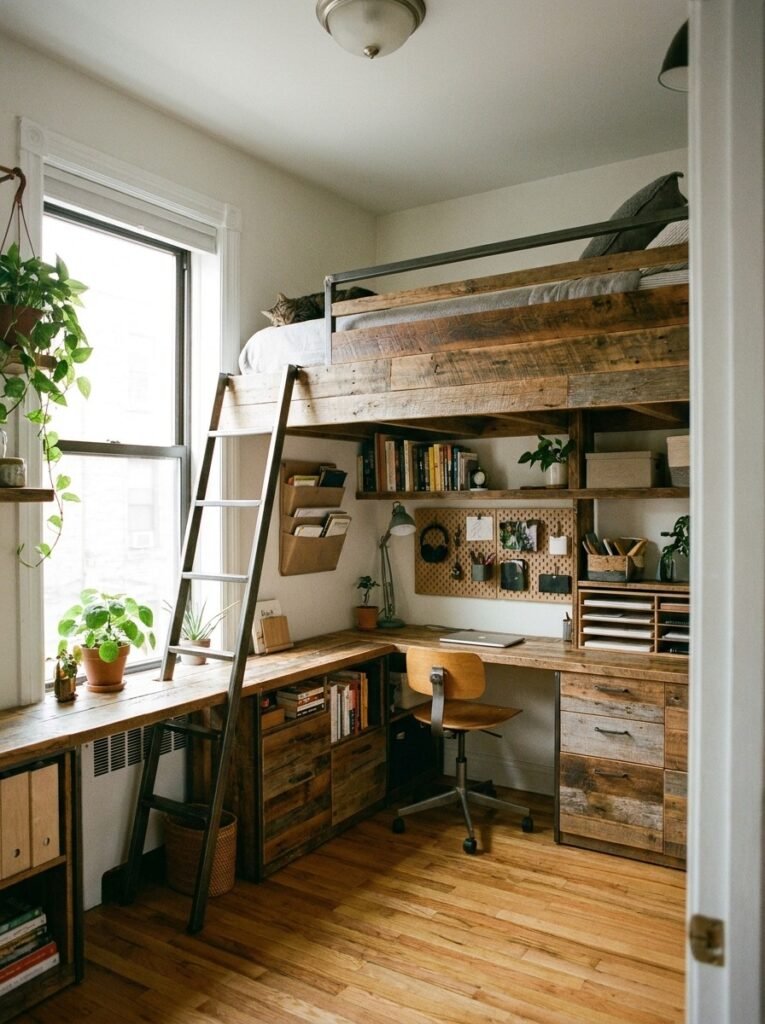
A loft bed elevates the sleeping area, freeing up the entire floor space beneath for a desk, seating area, or additional storage. This vertical solution proves especially valuable in genuinely tiny bedrooms, like dorm rooms or studio apartments, where floor space is the most limited resource available.
Choose a loft bed with adequate ceiling clearance to avoid feeling cramped while lying down, and ensure the space below is designed with a specific function in mind rather than left empty. A desk, wardrobe, or reading nook all make excellent uses of the reclaimed area.
This dramatic space-saving solution requires a higher ceiling than a standard bedroom typically offers, making it best suited for lofts, converted attics, or homes specifically designed to accommodate this furniture style.
15. Slim Profile Furniture Choices
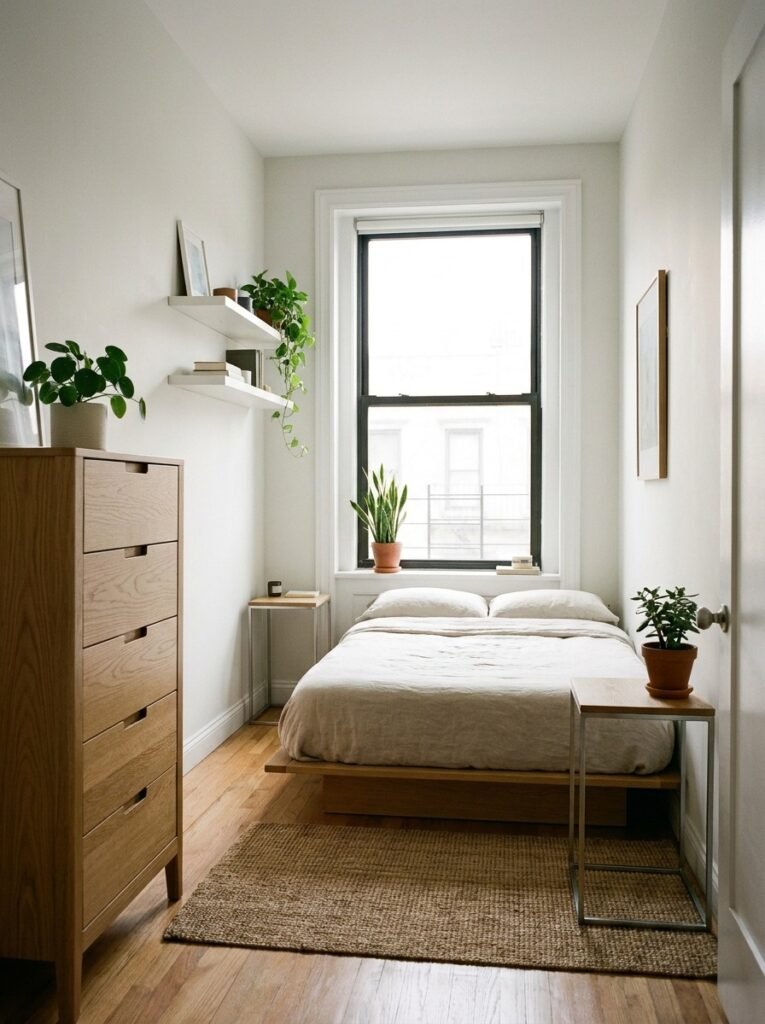
Choosing furniture with a genuinely slim profile, rather than standard-depth pieces, can meaningfully increase usable floor space in a small bedroom. A narrow dresser or slender nightstand takes up noticeably less room than bulkier alternatives while still providing adequate storage for most everyday needs.
Measure your available space carefully before purchasing furniture, prioritizing depth reduction over width whenever possible, since depth typically has the greatest impact on how much walking space remains available throughout the room.
This strategy requires more careful shopping than simply purchasing standard furniture sizes, but the payoff in usable floor space makes the extra research worthwhile. Every inch saved contributes meaningfully to how spacious a small bedroom ultimately feels.
16. Declutter and Minimalist Styling
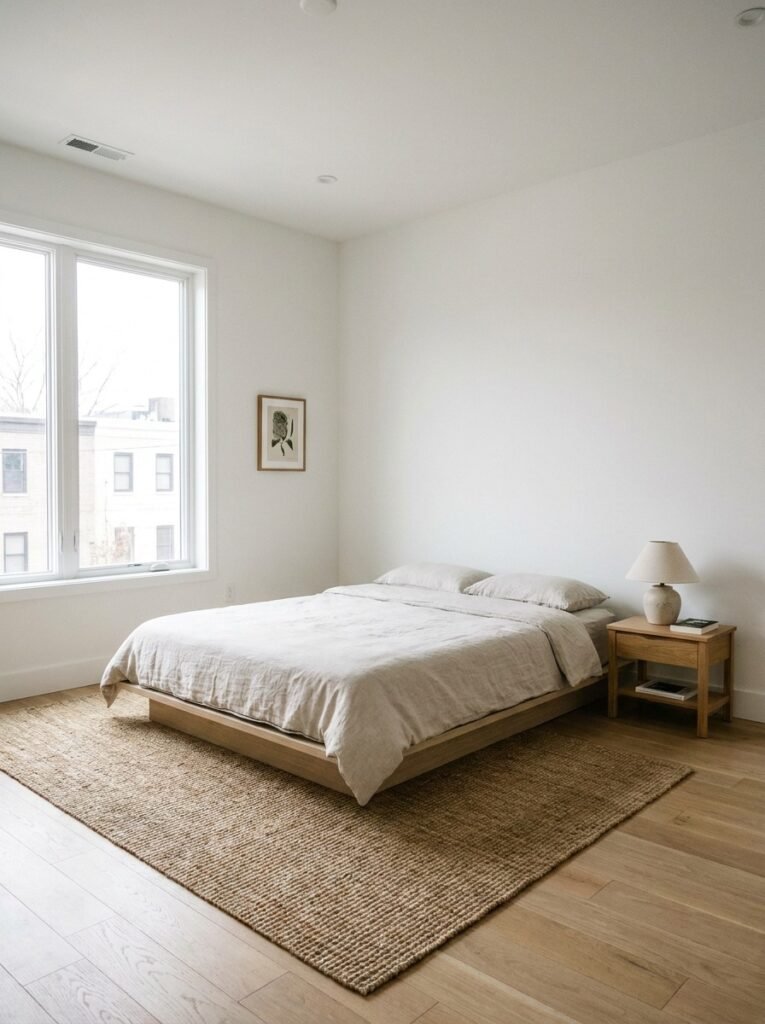
Decluttering and embracing a more minimalist approach to decor is one of the most effective, completely free ways to make a small bedroom feel larger. Removing unnecessary furniture, excess decorative objects, and accumulated clutter creates genuine visual and physical breathing room throughout the space.
This approach doesn’t mean the room needs to feel empty or impersonal, but rather that each remaining item should serve a genuine purpose or bring real joy to the space. Being selective about what stays in a small bedroom directly impacts how spacious the room ultimately feels.
This strategy requires ongoing maintenance rather than a one-time effort, since small bedrooms tend to accumulate clutter quickly given their limited storage capacity. Regular reassessment helps maintain the open, uncluttered feeling this approach is designed to create.
17. Vertical Striped Wallpaper
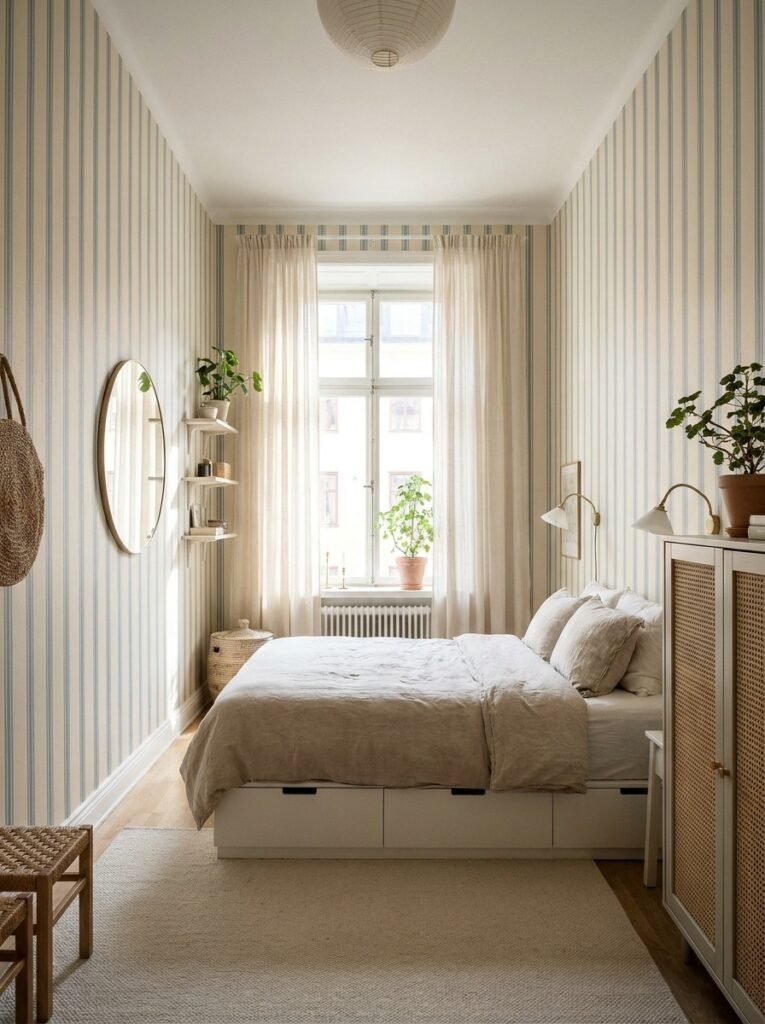
Vertical striped wallpaper creates the optical illusion of higher ceilings, drawing the eye upward and making a small bedroom feel taller and more spacious than its actual dimensions. This classic design trick has remained popular precisely because it delivers genuine visual results in compact rooms.
Choose stripes with subtle contrast rather than bold, high-contrast patterns for the most sophisticated, space-enhancing effect. Soft tone-on-tone stripes tend to work better in small spaces than dramatic color combinations that can feel overwhelming in a compact room.
This wallpaper choice works particularly well in small bedrooms with lower ceilings, where the vertical lines help counteract the room’s more limited height. It’s an elegant, proven technique for visually expanding a small space.
18. Sheer Curtains for Light
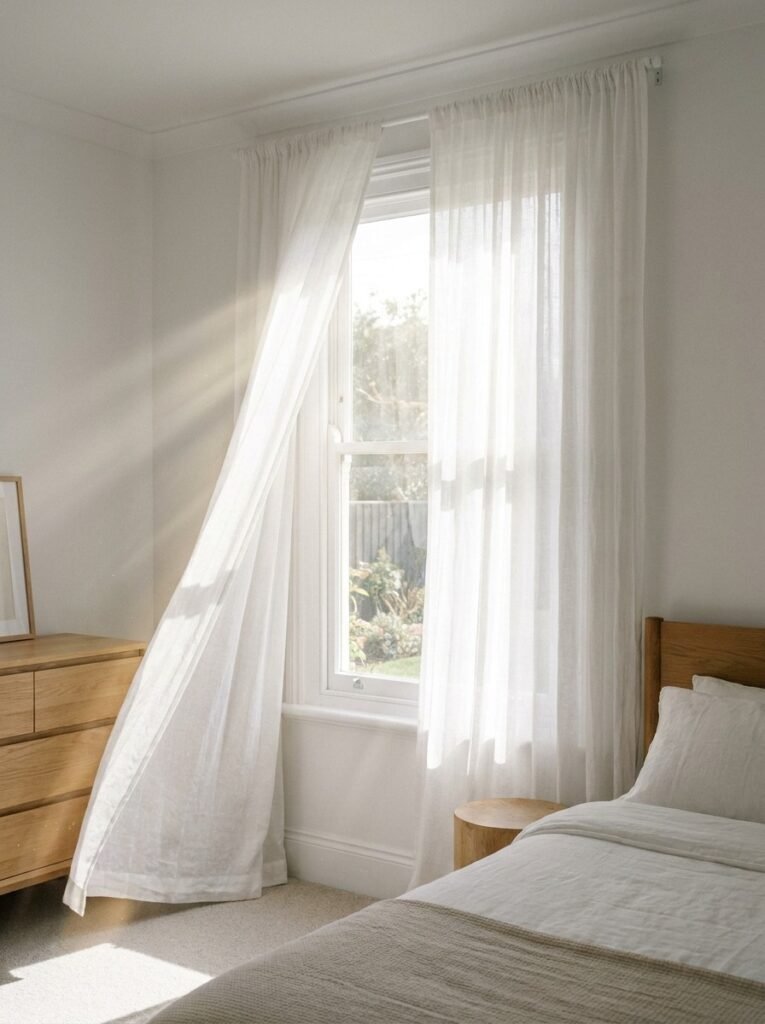
Sheer curtains allow maximum natural light to filter into a small bedroom, brightening the entire space and enhancing the sense of openness. Heavier, darker drapes can make an already compact room feel more enclosed, while lightweight sheers keep the space feeling bright throughout the day.
Choose a sheer fabric in white or a soft neutral tone for the most versatile, light-enhancing effect. If privacy is a concern, layer the sheers with a blackout liner that can be added or removed depending on the time of day or specific need.
This curtain choice also softens the window’s overall appearance, adding a gentle, airy quality that complements the broader goal of making a small bedroom feel as open and bright as possible throughout the day.
19. Wall-Mounted Reading Lights
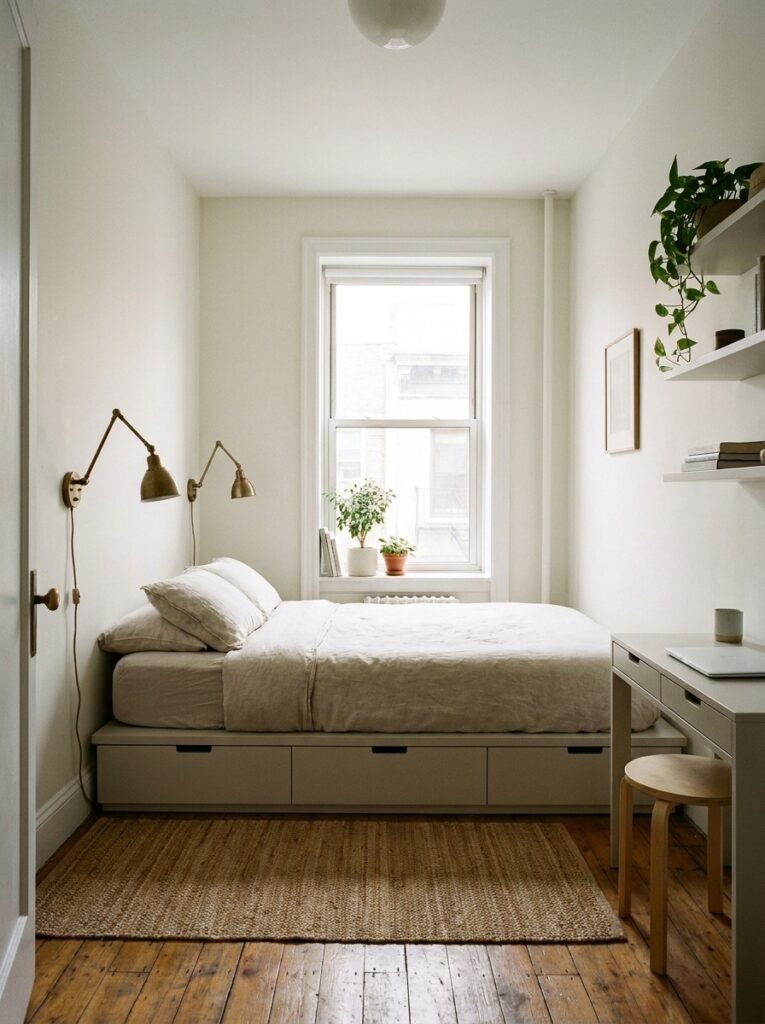
Wall-mounted reading lights eliminate the need for bedside table lamps, freeing up valuable surface space on already limited nightstands. This lighting solution provides the same functional reading light without contributing to the visual and physical clutter that table lamps can create in a small bedroom.
Choose a swing-arm design that allows the light to be adjusted precisely where needed, offering more flexibility than a fixed table lamp positioned in one spot. This adjustable feature proves particularly useful for reading in bed without disturbing a partner sleeping nearby.
This small lighting swap significantly reduces nightstand clutter, allowing the remaining surface space to be used for essentials like a phone charger or a small stack of books instead of a bulky lamp base.
20. Rug to Define Space
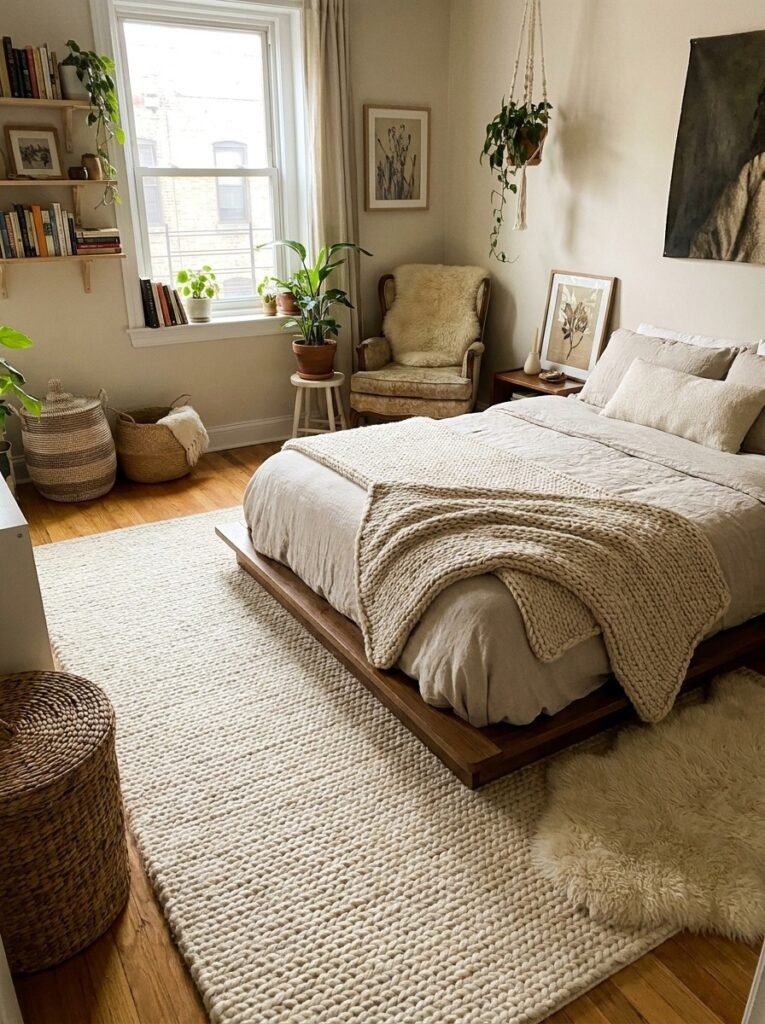
An area rug helps visually define the sleeping area within a small bedroom, particularly useful in studio apartments or multi-purpose rooms where the bedroom shares space with other functions. This simple addition creates a sense of intentional zoning without requiring any physical dividers or walls.
Choose a rug sized to extend slightly beyond the sides of the bed for the most balanced, proportional look. A lighter color or pattern helps the space feel open, while a bold rug can serve as a genuine design statement within the room’s overall layout.
This technique also adds warmth and softness underfoot, making the small bedroom feel more complete and cozy despite its limited square footage. It’s an affordable way to bring both function and style into a compact space.
21. Built-In Wardrobe Solutions
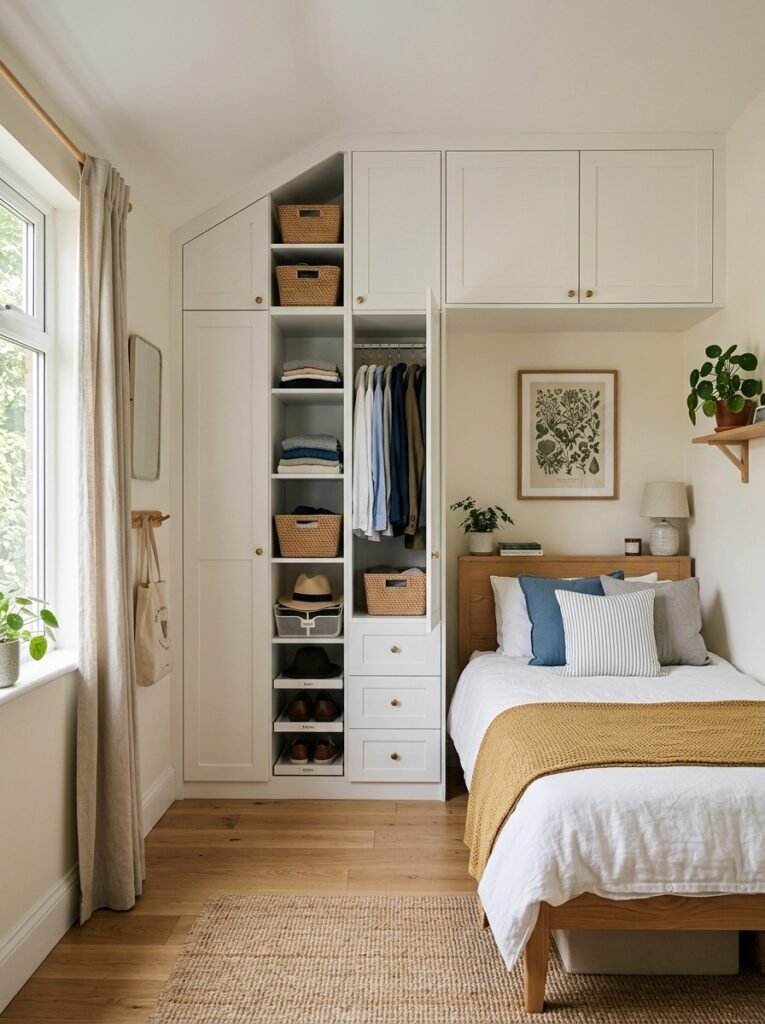
Built-in wardrobe solutions make efficient use of awkward corners, alcoves, or sloped ceiling areas that standard furniture simply cannot accommodate. This custom approach maximizes every available inch of storage capacity, often providing significantly more space than a freestanding wardrobe of similar footprint.
Work with the room’s existing architecture, like a sloped ceiling or an irregular nook, to design storage that fits perfectly into the available space. This custom fit eliminates wasted gaps that standard furniture sizes often leave behind in oddly shaped rooms.
While this solution requires more upfront investment than purchasing ready-made furniture, the long-term storage benefits often justify the cost, particularly in small bedrooms where every inch of capacity genuinely matters for daily organization.
22. Ceiling Height Curtains
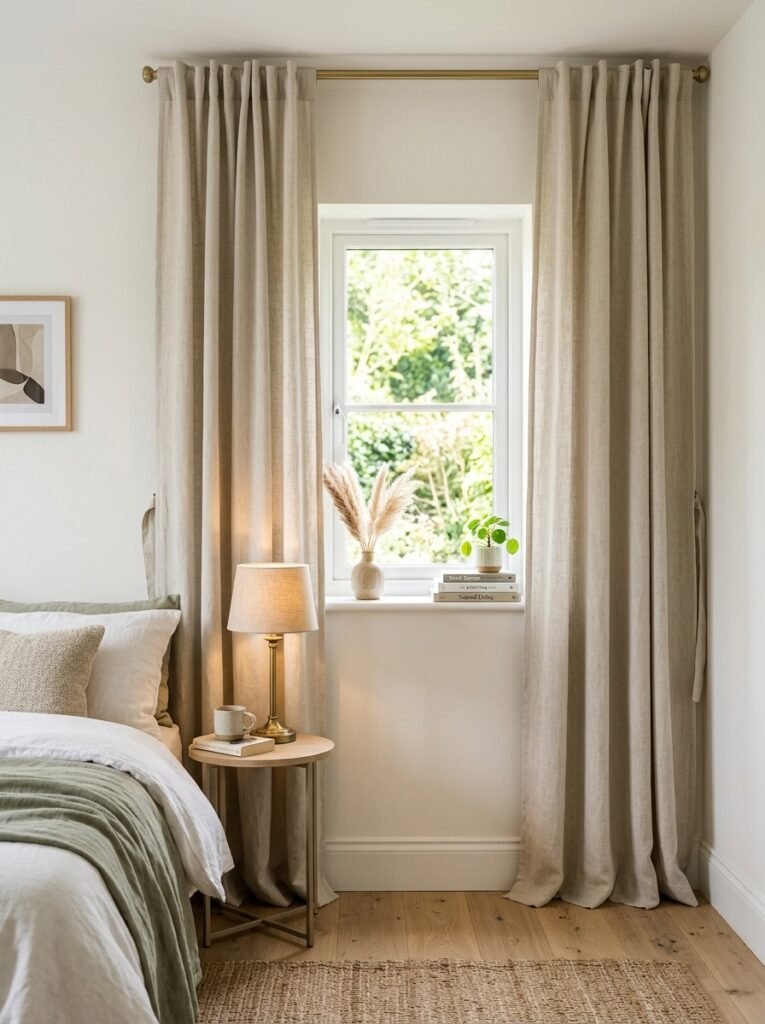
Hanging curtains from ceiling height, rather than directly above the window frame, creates the illusion of taller windows and higher ceilings in a small bedroom. This simple installation trick draws the eye upward, making the entire room feel more spacious and elegant than its actual dimensions.
Choose a curtain rod that extends slightly wider than the window frame as well, allowing the panels to hang fully open without blocking any of the window’s natural light during the day. This combination of height and width maximizes the room’s perceived scale.
This technique requires no additional furniture or major investment, simply a different curtain hanging approach than most people default to. It remains one of the most effective, low-cost tricks for visually expanding a small bedroom.
A small bedroom rewards thoughtful choices far more than expensive ones. From storage beds and floating nightstands to strategic mirrors and vertical striped wallpaper, these 22 ideas prove that the right combination of smart furniture, clever visual tricks, and a bit of decluttering can make even the tightest room feel genuinely spacious and comfortable.
The most effective approach usually combines several strategies at once, rather than relying on a single fix. Pairing a light color palette with slim, low-profile furniture and a well-placed mirror, for example, tends to deliver a far more noticeable transformation than any one change on its own.
At the end of the day, a small bedroom doesn’t need to feel like a compromise. Save your favorite ideas from this list, prioritize the changes that fit your specific layout, and enjoy creating a compact space that feels every bit as comfortable and stylish as a much larger room.